
Palm mealybug
Palmicultor
Description
How to identify
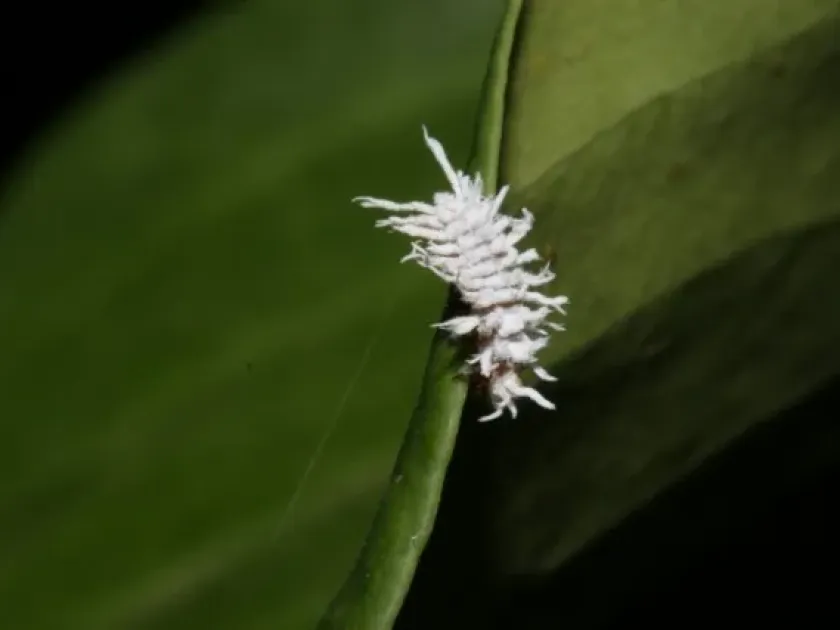
The palm mealybug (genus Palmicultor) is a member of the Pseudococcidae family, known for its distinctive white, waxy coating that gives it a fluffy, mealy appearance.
Adult females are oval-shaped with soft bodies and short waxy filaments along their margins, while adult males are rarely seen as they are short-lived, winged insects dedicated to reproduction.
These pests are cryptic in nature, preferring to hide in secluded locations such as the base of petioles, leaf axils, and near the crown of the palm tree.
Reproduction involves the production of waxy egg sacs, which provide excellent protection for the eggs against environmental stressors and many contact insecticides.
The first instar nymphs, known as crawlers, are highly mobile and are the primary stage responsible for infesting new areas of the plant or spreading to adjacent palms.
What it damages
This pest primarily infests various species of palm trees (Arecaceae), often becoming a persistent problem in conservatories, indoor gardens, and ornamental nurseries.
While palms are their main hosts, heavy infestations can occasionally spread to succulents, orchids, and other greenhouse plants kept in close proximity.
Mealybugs feed by inserting their stylets into plant tissue and extracting phloem sap, which depletes the plant's resources and stunts overall development.
Severe infestations can lead to the necrosis of growing points, resulting in the eventual decline and death of the plant if left untreated for an extended period.
Feeding activities also result in the excretion of honeydew, which serves as a substrate for sooty mold, blocking light and further inhibiting the plant's photosynthetic capacity.
Signs of infestation
The most reliable indicator of an infestation is the presence of white, cotton-like waxy masses tucked into the crevices where leaves attach to the trunk.
Leaf yellowing and chlorosis are common symptoms, as the plant struggles to maintain nutrition while its sap is being siphoned off by the colony.
A shiny, sticky substance on the foliage, known as honeydew, often alerts owners to the presence of pests before the actual insects are even noticed.
The growth of black sooty mold on the leaves is a secondary sign that usually indicates a significant and well-established population of mealybugs.
- Cottony, white wax masses in leaf axils.
- Sticky honeydew residue on leaf surfaces.
- Stunted growth and distorted young leaves.
- Visible presence of black sooty mold.
- Premature leaf drop and generalized chlorosis.
Control measures
Mechanical control involves the physical removal of the pests using a cotton swab dipped in isopropyl alcohol or a gentle insecticidal soap, which effectively dissolves the waxy coating.
For larger infestations, systemic insecticides, particularly those containing imidacloprid or similar compounds, are highly effective as they are absorbed by the plant and kill pests upon feeding.
Multiple treatment applications are necessary because the waxy egg sacs are resistant to most contact chemicals, requiring the hatching nymphs to be targeted over time.
Good sanitation practices, such as quarantining new plants and regularly wiping down foliage, are essential to prevent the entry and spread of the pest within a collection.
Maintaining optimal environmental conditions, including appropriate humidity and ventilation, helps the plant remain resilient against pest attacks and reduces the likelihood of outbreaks.
Taxonomy
- Latin name
- Palmicultor
- Order
- Hemiptera (bugs, aphids, leafhoppers)
- Family
- Pseudococcidae
- EPPO code
- PALTSP
Discussion
No discussions yet — be the first.