
Maconellicoccus lanigerus
Maconellicoccus lanigerus
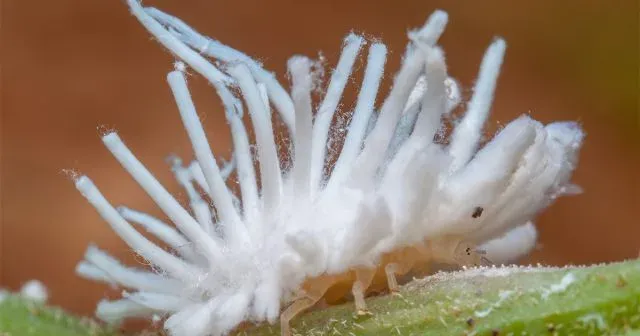
Description
How to identify
Maconellicoccus lanigerus is a sap-sucking insect belonging to the Pseudococcidae family, commonly known as mealybugs. These pests are easily recognized by the white, cottony wax secretion that covers their bodies, providing protection from the environment.
Females of this species are primarily sedentary and wingless, characterized by a soft body covered in this white mealy substance. This wax makes them particularly resistant to contact-based chemical treatments.
Males, in contrast, have wings and are capable of flight, although their existence is transient, focusing solely on finding and mating with females to ensure the continuation of the next generation.
The life cycle involves incomplete metamorphosis. They thrive in warm, humid climates, making greenhouses and tropical regions particularly susceptible to massive outbreaks of this pest.
Reproduction is prolific, with females depositing hundreds of eggs inside protective ovisacs made of waxy fibers. These sacs are often attached to the stems or undersides of leaves, ensuring high survival rates for the offspring.
What it damages
This pest acts as a polyphagous feeder, meaning it attacks a wide array of host plants including various fruit trees, citrus crops, grapes, and diverse ornamental greenhouse vegetation.
The insects feed by inserting their stylets into plant tissues and extracting nutrient-rich sap. This constant extraction severely weakens the plant's physiological condition.
The damage caused is twofold: direct feeding damage and indirect secondary impacts. Direct feeding stunts growth, causes leaf yellowing, and leads to the deformation of young shoots and fruits.
Indirectly, the excretion of honeydew promotes the growth of sooty mold. This dark, fungal layer covers the leaf surface, significantly impairing the plant's ability to perform photosynthesis.
In commercial orchards, infestation leads to a significant loss of market value for fruits due to blemishes, deformation, and the presence of waxy residues, rendering produce unsalable.
Signs of infestation
The most prominent sign of infestation is the appearance of white, woolly, or cottony clusters clustered around leaf axils, veins, and younger branches where sap is most accessible.
Sticky, shiny surfaces on the leaves, known as honeydew, indicate the presence of an active colony. This sugary substance is highly attractive to ants, which often tend to the mealybugs.
Yellowing, drooping, or premature senescence of leaves are classic symptoms that the plant has been heavily stressed by the extraction of its vital fluids.
A black, soot-like growth on the leaves and stems is a clear indicator that the honeydew has attracted secondary fungal infections, which further degrades plant health.
Visible ants moving up and down the stems are a behavioral sign; they protect the mealybugs from predators in exchange for the sugary honeydew they produce.
Control measures
Management begins with strict sanitation and monitoring. Early detection is key; removing infested plant parts can prevent the further spread of the population within a garden or orchard.
Systemic insecticides are the preferred choice for professional control, as they are absorbed into the plant's vascular system, ensuring that the pest ingests the toxin while feeding.
Biological control agents, such as specific ladybeetle species and parasitoid wasps, can be highly effective in reducing population levels in an environmentally friendly manner.
Cultural practices, such as optimizing irrigation and fertilization to avoid excessive succulent growth, can reduce the plant's attractiveness to these pests.
- Apply systemic insecticides during the crawler stage for maximum efficiency.
- Use horticultural oils to dissolve the waxy protective layer of the insect.
- Maintain weed-free surroundings to remove alternative hosts.
- Control ant populations to stop them from protecting mealybugs.
Taxonomy
- Latin name
- Maconellicoccus lanigerus
- Order
- Hemiptera (bugs, aphids, leafhoppers)
- Family
- Pseudococcidae
- EPPO code
- MCNLLA
Discussion
No discussions yet — be the first.