
Pink hibiscus mealybug
Maconellicoccus
Description
How to identify
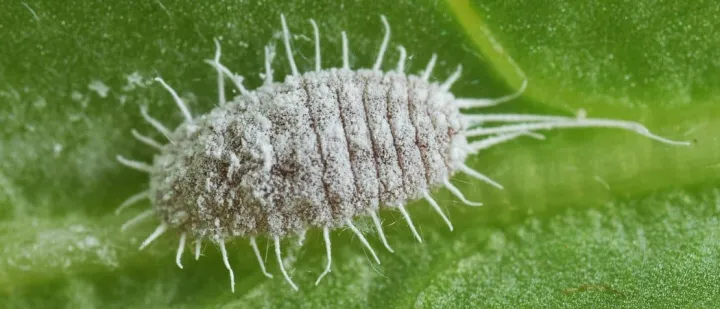
The pink hibiscus mealybug, scientifically known as Maconellicoccus hirsutus, is a significant member of the Pseudococcidae family. These insects are characterized by their small size and the presence of a protective white, waxy, mealy secretion that covers their bodies.
Adult females are typically oval-shaped and reach approximately 3 mm in length. They are sedentary feeders, often remaining on a single spot, while the winged males are elusive and rarely seen in the field. The females deposit their eggs into white, cottony masses.
Biological development is rapid, with environmental temperature and humidity being the primary drivers. In tropical or greenhouse conditions, multiple overlapping generations can occur throughout the year, leading to exponential population growth.
The crawler stage, or first-instar nymph, is the primary mobile phase. These crawlers are easily dispersed by wind, irrigation water, and human activities, facilitating the rapid colonization of new host plants.
Due to their high fecundity and ability to adapt to various environmental conditions, Maconellicoccus species are considered invasive and are strictly regulated in many parts of the world to prevent economic losses.
What it damages
Maconellicoccus hirsutus is a highly polyphagous pest with a broad host range, including commercial crops such as citrus, grapes, cocoa, cotton, and various ornamental species. The damage is primarily caused by their sap-sucking feeding habits.
Feeding often results in severe malformation of new shoots and leaves, commonly referred to as "bunchy top" or "rosette" growth. This inhibits normal plant development, reduces photosynthetic capacity, and ultimately suppresses overall plant health.
As they feed, they excrete honeydew, a sugary substance that coats the leaves and stems. This creates an ideal environment for sooty mold growth, which blocks sunlight and further complicates the plant's ability to produce energy.
Beyond physical damage, the mealybug is a known vector for several plant viruses. These viruses can cause widespread disease outbreaks that are often more destructive than the mealybug feeding itself.
Economic losses are compounded by the high cost of control efforts and trade restrictions imposed on regions where this pest is established, as the mealybug can cause total crop failure if left unmanaged.
Control measures
Successful management begins with strict phytosanitary measures, including the inspection of incoming plant shipments. Early detection programs are crucial for preventing the establishment of the pest in new geographical areas.
Biological control, specifically the release of host-specific parasitoid wasps like Anagyrus kamali, has been highly effective in suppressing mealybug populations in several regions, offering a sustainable and eco-friendly solution.
Chemical control should be used judiciously, focusing on systemic insecticides that reach the pest under its waxy covering. Rotating chemical classes is essential to manage the potential development of insecticide resistance.
Cultural practices, such as pruning and incinerating heavily infested plant parts, help reduce local population density. Additionally, controlling ant populations is vital, as ants protect mealybugs from natural predators to feed on the honeydew.
- Regular monitoring with pheromone traps to detect male populations.
- Use of horticultural oils to physically coat and suffocate nymphs.
- Integration of natural predator populations into the ecosystem.
- Sanitation of farming tools to prevent mechanical transmission.
Taxonomy
- Latin name
- Maconellicoccus
- Order
- Hemiptera (bugs, aphids, leafhoppers)
- Family
- Pseudococcidae
- EPPO code
- MCNLSP
Discussion
No discussions yet — be the first.