
Laminicoccus
Laminicoccus
Description
How to identify
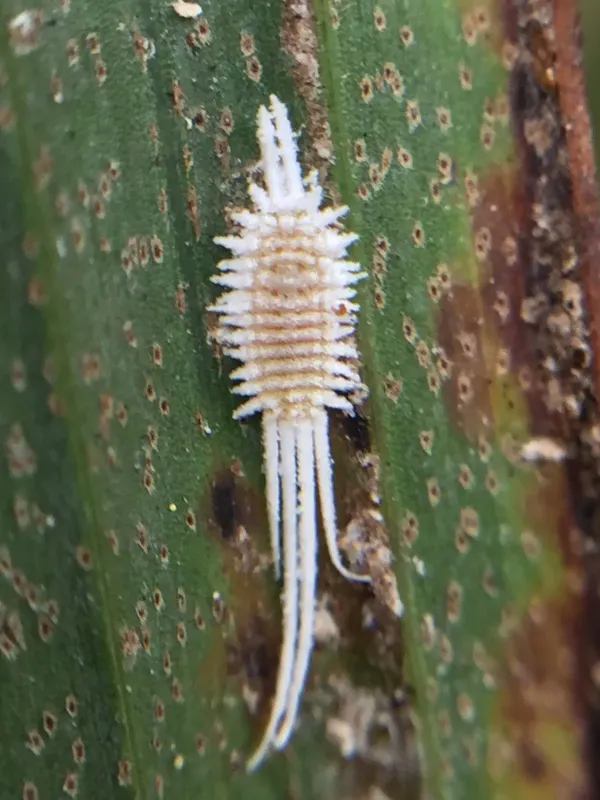
Laminicoccus is a genus of insects from the mealybug family (Pseudococcidae), belonging to the order Hemiptera. These are small sap-sucking pests distinguished by the presence of characteristic waxy secretions on their bodies.
Adult individuals appear as oval, sluggish insects covered with a white mealy coating. They often colonize hidden parts of the plant, which makes their initial detection difficult for farmers and gardeners.
The biology of this genus is closely linked to tropical and subtropical regions. Females are typically wingless and lead a sedentary life, while males have wings and are capable of flight, which facilitates the spread of the population.
The development cycle includes egg, nymph (multiple instars), and adult stages. Females lay eggs in special ovisacs consisting of a dense, cotton-like mass that protects the offspring from external environmental factors.
Identification is complicated by their ability to mimic plant parts or soil particles. During inspections, it is necessary to check leaf axils, the base of petioles, and the root collar area carefully.
##damage##This pest primarily affects tropical fruit crops such as bananas and citrus, as well as various decorative plant species in greenhouses and indoor environments.
These insects extract cell sap from plant tissues, leading to the depletion of the plant's vitality. Damaged plant parts lose turgor, become deformed, and eventually die off.
An important aspect of their harmfulness is the secretion of honeydew, a sugary substance. Sooty mold fungi actively grow on this residue, covering the leaves with a black coating that significantly disrupts the photosynthesis process.
In places where the tissue has been punctured, secondary infections often occur, such as viral or bacterial diseases that enter through the damaged plant surfaces, greatly increasing the damage.
Severe infestation leads to premature leaf drop, shriveling of shoots, and a significant decrease in yield or the total loss of the commercial value of decorative plants.
##season##In greenhouses and indoor conditions, Laminicoccus is capable of breeding all year round, as there are no sharp seasonal temperature fluctuations to interrupt its biological cycle.
The most active spread is observed during periods of high humidity and stable temperatures (ranging from +20 to +28 degrees Celsius), which promote the accelerated maturation of nymphs.
In nature, the activity of the pest is synchronized with the growing seasons of its host plants. When unfavorable conditions occur, the insect's metabolism slows down, but they maintain viability.
Spread within a facility often occurs via infested planting material, contaminated tools, or the transport of nymphs by air currents within greenhouse structures.
Agronomists emphasize that monitoring the pest population should be performed regularly, especially during the spring-summer period, when plants are most vulnerable to intense attacks.
##signs##The main sign of infestation is the appearance of white cotton-like clusters in leaf axils, on young shoots, and where fruits attach to the fruit stalks.
Plant leaves develop a yellowish tint, curl, or become deformed. Under heavy infestation, a noticeable slowing of plant growth and a lack of new shoot development are common symptoms.
Sticky residue on the leaf surface (honeydew) is an alarming signal. Soon after its appearance, black fungal growth begins, which visually degrades the plant's health and appearance.
When inspecting the root system of some species, mealybug colonies may be found, causing the formation of galls and knotted thickenings on the roots, which hinders proper nutrient uptake.
The presence of small, fast-flying male insects in the air near plants also indicates a high level of infestation and an active reproductive cycle in the population.
##control##Control measures include strict phytosanitary checks on imported planting material and regular disinfection of greenhouse equipment and tools.
Upon detecting infestation centers, mechanical cleaning is necessary, which involves removing heavily damaged plant parts and washing the remaining leaves with soapy solutions or alcohol-based mixtures.
The use of biological control methods, such as introducing natural entomophages (predatory ladybugs or parasitic wasps), has proven highly effective in greenhouse settings.
Chemical treatment with systemic insecticides is a necessary step when population numbers are high. It is recommended to use preparations based on imidacloprid or spirotetramat.
- Regular ventilation of greenhouse areas.
- Adherence to strict quarantine measures for new plants.
- Maintaining optimal air humidity levels.
- Timely fertilization to strengthen plant immunity.
- Rotating chemical agents to prevent pesticide resistance.
Taxonomy
- Latin name
- Laminicoccus
- Order
- Hemiptera (bugs, aphids, leafhoppers)
- Family
- Pseudococcidae
- EPPO code
- LAMCSP
Discussion
No discussions yet — be the first.