
Cactus mealybug
Hypogeococcus spinosus
Description
How to identify
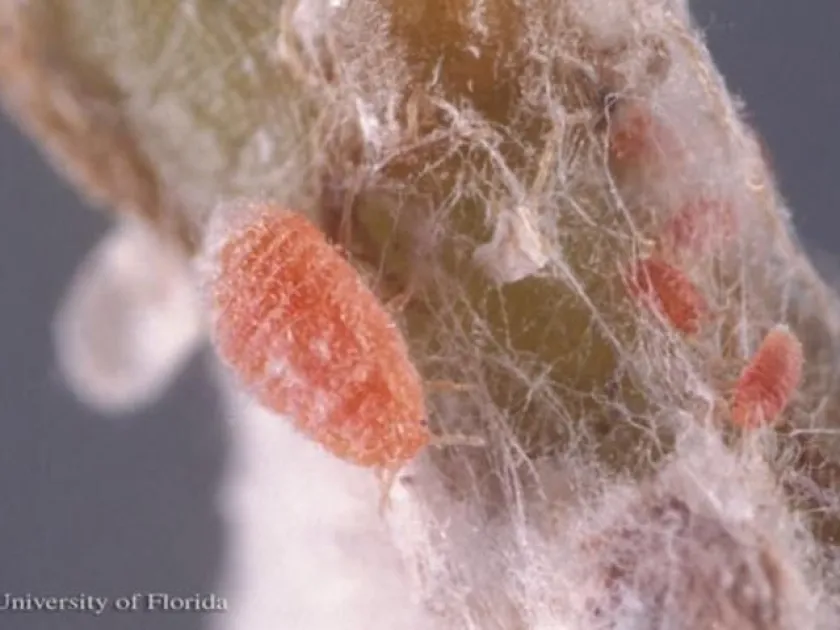
The cactus mealybug (Hypogeococcus spinosus) is a member of the Pseudococcidae family, known for causing significant damage to various succulent species.
Adult females are characterized by their soft, oval bodies covered in a white, waxy secretion that gives them a cotton-like appearance.
These insects are highly secretive, often congregating in protected areas such as the crevices of cactus ribs, the base of spines, and sometimes even in the root system.
The life cycle involves multiple larval stages, and females often protect their eggs within specialized, fluffy white ovisacs hidden in the plant’s folds.
They are particularly difficult to spot in dense cactus spines, meaning infestations are often discovered only when they have become quite advanced.
What it damages
This pest primarily targets the Cactaceae family, showing a strong preference for cacti with complex spine structures or deep crevices where they can hide.
By piercing the epidermis and sucking the plant's sap, the mealybug extracts essential nutrients, which weakens the host and inhibits normal physiological functions.
Heavy feeding can cause stunted growth, disfigurement of the stem, and even the collapse of the plant due to severe vascular tissue damage.
The feeding process often introduces secondary pathogens, including various fungal and bacterial infections that accelerate the plant's decay.
Reduced vigor makes the cacti more susceptible to environmental stress, leading to a significant loss of ornamental value for collectors and growers.
Signs of infestation
The most distinctive sign of a cactus mealybug infestation is the appearance of white, woolly or powdery clusters, primarily in the areoles or spine axils.
Affected plants often display a loss of turgor, looking flaccid or shriveled even when the soil moisture is adequate, indicating compromised root or stem health.
Sticky honeydew secretions on the plant surface often lead to the growth of sooty mold, which appears as a black, dusty layer on the cactus skin.
Root-infesting populations are typically detected when the plant fails to thrive, turns yellow, or becomes loose in its potting mix during regular inspection.
- Cotton-like white deposits in areoles.
- Yellowing of the epidermis in patches.
- Sticky residue on the surface of the cactus.
- Stunted or distorted new growth.
- White, mold-like patches visible on the roots.
Control measures
Effective management begins with strict quarantine measures, ensuring that any new plants are isolated for several weeks before being added to an existing collection.
For minor infestations, manual removal using a cotton swab dipped in isopropyl alcohol is an effective way to kill the insects on contact without harming the plant.
Systemic insecticides are generally required for severe or persistent infestations, as they are absorbed by the plant and provide long-lasting internal protection.
Applications should be repeated every 10 to 14 days to target the mobile crawler stages and ensure that emerging nymphs are eliminated before they reach maturity.
Proper environmental management, including good airflow and avoiding over-fertilization with nitrogen, helps keep plants healthy and less attractive to mealybug colonization.
Taxonomy
- Latin name
- Hypogeococcus spinosus
- Order
- Hemiptera (bugs, aphids, leafhoppers)
- Family
- Pseudococcidae
- EPPO code
- HPGCSN
Discussion
No discussions yet — be the first.