
Hypogeococcus pungens
Hypogeococcus pungens
Description
How to identify
Hypogeococcus pungens is a small insect belonging to the Pseudococcidae family (mealybugs) of the order Hemiptera. Adult females are oval-shaped and typically covered in a dense white, waxy secretion that acts as a protective shield against external threats.
This species is highly prolific and capable of colonizing plants very rapidly. The white, cotton-like masses found in leaf axils or on stems are the most reliable visual indicator of an active infestation.
Male insects are rarely observed, as they are small and winged, serving only the purpose of reproduction. The life cycle involves several larval stages, with the highly mobile crawlers being responsible for spreading the infestation to nearby plants.
Accurate identification usually requires microscopic analysis of the insect's wax pores and setae. For practical gardening purposes, identifying the typical clustering pattern is usually sufficient to initiate control protocols.
Because these insects are adept at hiding in crevices and deep within the structural parts of succulents, they are often difficult to detect until the infestation has reached a mature stage.
What it damages
This pest is a significant polyphage that causes substantial damage to various plant families, with Cactaceae (cacti) being particularly susceptible to its feeding habits.
By injecting toxins during feeding, Hypogeococcus pungens causes the plant to develop abnormal growths, deformities, and necrotic spots, effectively ruining the plant's aesthetic value and structural health.
When the infestation targets the growing tips or meristematic tissues, the plant's normal growth cycle is disrupted, leading to stunted development and eventual decline of the entire specimen.
The damage caused by the insects also leaves the plant vulnerable to secondary infections, such as fungal pathogens and bacteria that thrive in the wounds created by the mealybugs.
Massive colonies drain the plant of essential nutrients and fluids, eventually causing the host to wither, yellow, and die if left untreated for an extended period.
When it appears
In greenhouses and indoor environments, Hypogeococcus pungens does not strictly follow seasonal patterns and can breed year-round if the climate remains favorable.
Warmer temperatures and stable humidity levels accelerate the transition from the egg stage to adulthood, significantly increasing the risk of population explosions during the summer months.
Winter conditions might slow down the metabolic rates of the insects, but they do not eliminate the infestation, meaning that constant monitoring is necessary throughout the year.
The dispersal of the pest occurs primarily through the active movement of crawlers or via human activity, such as handling plants, utilizing shared tools, or carrying infested materials between zones.
The peak of damage often coincides with the plant's active growing season, as the increased flow of phloem provides an abundant food source for the growing mealybug population.
Signs of infestation
The most immediate sign of an infestation is the appearance of white, woolly fluff clustered in inaccessible areas like the crevices of leaf bases or the deep areoles of cacti.
Leaves or stems may also exhibit signs of honeydew, a sticky, sugary substance excreted by the mealybugs, which often turns black due to the growth of sooty mold.
Affected plants begin to show signs of physiological stress, including wilting, chlorosis, and a lack of vigor that cannot be attributed to improper watering or lighting.
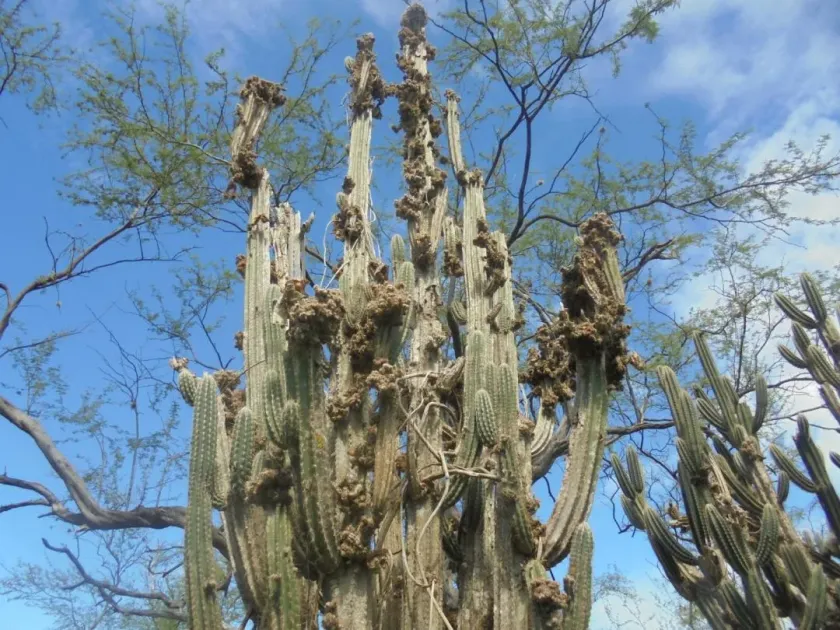
Cacti infested by this species frequently develop bulbous tumors or galls, which are a characteristic reaction to the insect's persistent feeding and toxic secretions.
- White, cottony clusters on plant parts
- Sticky residue on leaves and stems
- Deformed growth and stunted development
- Appearance of sooty mold fungus
- Yellowing and loss of leaves
Control measures
Effective management of Hypogeococcus pungens requires a multifaceted strategy involving physical cleaning, plant isolation, and the application of appropriate chemical controls.
Any plant suspected of hosting an infestation should be immediately separated from the rest of the collection to prevent the movement of crawlers to healthy specimens.
Chemical control utilizing systemic insecticides, particularly those belonging to the neonicotinoid class, is highly recommended as they are absorbed into the plant's tissues.
Multiple treatments are essential to break the life cycle, with intervals of 7 to 10 days ensuring that newly hatched larvae are eliminated before they can reach maturity and reproduce.
Ongoing vigilance and strict quarantine measures for any new plants introduced to the collection are the most effective ways to prevent a recurrence of the pest.
Taxonomy
- Latin name
- Hypogeococcus pungens
- Order
- Hemiptera (bugs, aphids, leafhoppers)
- Family
- Pseudococcidae
- EPPO code
- HPGCPU
Discussion
No discussions yet — be the first.