
Cactus mealybug
Hypogeococcus othnius
Description
How to identify
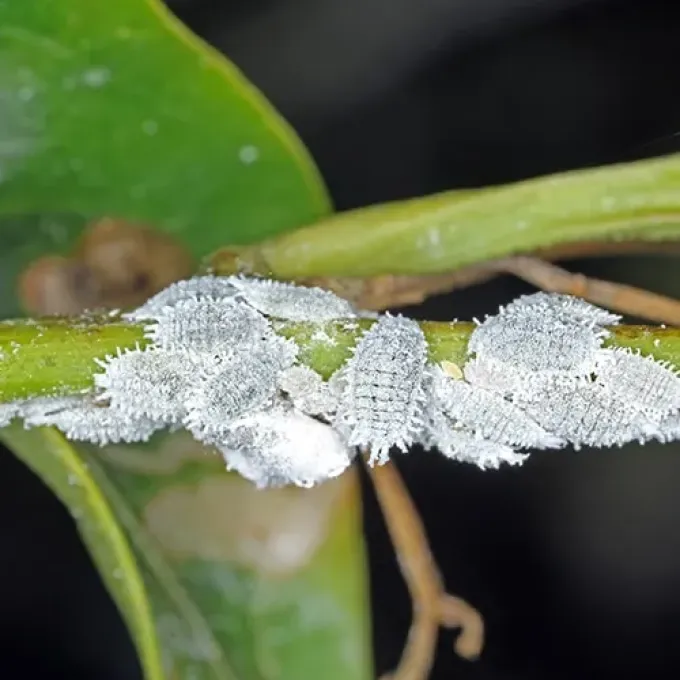
Hypogeococcus othnius is a significant pest belonging to the Pseudococcidae family, commonly known as the cactus mealybug. These small insects are characterized by a soft, oval-shaped body covered in a white, powdery, or cotton-like waxy secretion that acts as a shield against external threats.
The pest is primarily a sap-sucking insect. Because of their size, usually reaching only 2–3 mm, they are often overlooked until they form visible, fluffy white colonies on the surface of cacti and other succulents. Their cryptic nature makes early detection difficult.
Males are small, winged, and do not feed, focusing solely on reproduction. Females remain stationary for most of their lives, feeding and laying eggs in waxy ovisacs. This reproductive strategy allows them to rapidly increase their population numbers in a short time.
These pests thrive in protected environments such as greenhouses and indoor collections where environmental stability favors continuous breeding cycles throughout the year.
Due to their mobility during the larval stage, known as "crawlers," they can quickly spread throughout an entire greenhouse or collection via air currents or contaminated gardening equipment.
What it damages
Hypogeococcus othnius primarily targets cacti, causing severe damage that can lead to stunted growth, loss of aesthetic value, and even plant mortality. Their feeding activity triggers complex reactions in the host plant.
As they suck sap, they inject saliva that contains substances causing the formation of galls — abnormal, tumor-like growths on the stems and areoles. These deformities permanently disfigure the plant and disrupt its structural integrity.
The loss of sap deprives the plant of essential nutrients, leading to a loss of turgor, softening of the stem, and the dropping of flower buds. Infested plants show significant signs of distress and lack of vigor.
The wounds created during feeding serve as entry points for secondary pathogens, such as soft rot and other fungal diseases, which can kill a weakened plant much faster than the pest itself.
Root-infesting populations are particularly dangerous because they remain hidden in the soil, slowly destroying the root system and preventing the plant from absorbing water and nutrients.
Signs of infestation
The most recognizable sign is the presence of fluffy, white, cottony masses located in the crevices of the plant, especially near the base of spines or where stems join. These masses indicate the presence of females and their egg clusters.
Deformations, bumps, or irregular galls on the stem are strong indicators of a chronic infestation. These structural changes are caused by the plant's internal response to the pest's feeding toxins.
Sticky residue on the surface of the plant, known as honeydew, is a classic symptom. This sugary substance often attracts sooty mold, which appears as a black, powdery layer that blocks photosynthesis and worsens the plant's condition.
A general lack of growth or failure to flower, despite proper care, should prompt a thorough investigation for root-dwelling mealybugs. If the plant looks sickly or unstable, checking the root zone is crucial.
- White cottony colonies on the plant stem.
- Abnormal stem deformities and galls.
- Sticky honeydew secretions on the epidermis.
- Presence of black sooty mold.
- General wilting and failure to thrive.
Control measures
Effective management of Hypogeococcus othnius relies heavily on the use of systemic insecticides, such as neonicotinoids. These systemic treatments are absorbed by the plant, making its tissues toxic to the insects when they feed.
Because the waxy covering protects the eggs and adults from contact sprays, a single application is rarely enough. A consistent program with applications every 10 to 14 days is necessary to break the life cycle and eliminate emerging crawlers.
Mechanical control, such as physically wiping the pests away with a cotton swab dipped in 70% isopropyl alcohol, is effective for small, localized infestations but should be followed by systemic treatment to ensure complete eradication.
For soil-borne infestations, applying systemic insecticide via soil drenching is recommended. In severe cases, repotting the plant into fresh, sterile soil while washing the roots with an insecticidal solution may be required.
Strict quarantine measures are essential. Any new plant entering the collection should be isolated for at least 30 days and carefully monitored for symptoms before being placed near established plants.
Taxonomy
- Latin name
- Hypogeococcus othnius
- Order
- Hemiptera (bugs, aphids, leafhoppers)
- Family
- Pseudococcidae
- EPPO code
- HPGCOT
Discussion
No discussions yet — be the first.