
Heliococcus summervillei
Heliococcus summervillei
Description
How to identify
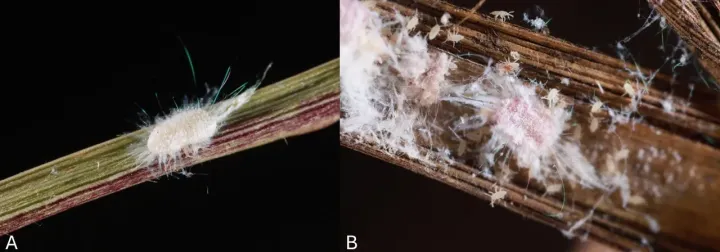
Heliococcus summervillei is a species of mealybug (family Pseudococcidae) that belongs to the order Hemiptera. Adult females are distinguished by their oval-shaped bodies, which are encased in a dense white waxy substance that serves as a protective barrier against environmental stressors and chemical treatments.
Males of this species are rarely observed; they are winged and capable of flight to locate mates, whereas females remain largely sedentary, spending most of their life cycle firmly attached to the host plant to feed.
The first-instar nymphs, known as crawlers, are highly mobile and serve as the primary stage for dispersal, allowing the pest to spread across the plant canopy and to adjacent trees or shrubs.
Identification can be difficult because these insects prefer concealed locations such as crevices in the bark, leaf axils, or the base of buds. They are most commonly identified by the presence of white, cotton-like masses, which are actually the ovisacs where females deposit their eggs.
This species is highly adaptable, allowing it to colonize a variety of climates and host plants. If left unchecked, populations can grow rapidly, creating significant challenges for growers and landscapers alike.
What it damages
Heliococcus summervillei infests a wide range of woody plants, including both ornamental and fruit-bearing species. By using their piercing-sucking mouthparts, these insects drain essential plant fluids, causing systemic stress to the host.
Young plants and those already experiencing environmental stress are particularly vulnerable, often showing stunted growth, distorted shoots, and poor overall vigor. Severe infestations can lead to premature leaf drop and the eventual dieback of branches.
A major indirect symptom of infestation is the production of honeydew, a sugary byproduct of the insect's digestion. This substance promotes the rapid growth of sooty mold, a black fungus that covers leaf surfaces and significantly inhibits photosynthesis.
Continued feeding by large colonies can cause necrotic bark lesions, which may serve as entry points for secondary fungal and bacterial pathogens. This weakens the structural integrity of the plant and increases susceptibility to further diseases.
In commercial orchards and nurseries, the presence of this mealybug can lead to reduced fruit quality and significant yield losses, making it a critical concern for integrated pest management programs.
When it appears
The seasonal activity of Heliococcus summervillei typically begins in the spring, as temperatures rise consistently above 10-12 degrees Celsius, signaling the emergence of nymphs from their overwintering sites.
The most active period for dispersal occurs in late spring and early summer, when crawlers actively migrate to new growth. This is a critical time for monitoring and early intervention.
Throughout the summer, generations overlap, resulting in the presence of all life stages simultaneously. This makes control efforts more complicated, as repeated applications or sustained management are often required to address the entire population.
As autumn approaches and temperatures drop, adult females seek sheltered areas—such as under loose bark or in branch forks—to prepare for the winter months.
The species primarily overwinter as nymphs or fertilized females. Their protective waxy coverings and preference for sheltered micro-habitats allow them to survive harsh winter conditions until the following spring.
Signs of infestation
The most reliable sign of an infestation is the appearance of white, cottony masses on bark, twigs, or at the base of leaves, which mark the locations of female ovisacs.
- Sticky, shiny honeydew residue on foliage, which eventually turns black due to the growth of sooty mold.
- Visible wilting, yellowing, or abnormal curling of leaves, indicating significant loss of nutrients.
- Increased ant activity on the tree, as ants frequently tend to mealybugs to harvest their honeydew secretions.
- Premature yellowing and leaf fall, particularly during periods of active growth.
Close inspection of the underside of leaves and bark fissures using a hand lens can reveal the presence of small, crawling nymphs before the damage becomes extensive.
In cases of heavy infestation, the tree may exhibit a general "dusty" or greyish appearance on the trunk and branches, resulting from the accumulation of waxy excretions left behind by the insects.
Control measures
Managing Heliococcus summervillei requires a multi-faceted approach, as the protective wax layer often renders the insects resistant to conventional contact insecticides.
Systemic insecticides are generally the most effective method, as they are absorbed into the plant's vascular system, ensuring the pest consumes the toxin while feeding. Timing applications to coincide with the crawler stage is essential for maximum efficacy.
Cultural practices include the removal and destruction of heavily infested limbs and the manual cleaning of bark to eliminate overwintering sites for the next generation.
Promoting biological control through the conservation of natural enemies, such as lady beetles, lacewings, and parasitic wasps, can provide a sustainable way to keep populations below economic injury levels.
Consistent monitoring and the implementation of an integrated pest management (IPM) strategy help to minimize chemical usage while maintaining the health and productivity of the host plants.
Taxonomy
- Latin name
- Heliococcus summervillei
- Order
- Hemiptera (bugs, aphids, leafhoppers)
- Family
- Pseudococcidae
- EPPO code
- HELCSU
Discussion
No discussions yet — be the first.