
Heliococcus
Heliococcus
Description
How to identify
Heliococcus is a genus of insects belonging to the family Pseudococcidae, commonly known as mealybugs, which are significant agricultural pests.
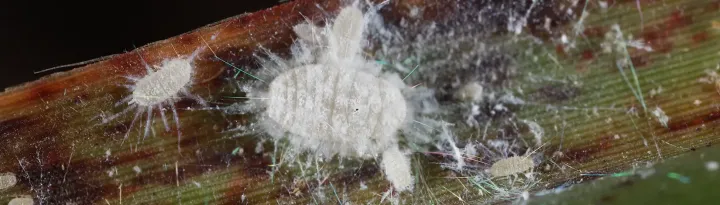
The adult females are characterized by an oval body shape covered with a white, waxy, mealy-like secretion that acts as a protective shield.
Males are generally smaller, often possess wings, and have a very short lifespan dedicated exclusively to finding and mating with females.
The life cycle involves several nymphal stages, with the first instar nymphs, known as crawlers, being the only highly mobile stage in the life cycle.
Identification of the genus often requires specialized entomological examination due to the morphological similarities between different mealybug species.
What it damages
As polyphagous insects, Heliococcus species feed on a wide variety of plants, including fruit trees, vineyards, and various ornamental species.
They damage plants by inserting their mouthparts into the plant tissues and extracting sap, which deprives the plant of essential nutrients.
Heavy infestations can lead to stunting, yellowing of leaves, premature leaf drop, and, in severe cases, the death of the host plant.
These pests are particularly problematic in greenhouse environments where the controlled climate allows for continuous year-round breeding.
Beyond direct feeding, they indirectly harm plants by inducing stress, which makes the host more susceptible to secondary viral and fungal infections.
When it appears
The activity of Heliococcus is strongly influenced by temperature and humidity, with development accelerating in warm and stable conditions.
Typically, the population starts to grow in early spring as temperatures rise, allowing nymphs to emerge and settle on new plant growth.
Peak infestation levels are usually observed during the summer months when environmental conditions facilitate the completion of multiple generations.
As the weather cools in autumn, the insects seek protected sites in crevices or bark to overwinter, entering a state of reduced metabolic activity.
Understanding these seasonal patterns is crucial for timing applications of systemic insecticides to coincide with the most vulnerable stages of the pest.
Signs of infestation
The most recognizable sign of an infestation is the presence of white, cottony or waxy masses on leaves, stems, and in the crotches of branches.
The excretion of honeydew by the mealybugs provides a substrate for the growth of sooty mold, which appears as a black, powdery coating on plant surfaces.
Leaf curling, discoloration, and stunted development of new shoots are clear indicators that the plant is under attack by a sucking pest colony.
An increased presence of ants on the plant is a secondary sign, as ants are often attracted to the honeydew produced by the mealybugs.
- White waxy tufts on plant parts.
- Presence of sticky honeydew on foliage.
- Development of black sooty mold fungus.
- Reduced vigor and stunted branch growth.
Control measures
Effective management requires an integrated approach starting with mechanical removal of infested foliage and cleaning of plant surfaces.
Systemic insecticides are generally the most effective chemical control, as they are absorbed by the plant and ingested by the mealybugs during feeding.
It is important to use adjuvants or stickers in spray mixtures to ensure better penetration through the protective waxy covering of the insect.
Biological control, including the introduction of natural predators such as lady beetles or parasitic wasps, is highly effective in professional greenhouse settings.
Cultural practices, such as maintaining plant hygiene and monitoring irrigation, help create conditions that are less favorable for massive pest outbreaks.
Taxonomy
- Latin name
- Heliococcus
- Order
- Hemiptera (bugs, aphids, leafhoppers)
- Family
- Pseudococcidae
- EPPO code
- HELCSP
Discussion
No discussions yet — be the first.