
Ferrisia malvastra
Ferrisia malvastra
Description
How to identify
Ferrisia malvastra is a species of mealybug belonging to the family Pseudococcidae, known for its ability to infest a diverse range of plant hosts.
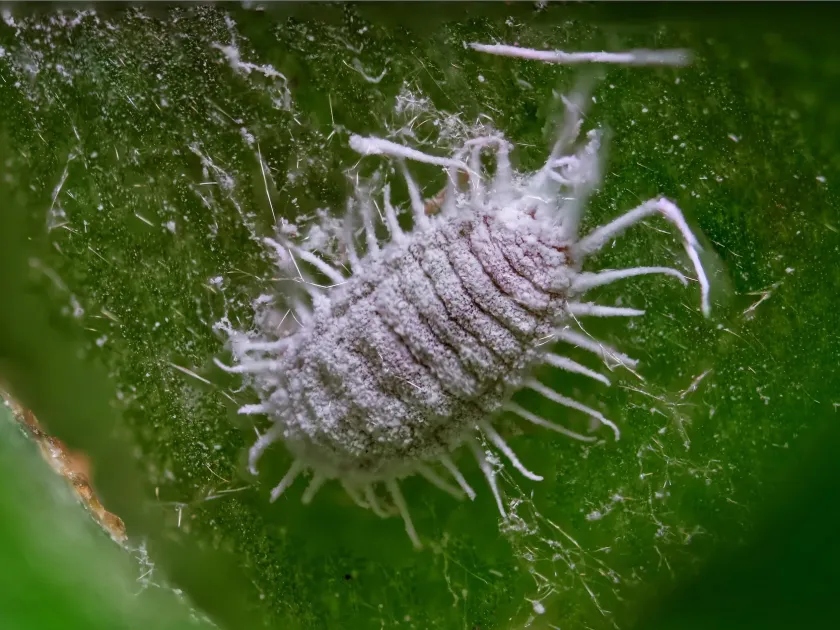
Adult females are characterized by an oval-shaped body covered in a white, powdery, or waxy secretion that protects them from environmental stresses.
The morphology of this pest includes characteristic lateral wax filaments, which are often used by entomologists for field identification, although microscopic analysis is safer.
Unlike females, which remain sessile for most of their lives, males are winged and primarily focus on finding females for mating.
These pests are cryptic in nature, preferring to hide in stems, leaf axils, or under debris, making early detection a significant challenge for growers.
What it damages
As a polyphagous insect, Ferrisia malvastra feeds on a wide variety of plants, including important agricultural, ornamental, and industrial crop species.
The damage is caused by the insertion of stylets into plant tissues to extract sap, which disrupts the normal nutrient flow within the plant.
Constant feeding leads to plant chlorosis, stunting of growth, and reduced fruit or flower production, depending on the host species.
Severe infestations can lead to the total collapse of the plant's health, as the insects deplete stored resources and introduce stress.
Additionally, the pest is known to cause systemic damage by transmitting plant pathogens during the feeding process, complicating management efforts.
Signs of infestation
The most visible indicator of an infestation is the presence of white, cottony wax masses on the foliage and branches of the host plant.
Plants infested with these mealybugs often exhibit distorted leaves, premature yellowing, and leaf drop due to sap loss.
Honeydew, a sticky substance excreted by the bugs, accumulates on the leaves and provides a substrate for sooty mold growth.
The development of a black sooty mold layer blocks sunlight, which negatively impacts photosynthesis and further weakens the plant.
A closer look often reveals the insects clustered along leaf veins or hidden deep within the plant structure, protected by their waxy coverings.
Control measures
Integrated Pest Management (IPM) is essential for controlling Ferrisia malvastra, emphasizing prevention and low-toxicity interventions.
Strict quarantine protocols should be followed when introducing new plants into a facility to prevent the establishment of the pest population.
Systemic insecticides are generally the most effective chemical control method as they travel through the plant and target the insects where they hide.
- Physical removal and sanitation by pruning and destroying infested branches.
- Release of biological control agents, such as predatory beetles or parasitoid wasps.
- Use of horticultural oils to suffocate the insects by disrupting their respiration.
- Monitoring the environment to ensure it remains unfavorable for rapid insect development.
- Application of specialized pesticides targeting the crawler stage, which is the most vulnerable point in the life cycle.
Effective management requires consistent monitoring and a rotation of control products to prevent the development of resistance within the pest population.
Taxonomy
- Latin name
- Ferrisia malvastra
- Order
- Hemiptera (bugs, aphids, leafhoppers)
- Family
- Pseudococcidae
- EPPO code
- FERRMA
Discussion
No discussions yet — be the first.