
Blueberry mealybug
Dysmicoccus vaccinii
Description
How to identify
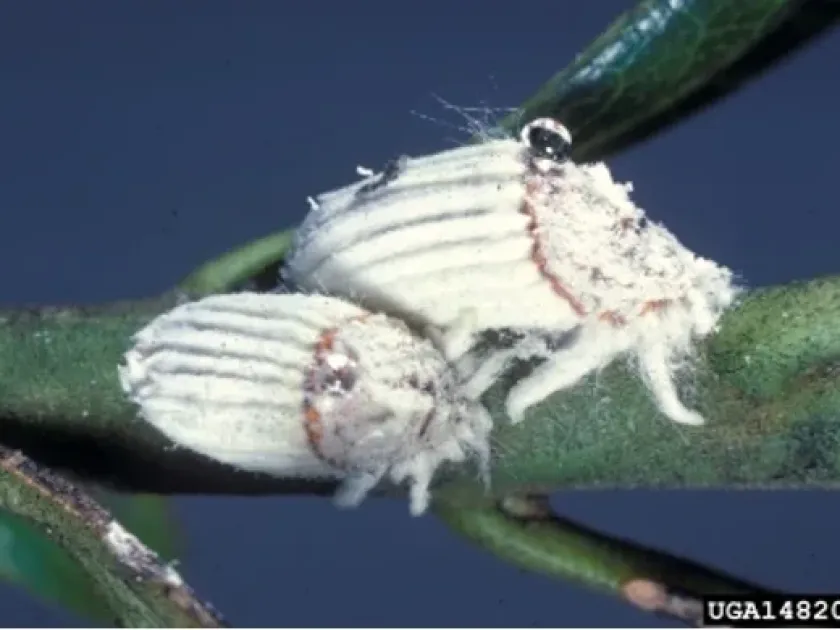
The blueberry mealybug (Dysmicoccus vaccinii) belongs to the Pseudococcidae family, order Hemiptera. These small insects are covered in a white, waxy substance that acts as a protective shield against the environment and pesticides.
Females are typically sedentary with an oval body, while adult males are winged but short-lived, serving only to locate females for reproduction.
Identifying this pest is challenging because they prefer hidden locations such as under bud scales, within branching points, or near the base of leaf petioles.
They lay eggs in loose, waxy ovisacs produced by the female, which often look like patches of mold or fungal growth to the untrained eye.
A key visual indicator is the presence of white, cotton-like masses on the stems, which stand out against the dark bark of the blueberry bush.
What it damages
Blueberry mealybugs primarily infest highbush blueberries, though they can also be found on other Ericaceae species, including wild blueberries.
These insects feed by sucking cell sap from young shoots, leaves, and flower buds, causing systemic weakness and stunted growth of the plant.
They excrete honeydew, a sticky substance that promotes the growth of sooty mold, which blocks sunlight and significantly inhibits the plant's photosynthesis.
Severe infestations result in premature leaf drop, twisting of shoots, and a measurable decrease in fruit yield throughout the harvest season.
Weakened plants show reduced cold hardiness, making them more susceptible to frost damage and potential mortality during harsh winter months.
When it appears
Activity begins in early spring as temperatures rise, prompting the overwintered nymphs to emerge from their hiding spots and move toward active growth.
Population peaks usually align with the flowering and fruit development stages, when environmental conditions are optimal for rapid reproduction.
Multiple generations can occur within a single growing season, meaning that producers must remain vigilant and monitor the crop throughout the entire summer.
As autumn approaches, adult females and older nymphs migrate to sheltered areas beneath the bark to overwinter and wait out the colder months.
Monitoring should be initiated once temperatures consistently reach above 10°C, as this is the trigger for the pest's emergence from its dormant state.
Signs of infestation
The first sign is the appearance of white, fluffy, cottony masses in the leaf axils, on the trunks, or near the buds of the blueberry bush.
The accumulation of sticky honeydew on the foliage, which later turns black due to the growth of sooty mold, is a major symptom of severe infestation.
Plants may show reduced vigor, shortened internodes, and foliage that turns yellow and curls prematurely even when other nutritional requirements are met.
Fruit quality declines, resulting in smaller, underdeveloped berries with poor flavor and a tendency for premature fruit drop.
Cracking bark and localized necrotic spots on twigs are also indirect signs that the plant has been hosting a colony of mealybugs for an extended period.
Control measures
Cultural control measures focus on rigorous sanitation, including pruning and destroying infested wood to prevent the spread of the colony.
Maintaining proper plant spacing and ensuring good airflow is critical, as high humidity within dense foliage creates a perfect microclimate for mealybugs.
Chemical control often requires systemic insecticides, as the insect's waxy covering and habit of living in crevices make contact sprays less effective.
Horticultural oils can be used to soften the waxy shield of the mealybug, significantly increasing the effectiveness of follow-up chemical treatments.
- Deploying pheromone or sticky traps to monitor early pest activity.
- Removing loose bark in early spring to eliminate overwintering sites.
- Encouraging natural predators such as lady beetles and lacewings in the orchard.
Taxonomy
- Latin name
- Dysmicoccus vaccinii
- Order
- Hemiptera (bugs, aphids, leafhoppers)
- Family
- Pseudococcidae
- EPPO code
- DYSMVA
Discussion
No discussions yet — be the first.