
Cypress mealybug
Dysmicoccus ryani
Description
How to identify
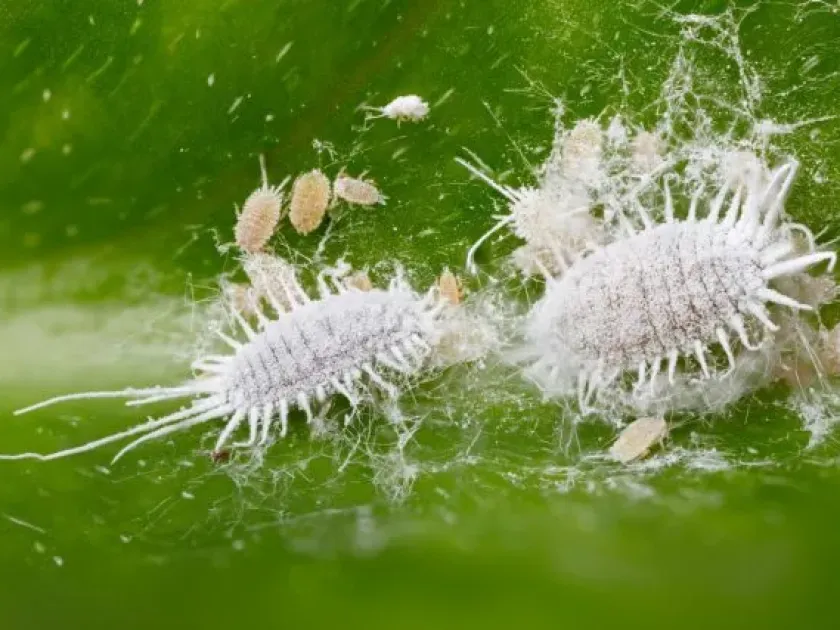
The Cypress mealybug (Dysmicoccus ryani) is a scale insect belonging to the family Pseudococcidae. It is characterized by the presence of a white, waxy, cotton-like substance that covers the female's body, providing protection against environmental stress and external contact insecticides.
The life cycle includes eggs, several nymphal instars, and adults. The first instar nymphs, commonly referred to as "crawlers," are the most mobile stage. They are responsible for the dispersal of the population to new branches and neighboring plants via wind currents or physical contact.
Adult females are typically oval-shaped, measuring about 3-4 mm in length, and are usually found huddled together in protected areas. Males are rare, winged, and do not feed; their sole purpose is reproduction, which occurs throughout the warmer seasons.
These insects prefer secluded micro-habitats such as needle axils, bark crevices, and the junctions between twigs. This hidden lifestyle makes the early detection of the pest difficult for gardeners and nursery professionals alike.
The species thrives in warm, temperate conditions. In protected environments like greenhouses or sheltered ornamental areas, populations can increase rapidly, often overlapping generations and creating a continuous cycle of infestation that weakens the host plant.
What it damages
The Cypress mealybug primarily attacks conifer species, including members of the Cupressaceae family like Cupressus, Thuja, and Juniperus. It feeds by inserting its stylets into the plant tissue to extract phloem sap, which is vital for the plant's growth.
As the insects feed, they excrete a sugary substance known as honeydew. This substance accumulates on the needles and branches, serving as an ideal medium for the growth of sooty mold, a dark fungal layer that blocks sunlight and interferes with photosynthesis.
The cumulative effect of sap extraction and sooty mold coverage causes the foliage to lose its natural color, turning yellow and eventually brown. This leads to premature needle drop and the stunting of new shoot growth across the entire canopy of the tree.
Infested plants suffer from a significant decline in vigor, which makes them highly susceptible to secondary stressors. In severe cases, particularly with young or weakened conifers, the damage can lead to the permanent deformity or death of the tree.
The presence of these pests disrupts the aesthetic and economic value of ornamental landscapes. If left unmanaged, the infestation can spread quickly to neighboring trees, creating a persistent problem that requires long-term remedial action.
Signs of infestation
The most visible sign of an infestation is the appearance of white, fluffy, wax-like masses at the base of needles or along the stems. These masses often resemble small tufts of cotton and are indicative of a developing or established colony.
Honeydew accumulation makes the needles appear sticky and glistening in the sunlight. Over time, this stickiness turns black due to the colonization of sooty mold, which is a telltale sign of a significant mealybug presence on the plant.
Ant activity is another strong indicator. Ants are frequently observed farming mealybugs, as they feed on the honeydew produced by the insects. Finding an unusually high number of ants on a cypress or thuja is a clear call for an inspection for mealybugs.
Yellowing, flagging needles and overall chlorosis of the foliage are common systemic symptoms of infestation. The tree may also exhibit a general lack of luster, as the plant struggles to maintain its health under the constant pressure of insect feeding.
During a physical inspection, one might notice small, greyish-pink insects hiding within the bark fissures. Identifying these in the early stages is crucial, as the waxy covering of the adults makes them highly resistant to common contact-based treatments.
Control measures
Effective management of the Cypress mealybug involves the use of systemic insecticides, such as those containing neonicotinoids. These products are absorbed by the plant and provide long-lasting control by killing the insects as they ingest the poisoned sap.
Cultural control practices, such as high-pressure water sprays, can be used to physically dislodge the mealybugs from the foliage. This method also helps to wash away the honeydew and sooty mold, improving the overall health and air circulation of the canopy.
Horticultural oils and insecticidal soaps can be utilized to suffocate the insects. These substances coat the mealybugs and block their spiracles, effectively killing them without leaving toxic residues, making them a preferred choice for residential or eco-friendly gardening.
Biological control is a viable option for large nurseries or parks. Introducing natural predators, such as the ladybird beetle Cryptolaemus montrouzieri (often called the mealybug destroyer), can keep populations under control when maintained in sufficient numbers.
Routine sanitation is essential to prevent re-infestation. This includes pruning out heavily infested branches and ensuring the health of the plant through proper irrigation and balanced fertilization, which helps the tree recover and develop resistance to further pest attacks.
Taxonomy
- Latin name
- Dysmicoccus ryani
- Order
- Hemiptera (bugs, aphids, leafhoppers)
- Family
- Pseudococcidae
- EPPO code
- PSECRY
Discussion
No discussions yet — be the first.