
Pineapple mealybug
Dysmicoccus neobrevipes
Description
How to identify
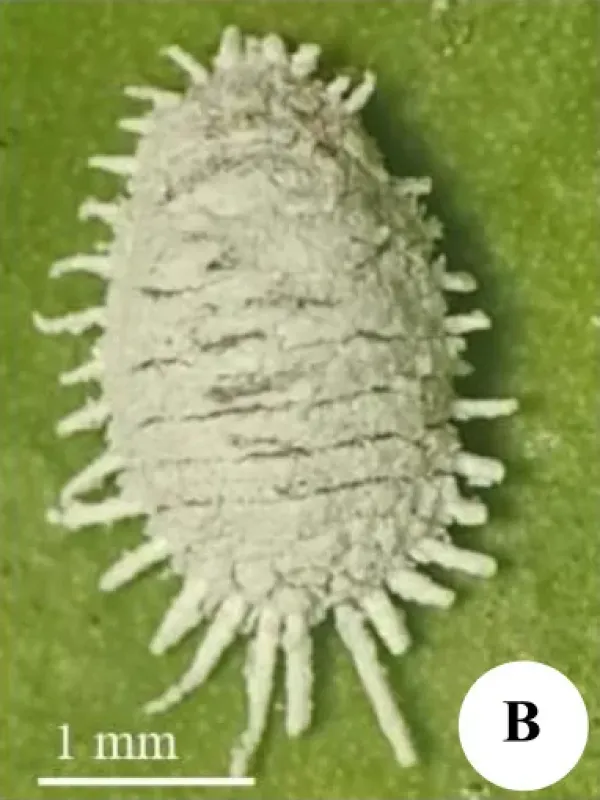
The pineapple mealybug, scientifically known as Dysmicoccus neobrevipes, is a small insect belonging to the family Pseudococcidae, order Hemiptera. Adult females are oval-shaped and covered with a white, powdery wax layer.
These insects are typically 2–3 mm long. While adult females are wingless and move slowly, the first-instar nymphs, known as crawlers, are highly active and are responsible for dispersal.
The species primarily reproduces parthenogenetically, meaning males are rarely observed. This allows for rapid population growth under favorable environmental conditions.
Identification is often confirmed by examining the insect's microscopic structures, such as the arrangement of wax pores and ducts, to distinguish them from other Dysmicoccus species.
Their life cycle is closely linked with ant species, which provide protection from natural enemies in exchange for the honeydew secreted by the mealybugs.
What it damages
While the pineapple is the primary host, the mealybug can infest various other crops, including citrus, coffee, avocado, and many ornamental plants.
The insects feed by inserting their stylets into plant tissue to suck sap, which stresses the plant and drains it of essential nutrients and moisture.
Feeding at the base of the plant or on the roots causes significant growth reduction and can eventually lead to the collapse of the plant's vascular system.
The secretion of honeydew promotes the growth of sooty mold, which coats the leaves and significantly impairs photosynthesis, leading to reduced yields.
Most importantly, the mealybug is the primary vector for the pineapple mealybug wilt-associated viruses, which can cause devastating economic losses in pineapple production.
Signs of infestation
The most recognizable sign is the presence of white, cotton-like masses of wax and insect colonies concentrated in leaf axils or at the base of the fruit.
Plants affected by the associated wilt virus exhibit leaf tip yellowing and reddening, followed by curling and a general loss of turgor pressure.
In advanced stages of infestation, the root system fails, resulting in stunted, yellowish plants that are unable to produce marketable fruit.
The presence of trails of ants climbing up the plants is a strong indicator of an underlying mealybug colony that needs immediate attention.
Sticky, shiny residue on the leaves and fruit, often accompanied by black sooty mold growth, is a classic symptom of a severe mealybug infestation.
Control measures
The primary control strategy involves starting with clean, disinfected planting material to ensure no initial infestation is brought onto the farm.
Managing ant populations is crucial, as they actively protect mealybugs from predators and parasites, effectively shielding them from biological control efforts.
Systemic insecticides are generally effective because they are absorbed by the plant and kill the mealybugs as they feed on the internal sap.
Rotation of chemical groups is essential to delay the development of pesticide resistance within the mealybug population.
- Regular field scouting and monitoring using traps.
- Encouraging natural biological enemies like ladybird beetles and wasps.
- Sanitation by removing and destroying heavily infested plant material.
- Implementing strict quarantine measures for new plant introductions.
Taxonomy
- Latin name
- Dysmicoccus neobrevipes
- Order
- Hemiptera (bugs, aphids, leafhoppers)
- Family
- Pseudococcidae
- EPPO code
- DYSMNE
Discussion
No discussions yet — be the first.