
Pineapple mealybug
Dysmicoccus brevipes
Description
How to identify
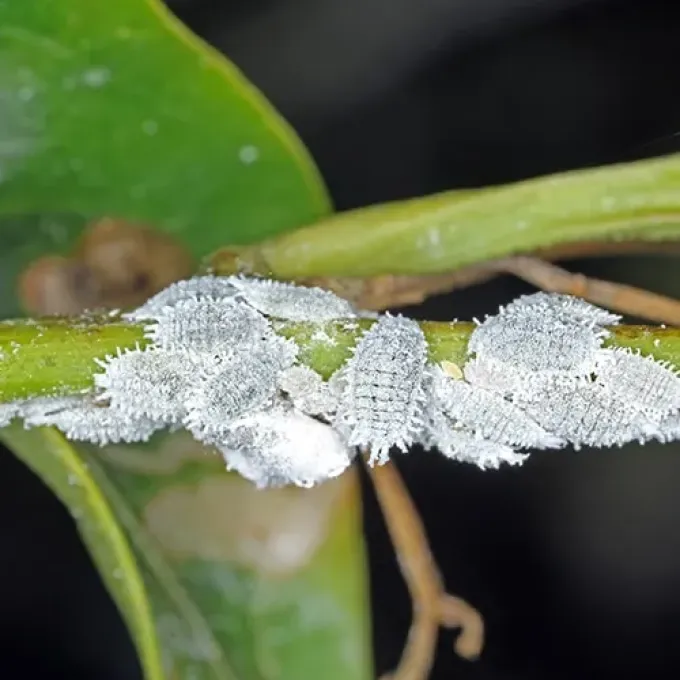
The pineapple mealybug (Dysmicoccus brevipes) is a member of the Pseudococcidae family within the order Hemiptera. Adult females are oval-shaped, typically 2–3 mm long, and covered in a white, powdery waxy secretion that often forms filaments around the body margins.
Males are rarely observed; they are smaller, winged, and do not feed, as their mouthparts are non-functional. Reproduction is primarily parthenogenetic, allowing for rapid colonization of host plants without the need for mating.
The life cycle involves an egg stage, several nymphal (crawler) stages, and the adult stage. The crawler stage is highly mobile and is the primary mechanism for the dispersal of the pest between plants, facilitated by wind, farm equipment, or ants.
These insects prefer protected microclimates. They are commonly found in leaf axils, near the base of the stem, around the fruit base, and deep within the root system, making them difficult to detect during routine inspections.
The development of Dysmicoccus brevipes is favored by warm and humid tropical conditions. Under ideal circumstances, a full generation can be completed in about one month, leading to multiple overlapping generations throughout the year.
What it damages
While named for its impact on pineapples, this pest is a significant polyphage. It infests various crops, including coffee, bananas, citrus, cacao, and many ornamental species, posing a global threat to tropical and subtropical agriculture.
Mealybugs cause direct damage by inserting their stylets into plant tissues to feed on phloem sap. This feeding process results in reduced vigor, stunted growth, and in severe cases, the death of the plant due to nutrient depletion.
The excretion of honeydew serves as a substrate for the growth of sooty mold, a black fungus that covers leaves. This layer impairs the plant's ability to perform photosynthesis, further weakening the host and reducing the overall quality of the harvest.
The most critical impact of Dysmicoccus brevipes is its role as a vector for the pineapple mealybug wilt-associated virus (PMWaV). This virus causes systemic wilting and can lead to the total collapse of a plantation.
Root-infesting populations cause direct damage to the root system, leading to the formation of galls and secondary root rot infections. This damage is often irreversible and significantly impacts the plant's ability to uptake water and nutrients.
Signs of infestation
The most recognizable sign is the presence of white, cottony wax masses in leaf axils or on the fruit surface. These masses conceal the adult females and their eggs, acting as a visual indicator of an active infestation.
Foliage symptoms include yellowing, curling, and gradual necrosis. In pineapples, the characteristic "mealybug wilt" presents as a reddening or browning of the leaves, starting from the tips and progressing toward the base of the plant.
The presence of ants is a strong indicator of an infestation. Ants provide "tending" services to mealybugs, protecting them from predators in exchange for the sweet honeydew, and they frequently move crawlers to new feeding sites.
Fruit infestation leads to poor fruit development, deformation, and potential fruit drop. Early detection on the fruit base is crucial to prevent the spread of the virus before the crop reaches marketability.
Root damage manifests as lack of vigor and the plant pulling out easily from the soil due to root system degradation. If plants are failing without obvious surface damage, inspecting the roots for white mealybug colonies is essential.
Control measures
Prevention is the first line of defense. Growers must source planting material from certified, virus-free stocks and implement rigorous quarantine protocols to avoid introducing the pest into new production areas.
Chemical control focuses on the use of systemic insecticides, which are transported through the plant tissues to reach the hidden mealybugs. Proper timing, usually targeting the crawler stage, is key to success.
Biological control agents, such as the predatory ladybird beetle Cryptolaemus montrouzieri and various parasitic wasps, are highly effective in greenhouse and field settings. They can significantly suppress population density without chemical residue issues.
Good agricultural practices include thorough weed management to remove alternative hosts and active ant control. Reducing the ant population is essential because ants actively inhibit the effectiveness of biological control agents.
- Regular field monitoring using pheromone traps to detect population spikes.
- Sanitization of tools and machinery to prevent cross-contamination between fields.
- Post-harvest destruction of crop residues to break the life cycle of the pest.
Taxonomy
- Latin name
- Dysmicoccus brevipes
- Order
- Hemiptera (bugs, aphids, leafhoppers)
- Family
- Pseudococcidae
- EPPO code
- DYSMBR
Discussion
No discussions yet — be the first.