
Mealybug of the genus Dysmicoccus
Dysmicoccus
Description
How to identify
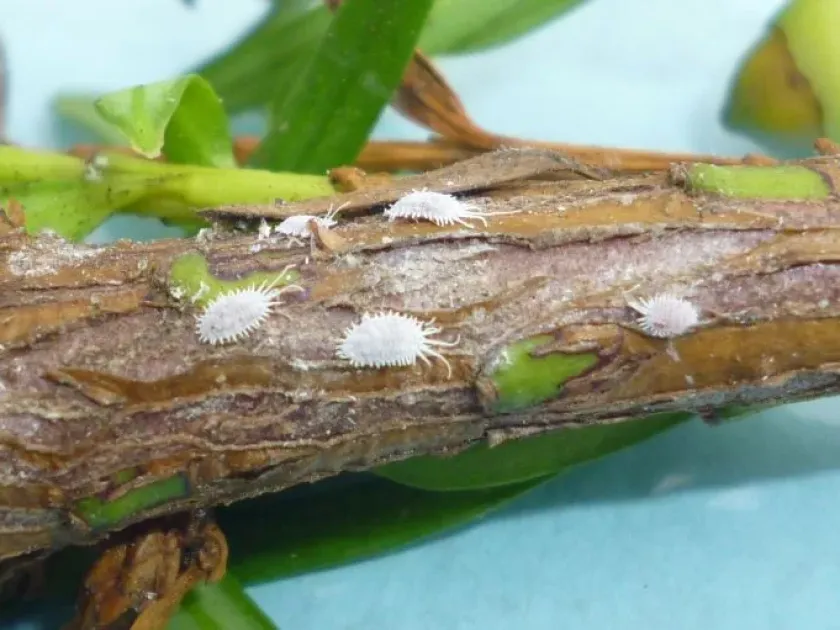
Mealybugs of the genus Dysmicoccus belong to the family Pseudococcidae, order Hemiptera. These insects are easily recognized by their oval bodies covered in a white, powdery wax layer that serves as a protective shield against environmental stressors.
Adult females are typically wingless and relatively sedentary, spending most of their time feeding in leaf axils or near roots. Adult males are small, winged insects whose primary role is reproduction, as they do not feed during their short lifespan.
Morphological identification of Dysmicoccus species often requires microscopic examination of specific traits, including the arrangement of wax pores and the structure of anal lobes. These details differentiate them from related genera like Planococcus.
The first instar larvae, often called crawlers, are the most active stage. They move across the plant surface seeking the optimal feeding site and are responsible for the spread of the infestation between plants.
These pests maintain symbiotic relationships with ants, which feed on the honeydew produced by the mealybugs. In return, ants protect the mealybug colonies from natural predators, significantly complicating the pest management process.
What it damages
Dysmicoccus species affect a wide range of agricultural and ornamental crops, including citrus, pineapple, coffee, and numerous greenhouse plants. They typically colonize succulent parts, roots, and the undersides of leaves.
As they feed, they pierce plant tissues and extract sap, which leads to nutrient loss, stunted growth, and loss of vigor. The plant tissue around the feeding site may show signs of chlorosis, necrosis, or severe wilting.
The excretion of honeydew is a major indirect cause of damage. This substance fosters the growth of sooty mold, which covers leaves with a dark, crusty film, thereby inhibiting photosynthesis and aesthetic appeal.
Severe infestations often result in fruit drop, plant deformation, and reduced overall harvest yield. In nurseries and greenhouses, these pests can cause significant economic losses by rendering plants unmarketable.
Furthermore, Dysmicoccus mealybugs are known vectors for various plant viruses, such as pineapple mealybug wilt-associated viruses. This vector capacity makes them high-priority pests in integrated pest management programs.
Control measures
Effective management begins with strict sanitation practices and rigorous inspection of incoming plant stock. Quarantining new plants before introducing them to the main production area is essential to prevent outbreaks.
For small infestations, physical removal using cotton swabs dipped in isopropyl alcohol is an effective non-toxic method. This process breaks down the protective wax and kills the individual insects on contact.
Chemical control usually involves the use of systemic insecticides, particularly neonicotinoids. These products are absorbed by the plant and translocated through the sap, reaching the pests even in protected areas like leaf crevices.
Biological control programs frequently utilize predators such as Cryptolaemus montrouzieri beetles. These natural enemies are highly successful in controlling mealybug populations in both glasshouse and field environments.
Integrated management must include ant control to ensure that natural predators can operate effectively. Removing ant trails and using baits are standard procedures to undermine the protection provided to mealybug colonies.
Taxonomy
- Latin name
- Dysmicoccus
- Order
- Hemiptera (bugs, aphids, leafhoppers)
- Family
- Pseudococcidae
- EPPO code
- DYSMSP
Discussion
No discussions yet — be the first.