
Azalea mealybug
Crisicoccus azaleae
Description
How to identify
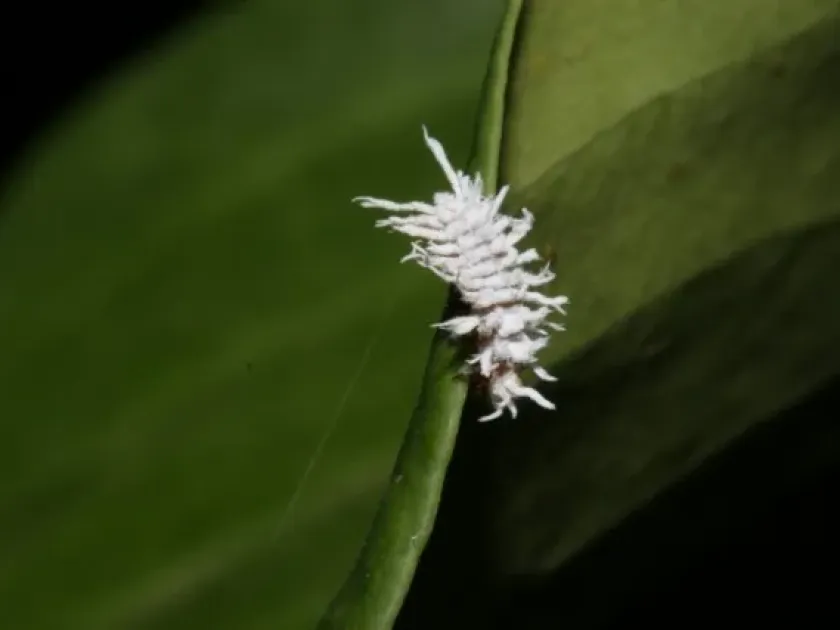
The Azalea mealybug (Crisicoccus azaleae) is a small insect belonging to the family Pseudococcidae, order Hemiptera. It is characterized by an oval, soft body protected by a layer of white, waxy, cotton-like material.
Adult females are typically sedentary and prefer to congregate in protected areas such as leaf axils, branch forks, and the undersides of leaves. Their bodies can range from light pink to gray.
Males are rarely seen; they are winged and flight-capable, but they are short-lived and do not feed. The primary damage is caused by the female, which extracts plant nutrients throughout her life cycle.
Identification is easiest by spotting the white, woolly masses of wax that the females produce to house their eggs. These masses are conspicuous against the dark green foliage of azaleas.
On early stages of infestation, the tiny, translucent nymphs (crawlers) are difficult to spot. Using a magnifying glass to inspect the undersides of leaves and stem nodes is essential for early detection.
What it damages
This pest specifically targets plants in the Ericaceae family, most notably azaleas and rhododendrons. By feeding on plant sap, the mealybug causes significant physiological stress to the host.
Infestation leads to leaf deformation, yellowing, and premature senescence. The loss of foliage vigor significantly reduces the aesthetic value and flowering potential of the ornamental plants.
Mealybugs excrete a sugary substance known as honeydew. This substance attracts sooty mold, a fungus that covers leaves in a black, powdery coating, further hindering the plant's ability to photosynthesize.
Heavy infestations can result in stunted growth, twig dieback, and eventually the death of entire branches or even the whole plant if left untreated for an extended period.
Stressed plants become more susceptible to other secondary infections and environmental challenges, such as frost or drought, due to their weakened immune system.
When it appears
The life cycle of Crisicoccus azaleae is highly dependent on temperature. Development accelerates during the warmer months, starting in early spring as temperatures rise.
Females lay eggs in these waxy sacs throughout the late spring and summer months. A single female can produce a large number of eggs, allowing for rapid population growth.
Nymphs, or crawlers, emerge and actively disperse throughout the plant to find fresh, succulent growth to feed on. This is the most mobile and vulnerable stage of the pest's lifecycle.
In greenhouses or indoor environments, the mealybug can reproduce continuously throughout the year, as the stable temperatures prevent the natural winter dormancy period.
In outdoor settings, the pest typically overwinters as eggs or nymphs in protected areas like bark crevices or beneath bud scales, emerging again when conditions become favorable.
Signs of infestation
The most prominent sign of an infestation is the appearance of white, sticky, cotton-like fluff in branch crotches and leaf axils, indicating the presence of adult females.
Sticky honeydew residues on the upper surfaces of leaves located below the feeding sites are a reliable indicator of a burgeoning mealybug population.
A black, sooty coating on the leaves is a common secondary symptom that often alerts gardeners to the presence of sap-sucking insects higher up on the plant.
If the plant exhibits unusual leaf curling or yellowing despite proper irrigation and fertilization, it is often a sign of chronic sap depletion by mealybugs.
Small, slow-moving clusters of white dots on stems or underneath leaves are a clear warning that an immediate intervention is necessary to prevent further spread.
Control measures
Mechanical control involves manually removing the pests using a cotton swab dipped in isopropyl alcohol. This is effective for light infestations on small, potted plants.
Systemic insecticides, particularly those containing imidacloprid or acetamiprid, are highly effective as they are absorbed by the plant and kill the mealybugs upon feeding.
Regular applications are necessary to ensure that new generations emerging from the protected egg sacs are also eliminated, as contact sprays cannot penetrate the wax easily.
- Periodic inspection of all Ericaceae family plants in the collection.
- Application of systemic pesticides for thorough protection.
- Sanitary pruning of heavily infested branches to reduce population density.
- Maintaining proper airflow and humidity levels to discourage rapid pest colonization.
Good agricultural practices, such as avoiding excessive nitrogen fertilization, help keep plant tissue firmer and less attractive to sucking pests, thus acting as a form of natural prevention.
Taxonomy
- Latin name
- Crisicoccus azaleae
- Order
- Hemiptera (bugs, aphids, leafhoppers)
- Family
- Pseudococcidae
- EPPO code
- CRIZAZ
Discussion
No discussions yet — be the first.