
Mealybug of the genus Crisicoccus
Crisicoccus
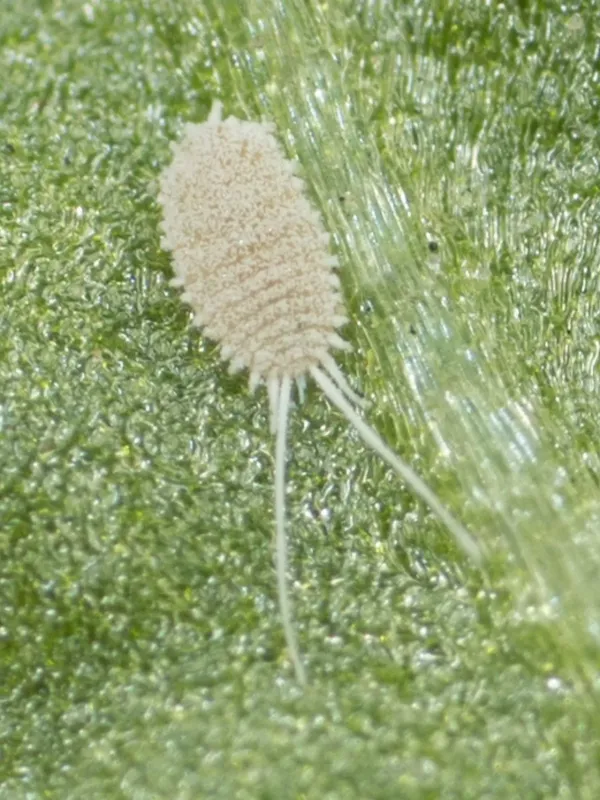
Description
How to identify
Mealybugs of the genus Crisicoccus belong to the Pseudococcidae family within the order Hemiptera. These small insects are known for their distinct white, waxy secretion that covers their bodies, providing protection from the environment.
Adult females have a soft, elongated oval body and move slowly across the host plant surfaces. They often hide in plant crevices, making them challenging to spot during initial inspections.
Accurate species identification often requires a microscopic analysis of the insect's morphological features, specifically the structure of its legs and sensory pores on the body.
The first-instar nymphs, commonly referred to as "crawlers," are highly mobile and serve as the primary stage for spreading to other parts of the plant or nearby crops.
Adult males are winged and short-lived, as they do not feed; their life cycle is strictly dedicated to finding a mate to reproduce with the sessile females.
What it damages
Crisicoccus species are polyphagous, meaning they attack a wide range of plants, including ornamental flowers, fruit trees, and various indoor vegetable crops.
By piercing and sucking phloem sap, these mealybugs drain the plant's nutrients, which leads to stunted growth, leaf chlorosis, and premature wilting.
The excretion of honeydew promotes the growth of sooty mold, a fungus that covers leaves and drastically reduces the efficiency of photosynthesis.
Severe infestations cause malformation of new shoots and fruit drop, resulting in significant economic losses for commercial growers and home gardeners alike.
Because they often infest root systems and stems near the soil line, damage can sometimes remain undetected until the plant shows signs of irreversible decline.
When it appears
The development and activity of the Crisicoccus mealybug are highly dependent on temperature, with warmer conditions significantly accelerating the reproduction cycle.
In greenhouses and interior settings, these pests can thrive year-round, as the stable environment prevents them from entering a dormant phase.
Springtime often sees the emergence of overwintering populations, which migrate to young, succulent shoots to establish new colonies for the upcoming season.
During the summer, the population density can peak rapidly if not kept under control, often resulting in multiple overlapping generations.
Monitoring should be most frequent during periods of fast vegetative growth, as this is when the plants are most vulnerable to feeding damage.
Signs of infestation
The most recognizable sign of an infestation is the presence of white, cotton-like masses clustered in plant nodes or on the undersides of leaves.
Sticky residue on the foliage indicates honeydew secretion, which often appears shiny and attracts ants, creating a secondary pest management issue.
A black, powdery layer of sooty mold on the plant surface is a strong indicator of an established mealybug colony that has been feeding for some time.
Wilted or yellowing leaves combined with overall plant lack of vigor are common physiological responses to the ongoing sap extraction by the bugs.
- White waxy tufts on stems
- Sticky honeydew patches
- Sooty mold accumulation
- Distorted growth patterns
Control measures
Control strategies for Crisicoccus involve a mix of chemical systemic treatments, which are the most effective for reaching insects hidden inside plant tissues.
Regular sanitation, including the pruning and safe disposal of heavily infested plant material, is essential to minimize the total population in the area.
In greenhouse environments, biological control agents such as predatory beetles or parasitic wasps can be introduced to manage population numbers naturally.
Contact insecticides often show limited efficacy due to the protective waxy layer, so choosing systemic products or oil-based treatments is recommended.
Consistent monitoring and early detection are key; implementing sticky traps and routine visual inspections will prevent small outbreaks from becoming unmanageable.
Taxonomy
- Latin name
- Crisicoccus
- Order
- Hemiptera (bugs, aphids, leafhoppers)
- Family
- Pseudococcidae
- EPPO code
- CRIZSP
Discussion
No discussions yet — be the first.