
Mealybug Coccidohystrix insolita
Coccidohystrix insolita
Description
How to identify
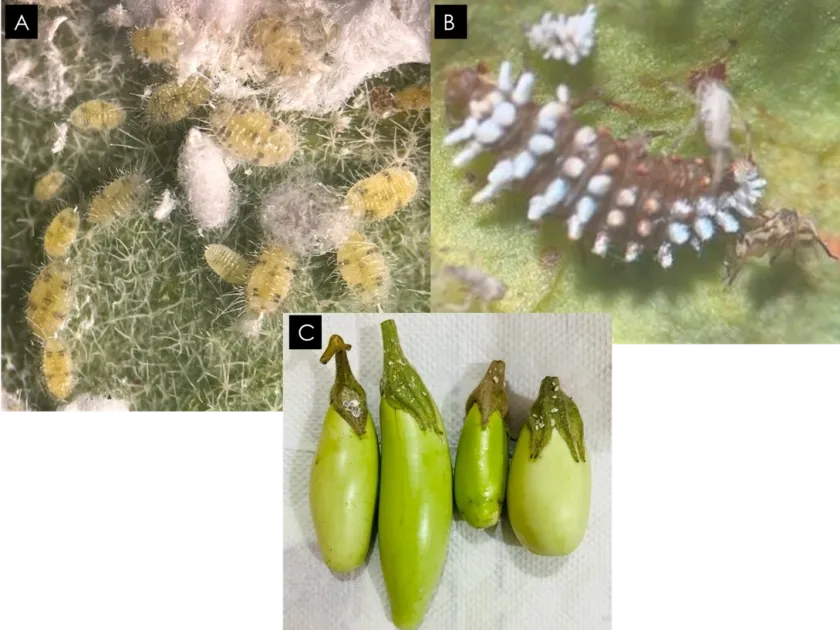
Coccidohystrix insolita belongs to the family Pseudococcidae and the order Hemiptera. This pest is easily recognized by its appearance: adult bodies are covered in a white, powdery wax secretion, which protects them and gives them their common name.
Adult females are typically wingless and oval-shaped, while males are small, winged, and highly mobile, primarily focused on finding mates. Identification often requires a specialized microscopic examination of the insect's dorsal setae and pores.
The first-instar nymphs, known as "crawlers," are very active. This is the main life stage for dispersal, as they can crawl to different parts of the host plant or be carried by wind currents to neighboring plants in the field or greenhouse.
The life cycle encompasses eggs, several nymphal stages, and the adult phase. Females lay eggs inside loose, waxy ovisacs, which serve as a protective barrier against environmental stress and the direct effects of many standard chemical treatments.
This species is well-adapted to warm climates but can thrive in indoor environments year-round. In greenhouse settings, they can complete multiple generations annually, making them a persistent threat to year-round production.
What it damages
Coccidohystrix insolita is a polyphagous pest that attacks a wide variety of agricultural and ornamental plants. It is particularly notorious for damaging solanaceous crops, such as tomatoes, peppers, and eggplants, which are staple crops in many regions.
The pest feeds on the aerial parts of the plant, preferring tender areas such as new growth, leaf axils, petioles, and the undersides of leaves. Infestations are also commonly found on stems and fruits, significantly impacting yield.
Feeding occurs by piercing the plant tissue and sucking out the phloem sap. This depletion of nutrients causes the plant to lose vigor, leading to stunted growth, leaf deformation, and the premature shedding of flower buds or young fruit.
The mealybugs excrete honeydew, a sticky substance rich in sugars. This exudate promotes the growth of sooty mold, a fungus that covers the leaf surface in a black film, which inhibits photosynthesis and reduces the plant's overall health.
Heavy infestations reduce the market value of the produce due to physical damage, the presence of insects, and the unsightly mold growth. In extreme cases, the entire plant may wither and die if not managed promptly.
Signs of infestation
The most distinctive sign of infestation is the appearance of white, cotton-like masses on the plant. These clusters consist of the insects themselves, their waxy secretions, and egg sacs, typically found in nodes and sheltered spots.
Sticky residue on leaves and fruits is another major indicator. This honeydew eventually turns black due to the accumulation of sooty mold, which creates a dirty, unappealing appearance on the foliage and stems of the affected crop.
Infested plants exhibit visible signs of stress, including yellowing leaves, curling, and early leaf drop. Apical shoots often become distorted or twisted, and fruit development is frequently affected, resulting in malformed produce.
Closer inspection of the plant's underside and axils will reveal the presence of the insects. While mealybugs are not fast movers, their sedentary nature makes them easy to identify once they start forming visible colonies.
The presence of ants is a strong indirect sign of mealybug infestation. Ants are attracted to the honeydew produced by the bugs and will often protect them from natural predators, further complicating natural biological control.
Control measures
The primary control strategy is strict sanitation: removing and destroying heavily infested plant parts, keeping greenhouses clean, and inspecting all new transplants before introducing them into the main crop area.
Cultural practices are essential for management. Maintaining appropriate humidity levels and ensuring good ventilation can prevent the environment from becoming too favorable for the pest. Healthy, well-nourished plants are better able to tolerate infestation.
Chemical control often involves systemic insecticides, particularly those in the neonicotinoid or organophosphate classes. These agents are effective because they are translocated through the plant's tissues, reaching the insects hidden under the wax.
Biological control methods include the use of natural enemies, such as predatory coccinellid beetles (e.g., Cryptolaemus montrouzieri) and specific parasitic wasps. These agents are highly effective in greenhouse environments when released at the right time.
When using pesticides, it is crucial to rotate chemical classes to prevent the development of resistance. Always adhere to local guidelines regarding application rates and pre-harvest intervals to ensure safety for the consumer and the environment.
Taxonomy
- Latin name
- Coccidohystrix insolita
- Order
- Hemiptera (bugs, aphids, leafhoppers)
- Family
- Pseudococcidae
- EPPO code
- PHENIN
Discussion
No discussions yet — be the first.