
Areca palm mealybug
Chryseococcus arecae
Description
How to identify
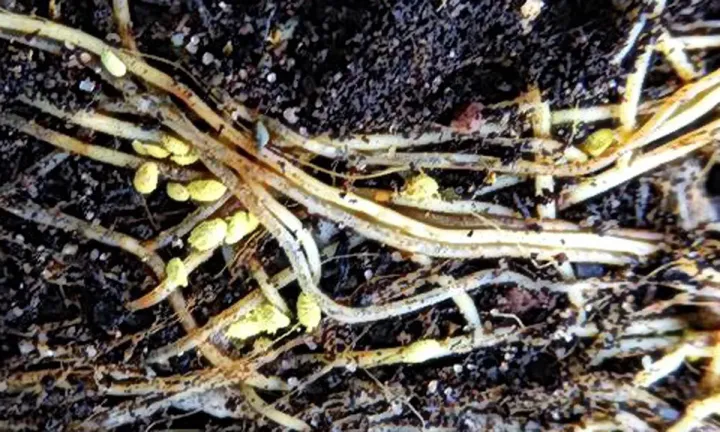
The Areca palm mealybug, scientifically known as Chryseococcus arecae, belongs to the Pseudococcidae family within the order Hemiptera. These tiny insects are notorious for their cryptic nature, often hiding in crevices.
Adult females are characterized by an elongated body covered with a powdery white wax secretion, which serves as a protective layer against environmental stress.
The mobile crawler stage consists of young nymphs that actively move across the plant surfaces to find suitable feeding sites, making them the primary agents of dispersal.
Unlike many other insects, males are rarely seen and are short-lived, while females remain stationary on the host plant once they begin feeding.
The population growth of this species is highly dependent on environmental conditions, with warm and stable temperatures in greenhouses favoring continuous reproduction.
What it damages
This pest is specialized in attacking palm species, particularly those in the Arecaceae family, which are frequently grown as decorative plants.
The mealybugs pierce plant tissues to extract sap, causing systemic weakness, stunted growth, and a loss of vigor in affected specimens.
Feeding activities result in the excretion of honeydew, a sticky substance that promotes the growth of sooty mold, blocking sunlight and reducing photosynthesis.
Severe infestations lead to yellowing leaves, foliage distortion, and potential dieback of fronds, significantly decreasing the ornamental value of the plant.
In nursery settings, this pest can cause rapid economic losses as it spreads efficiently between crowded pots if sanitation protocols are not strictly followed.
Signs of infestation
The most visible sign of an infestation is the presence of white, cotton-like masses, especially in leaf axils, near the base of stems, and on the undersides of leaves.
A shiny, sticky residue on the foliage is a telltale sign that a mealybug colony is present and actively feeding on the plant's sap.
Discolored, wilting, or drying fronds, despite regular watering, often indicate that the insect has compromised the plant's nutrient transport system.
The emergence of black sooty mold on the foliage is a secondary symptom confirming that the mealybug population has been established for some time.
If you notice ants tending to the plants, they are often attracted by the honeydew produced by the mealybugs, which acts as a secondary indicator.
Control measures
Initial control efforts should involve manual removal of visible mealybug clusters using cotton swabs dipped in rubbing alcohol or a mild soap solution.
Systemic insecticides are the most effective management strategy, as they are absorbed by the plant and kill the insects upon ingestion of the sap.
- Application of systemic insecticides containing imidacloprid.
- Frequent rinsing of the plant to physically wash away crawlers.
- Use of natural predators like Cryptolaemus montrouzieri.
- Quarantine of any new plants to prevent the introduction of the pest.
- Monitoring the plant environment for proper airflow to prevent excessive humidity.
Multiple treatment applications are necessary because the waxy layer on the eggs and adults makes them resistant to most direct contact sprays.
Sanitation is key, so ensure that tools and surfaces surrounding the affected plants are cleaned thoroughly to prevent re-infestation of the collection.
Taxonomy
- Latin name
- Chryseococcus arecae
- Order
- Hemiptera (bugs, aphids, leafhoppers)
- Family
- Pseudococcidae
- EPPO code
- CHYEAR
Discussion
No discussions yet — be the first.