
Kwon mealybug
Balanococcus kwoni
Description
How to identify
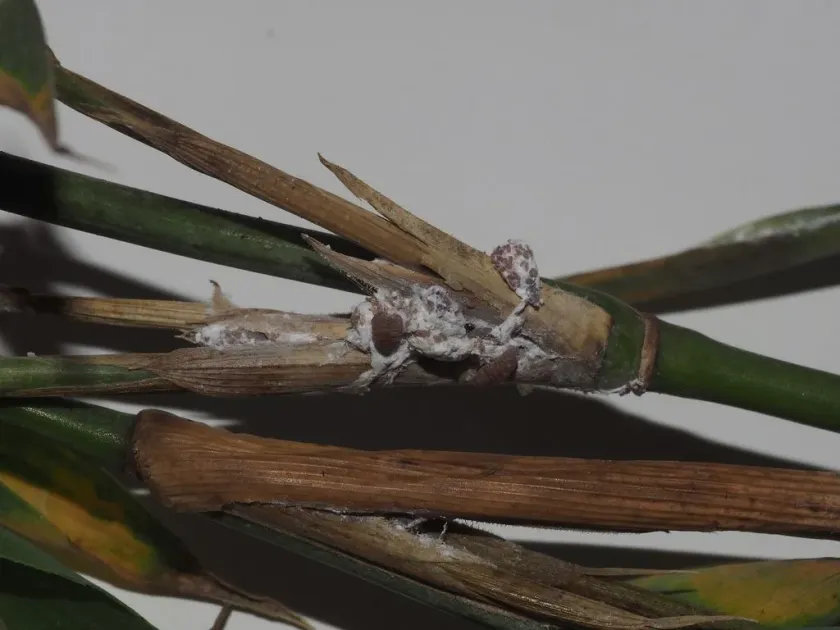
The Kwon mealybug (Balanococcus kwoni) is a member of the Pseudococcidae family. These insects are characterized by a soft body covered with a powdery white waxy secretion that provides protection against environmental stress and natural enemies.
Adult females are typically oval-shaped and relatively immobile. They prefer to hide in protected areas of the plant, such as leaf axils, bark crevices, or near the base of the stems, making them difficult to detect during the early stages of infestation.
The first-instar nymphs, commonly referred to as "crawlers," are the most mobile stage in the life cycle. They are responsible for the dispersal of the pest across the host plant or to neighboring plants, often aided by air currents or human handling.
This species displays a high level of specialization, adapting well to the microclimates of various host plants. Due to their size and cryptic behavior, populations can grow significantly before they become visible to the naked eye.
Identifying Balanococcus kwoni usually requires a morphological examination under magnification, as many mealybug species share similar physical characteristics, such as the white waxy layer covering their bodies.
What it damages
The Kwon mealybug causes damage by inserting its stylets into plant tissues to feed on phloem sap. This feeding process deprives the plant of vital nutrients and water, leading to reduced vigor and stunted development.
Feeding often causes systemic stress to the plant, manifesting as yellowing leaves, leaf curl, and the premature shedding of blossoms or fruit. These symptoms significantly decrease both the aesthetic value and the agricultural yield of the host plants.
As they feed, mealybugs excrete large quantities of honeydew, a sticky, sugary substance that coats the plant surfaces. This substance promotes the rapid growth of sooty mold, a fungus that further inhibits the plant's ability to perform photosynthesis.
The accumulation of sooty mold not only hampers the plant's metabolic functions but also degrades the quality of the produce, making it unmarketable. Heavy infestations can lead to total crop loss if left untreated.
By disrupting nutrient flow, these pests make plants more susceptible to secondary infections and environmental stressors, effectively weakening the host's overall resistance to diseases and harsh conditions.
Control measures
Managing the Kwon mealybug requires an integrated pest management (IPM) approach that prioritizes prevention and cultural controls. Regular inspection of incoming plant material is essential to keep greenhouses and fields free from the pest.
Cultural methods include the prompt removal and destruction of infested plant parts to reduce the source of the population. Proper watering and nutrient management help maintain plant health, allowing them to withstand minor pest pressure.
Biological control agents, such as predatory beetles or parasitic wasps, are highly effective in controlled environments. These natural enemies can keep mealybug populations below the economic injury level without the need for intensive chemical use.
When chemical intervention is necessary, systemic insecticides are preferred because they travel through the plant's vascular system. Using surfactants or horticultural oils helps to penetrate the waxy coating, increasing the effectiveness of the treatment.
- Regular monitoring using yellow sticky traps and visual inspection.
- Application of systemic insecticides targeting the nymphs.
- Manual cleaning of surfaces with insecticidal soap solutions.
Taxonomy
- Latin name
- Balanococcus kwoni
- Order
- Hemiptera (bugs, aphids, leafhoppers)
- Family
- Pseudococcidae
- EPPO code
- BNCCKW
Discussion
No discussions yet — be the first.