
Balanococcus
Balanococcus
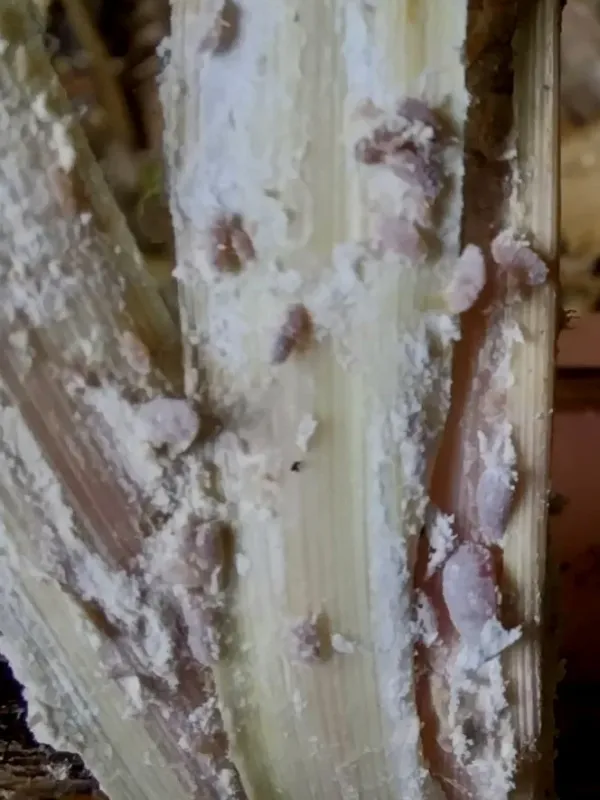
Description
How to identify
Balanococcus is a genus of insects within the family Pseudococcidae, commonly known as mealybugs. These small, sap-sucking pests are characterized by the presence of a white, waxy, powdery secretion covering their bodies.
Adult females are typically sedentary, often clustering in protected areas of the host plant, while their bodies may be elongated or oval-shaped depending on the specific species.
Because these insects are small and often camouflage within the plant's natural crevices, they are frequently overlooked until the infestation has reached a significant level.
The life cycle involves an egg stage, several nymphal instars, and the adult stage. The first-instar nymphs, known as crawlers, are the most active phase and are responsible for colonizing new parts of the plant.
Identification at the species level requires microscopic examination of key morphological characters, such as the arrangement of tubular ducts and sensory pores on the insect's cuticle.
What it damages
Balanococcus species are polyphagous pests, capable of attacking a diverse range of ornamental plants, subtropical crops, and greenhouse vegetation.
These mealybugs preferentially settle in hidden spots such as leaf axils, underneath bark flakes, near the root collar, and along the veins on the undersides of leaves.
By extracting plant sap, they disrupt the vascular transport of nutrients, which weakens the plant and stunts overall development and vitality.
During feeding, the insects inject salivary toxins into the plant tissues, leading to leaf yellowing, chlorosis, and in severe cases, premature drop of leaves and fruits.
The accumulation of honeydew secreted by the mealybugs provides a substrate for sooty mold, which further interferes with photosynthesis by blocking sunlight.
When it appears
In temperature-controlled greenhouse environments, Balanococcus can remain active and reproduce throughout the year, with overlapping generations.
Outdoor populations are highly dependent on climatic conditions and typically experience peak activity during warm, dry summer months.
Humidity plays a critical role in the survival of young crawlers; moderate to high humidity levels often facilitate the successful establishment of new colonies.
The pest is most frequently introduced into new areas through infested nursery stock, cuttings, or potted plants being traded between regions.
Winter survival is typically achieved through egg clusters or nymphs residing in protected, debris-covered areas at the base of the host plants.
Signs of infestation
The most distinctive sign of a Balanococcus infestation is the presence of white, cotton-like masses on the stems, leaves, or roots of the plant.
Sticky residue, known as honeydew, on leaf surfaces or the floor beneath the plant indicates the presence of heavy sap-sucking activity by the insects.
Plants often exhibit stunted growth, distorted leaf shapes, or yellowing, which suggests that the systemic flow of nutrients has been compromised.
The presence of ants patrolling specific areas of the plant is a strong indicator of a mealybug infestation, as they are attracted to the sugary honeydew.
Secondary colonization by black sooty mold fungus on the leaves and stems confirms the presence of honeydew-producing pests like mealybugs.
Control measures
Effective management requires an integrated pest management (IPM) approach that combines cultural, biological, and chemical control methods.
Strict quarantine protocols should be applied to all incoming plant materials to prevent the introduction of new populations into the greenhouse or field.
Systemic insecticides are generally the most effective chemical intervention, as they allow the plant to distribute the active ingredient throughout its vascular system.
- Regular monitoring of plant health and visual inspections for cottony masses.
- Introduction of natural predators such as ladybirds or parasitoid wasps.
- Mechanical removal or washing of plants with mild soap or alcohol solutions.
- Removal and destruction of highly infested plant parts to reduce the total pest load.
Taxonomy
- Latin name
- Balanococcus
- Order
- Hemiptera (bugs, aphids, leafhoppers)
- Family
- Pseudococcidae
- EPPO code
- BNCCSP
Discussion
No discussions yet — be the first.