
Antonina socialis
Antonina socialis
Description
How to identify
Antonina socialis is a specialized insect pest belonging to the family Margarodidae (giant scale insects). It is commonly found in grassy habitats and can occasionally affect cereal crops.
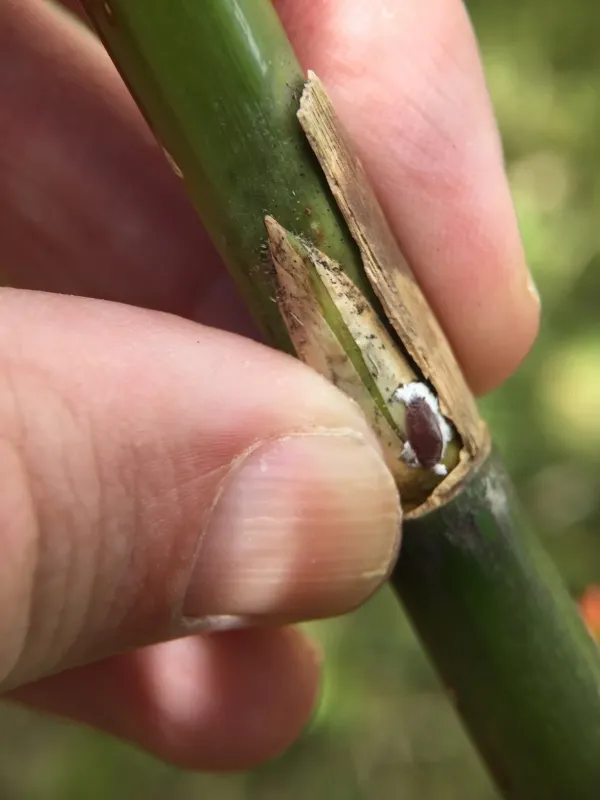
The adult females are wingless, sedentary, and often lack legs. They are characterized by their circular body shape and are covered in a dense, white waxy secretion that acts as a protective shield against predators and environmental stress.
Males are rarely observed in this species; they possess wings and are responsible for fertilization. However, the lifecycle is primarily dominated by the stationary female stages.
The mobile stage of the lifecycle is the first-instar larva, known as a "crawler." These larvae are responsible for the dispersal of the infestation to new plants or fields via wind or plant contact.
This species belongs to the order Hemiptera. Its cryptic nature makes it difficult to detect during early stages of infestation, as it prefers hidden locations on the host plant.
What it damages
Antonina socialis primarily infests various grass species. It feeds by inserting its mouthparts into the plant tissue, specifically targeting the sap flow.
Feeding occurs mostly in the leaf axils or under the leaf sheaths. This extraction of nutrients weakens the plant and disrupts its metabolic functions, particularly photosynthesis.
Affected plants often show stunted growth, yellowing foliage, and a decrease in overall vigor. In severe infestations, young shoots may become deformed or necrotic.
The presence of the pest also promotes the growth of sooty mold, which develops on the honeydew excreted by the insects. This further inhibits the plant's ability to process sunlight.
Crop yield loss is attributed to the reduced photosynthetic area and the diversion of nutrients from grain development to the maintenance of damaged tissue.
When it appears
The seasonal activity of Antonina socialis is strictly synchronized with the phenology of its host grasses. Overwintering typically occurs in the larval stage, sheltered in the base of the plant.
In spring, as temperatures rise, the larvae resume feeding and development. This period is critical for crop monitoring, as populations begin to grow rapidly.
During the summer, the lifecycle continues with the production of new generations. The rate of development is highly dependent on ambient temperature and moisture levels.
Autumn triggers the transition to overwintering. The insects move to more protected areas of the host plant to survive the impending cold weather.
Depending on the climatic zone, the species may complete one or more generations per year, with activity peaking during the most favorable growth conditions for the host plants.
Signs of infestation
The most prominent sign of an infestation is the appearance of white, cotton-like masses on the stems or at the base of the leaves, which are the wax secretions of the females.
Close inspection of the leaf sheaths often reveals the presence of sedentary, bumpy-looking insects covered in white powder, firmly attached to the plant surface.
Premature chlorosis or yellowing of the leaves is a common symptom. Infested fields may show patches of stunted or weaker plants compared to unaffected areas.
The sticky honeydew excretions create a damp surface that often becomes black due to the secondary colonization of sooty mold fungi.
Structural deformities, such as twisted stems or poorly developed ears in cereals, are clear indicators that the infestation level is high enough to affect plant development.
Control measures
Management of Antonina socialis starts with good agricultural practices, such as removing wild grasses that can act as reservoirs for the pest during the off-season.
Crop rotation is a highly recommended strategy to break the lifecycle of the insect and reduce the population pressure on subsequent crops.
If chemical control is necessary, systemic insecticides are the most effective choice. These treatments should be applied when the crawlers are active and the insects are most vulnerable.
Encouraging natural enemies, such as ladybird beetles and parasitic wasps, can provide biological control that keeps the pest population below the economic injury level.
Regular field scouting is essential for early detection. Targeted applications of insecticides on identified hot spots can prevent the spread of the infestation across the entire field.
Taxonomy
- Latin name
- Antonina socialis
- Order
- Hemiptera (bugs, aphids, leafhoppers)
- Family
- Pseudococcidae
- EPPO code
- ANTNSO
Discussion
No discussions yet — be the first.