
Grass mealybug
Antonina graminis
Description
How to identify
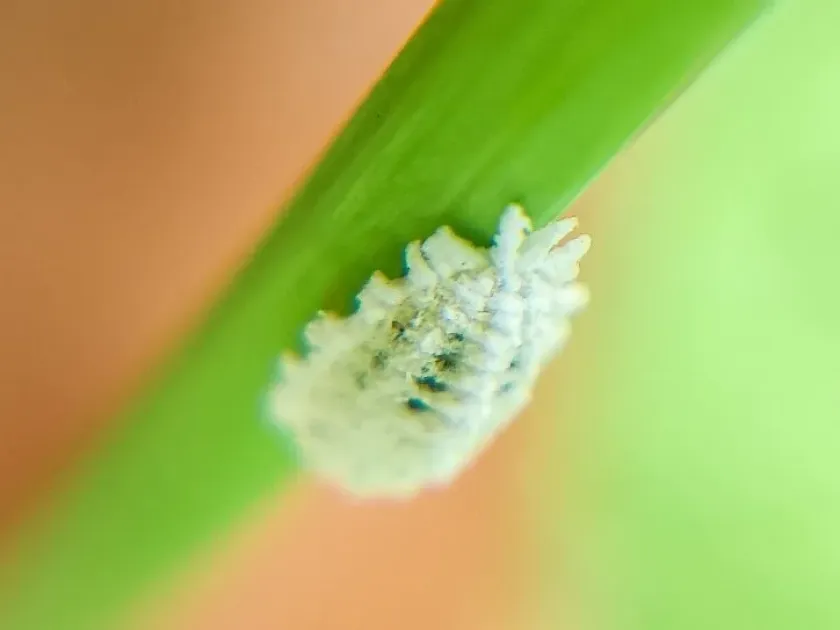
The grass mealybug (Antonina graminis) is a member of the Pseudococcidae family, known for its specific host range focusing on various grass species. Adult females are characterized by their rounded shape and a distinct white waxy covering.
These insects are sessile, typically embedding themselves in leaf axils or under the protective sheaths of grass stems. Their ability to blend into the plant structure makes early detection challenging for farmers and turf managers.
First-instar nymphs, known as crawlers, are the mobile stage responsible for spreading the infestation. They can move between plants or be transported by wind, water, or machinery.
Males are rarely seen in the field; their primary role is reproduction, which occurs quickly, making the female population the main focus of pest management strategies.
Upon settling, the insects begin to produce protective secretions that form a white, cotton-like mass, which is the most reliable visual indicator of their presence.
What it damages
The pest primarily affects a wide range of graminoid plants, including essential cereal crops like wheat, barley, and various forage grasses used in pastures.
Damage is caused by the extraction of large volumes of phloem sap, which deprives the plant of necessary nutrients and leads to severe physiological stress.
In lawns and recreational turf, heavy infestations can result in significant thinning of the grass cover, causing aesthetic damage and weakening the root system.
Pasture productivity suffers significantly as the grass loses its nutritional value and overall biomass production declines, impacting livestock grazing capabilities.
Secondary infections often take hold in the weakened tissues, as the feeding punctures created by the mealybug serve as entry points for various fungal and bacterial pathogens.
When it appears
The life cycle of the grass mealybug is highly dependent on climate, with population growth accelerating as spring temperatures begin to rise consistently.
Under favorable conditions, multiple generations can occur throughout the growing season, leading to a rapid increase in population density if not managed.
Summer marks the period of highest crawler activity, during which they actively seek out healthy, uncolonized plants to establish new feeding sites.
Autumn brings a decline in reproductive activity, and the population shifts toward preparing for the colder months, transitioning into overwintering life stages.
Overwintering usually occurs at the base of the plant or in root crowns, where females are protected from frost by their waxy, insulating shells.
Signs of infestation
The initial signs of infestation often mimic drought symptoms, with grass blades turning yellow, wilting, and eventually showing signs of necrosis despite regular irrigation.
Close examination of the stem nodes often reveals the characteristic white, fluffy waxy deposits that house the mealybug colonies.
Plants affected by the pest often exhibit stunted growth, with shortened internodes and a generally unthrifty appearance compared to healthy patches.
- Patchy yellowing and browning of the grass canopy.
- Presence of white waxy masses within stem sheaths.
- Reduced overall vigor and dieback of grass patches.
If left unmanaged, the infestation can lead to permanent damage in sections of the field or lawn, creating bare patches that are slow to recover.
Control measures
Effective management of the grass mealybug typically involves a combination of chemical intervention and cultural practices to keep populations below threshold levels.
Systemic insecticides are generally the preferred chemical solution, as they move within the plant tissue to reach insects sheltered under protective waxy layers.
Cultural control strategies include the regular mowing and proper disposal of infested grass clippings to remove the source of the infestation from the field.
Strict monitoring of incoming sod or planting material is essential to prevent the introduction of the pest into previously clean agricultural or landscaping areas.
Biological control agents, such as specific parasitic wasps or predatory beetles, can play a vital role in suppressing mealybug populations in balanced environments.
Taxonomy
- Latin name
- Antonina graminis
- Order
- Hemiptera (bugs, aphids, leafhoppers)
- Family
- Pseudococcidae
- EPPO code
- ANTNGR
Discussion
No discussions yet — be the first.