
Trichomalus perfectus
Trichomalus perfectus
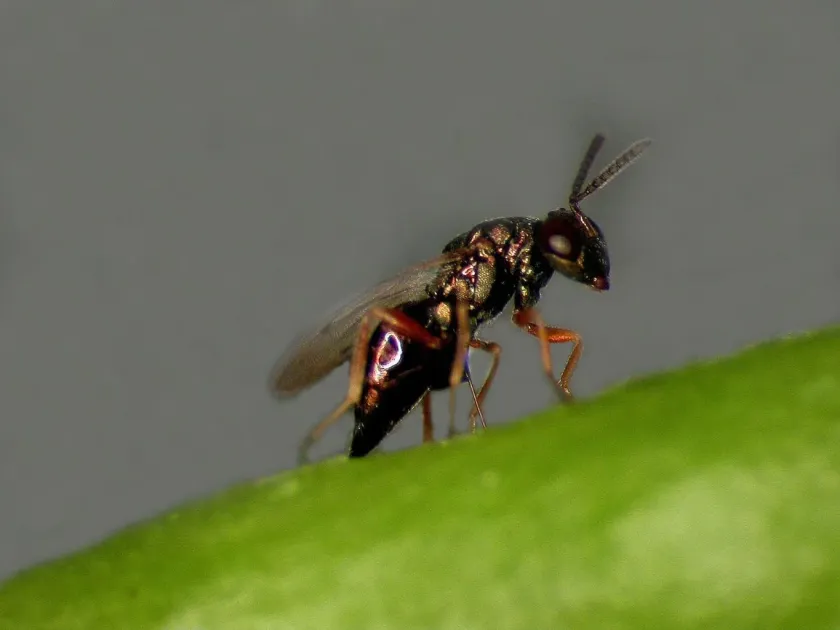
Description
How to identify
Trichomalus perfectus is a member of the Hymenoptera order and the Pteromalidae family. It is a specialized parasitoid wasp that plays a significant role in biological pest control within agricultural ecosystems.
The adult insect is small with a distinct metallic appearance. It is biologically adapted to locate and parasitize larvae of various weevil species associated with brassica crops.
The lifecycle of Trichomalus perfectus is closely synchronized with the phenology of its host, making it a critical component of natural population regulation in rapeseed and cabbage fields.
Visual identification requires entomological expertise, as these wasps are often indistinguishable from other related parasitoid species without microscopic examination.
Environmental stability and the absence of non-selective pesticides are crucial for maintaining healthy populations of this beneficial insect in crop production areas.
What it damages
The damage associated with this species is inherently linked to the presence of host larvae, such as those of the cabbage seed pod weevil. The host larvae feed on the plant tissues, leading to severe physiological stress.
The primary hosts infest the stems or pods of brassica crops, creating tunnels that weaken the plant structure and increase susceptibility to secondary bacterial infections.
The presence of Trichomalus perfectus serves as an indicator that the host pest population is established within the crop canopy.
While the wasp itself is a beneficial parasitoid, the collective damage caused by the weevil larvae it controls leads to reduced seed yield and lower oil content in affected crops.
Management must focus on the primary pest to mitigate the damage while simultaneously protecting the parasitoid population that provides natural control.
Control measures
Integrated Pest Management (IPM) is the most effective approach for managing fields where Trichomalus perfectus is present. Minimizing broad-spectrum insecticide usage is essential to protect these natural predators.
Cultural practices, including proper crop rotation and the destruction of crop residues post-harvest, are highly effective in breaking the lifecycle of the hosts.
The maintenance of non-crop vegetation or field margins can provide necessary floral resources for the adult parasitoids, increasing their longevity and reproductive success.
- Monitor pest density using pheromone traps.
- Avoid spraying during peak flowering periods to protect beneficial insects.
- Utilize selective insecticides that have minimal impact on parasitoid populations.
By prioritizing ecological balance, farmers can harness the natural regulating power of parasitoid wasps to achieve sustainable crop protection goals.
Taxonomy
- Latin name
- Trichomalus perfectus
- Order
- Hymenoptera
- Family
- Pteromalidae
- EPPO code
- TRISPE
Discussion
No discussions yet — be the first.