
Trichomalus herbidus
Trichomalus herbidus
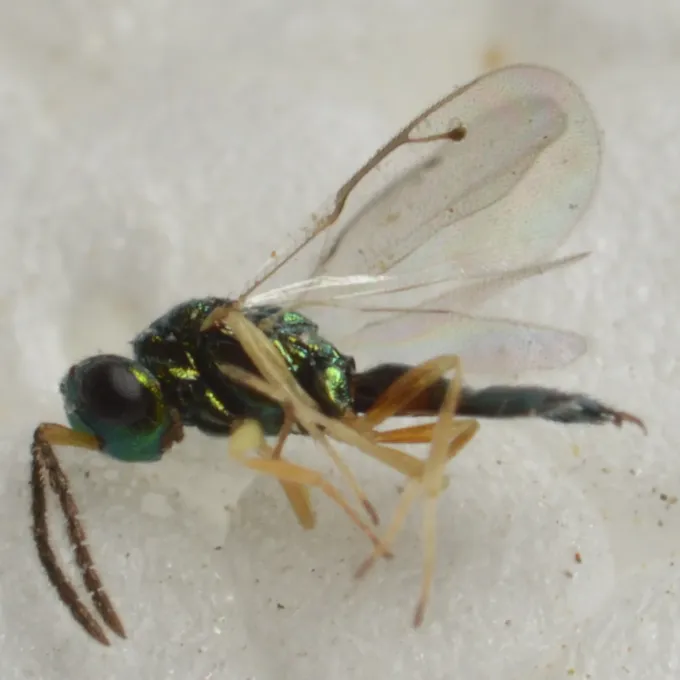
Description
How to identify
Trichomalus herbidus is a species belonging to the order Hymenoptera and the family Pteromalidae, known for its complex ecological interactions.
These insects are typically very small, requiring specialized entomological equipment for precise species identification in agricultural settings.
The adults are often characterized by a metallic green or bluish-green sheen, which is a common trait among many species of this wasp family.
Morphological identification focuses on the structure of the antennae, wing venation, and the thoracic anatomy of the specimens collected.
Recognizing this species is essential for agronomists, as its role in the ecosystem can shift between beneficial and harmful depending on population density.
What it damages
The primary hosts for this species are plants within the Brassicaceae family, including economically significant crops like rapeseed and mustard.
Damage to the crop is usually associated with the larval stage, which feeds on the generative organs of the plants during their development.
Economic losses occur due to the destruction of floral buds, leading to stunted pod development and reduced overall seed yields at harvest.
Plants affected by the insect often show irregular growth patterns and a lower capacity to form viable pods during the flowering stage.
In high-density infestations, the cumulative damage can significantly impact the profitability of the rapeseed production cycle.
When it appears
The activity of Trichomalus herbidus is tightly linked to the phenology of its host plants, with peak activity during the budding phase.
Adults emerge from their overwintering sites in the soil or crop debris as temperatures rise in the early spring season.
Multiple generations can occur throughout the growing season, necessitating ongoing monitoring from the early vegetative phase to flowering.
The life cycle is synchronized with the availability of host insects or plant tissues, which dictates the insect's movement within the field.
As temperatures decline toward the end of the season, the population decreases, and individuals seek protected areas to survive the winter.
Signs of infestation
Initial signs of infestation include tiny puncture marks on the buds, which may be difficult to detect without a magnifying lens.
Premature yellowing and desiccation of unopened buds serve as a clear indicator of larval feeding activity within the floral structures.
A reduction in the number of healthy flowers on the main raceme often suggests that the pest has established itself within the crop.
Scouting for adult wasps using sweep nets in the early morning provides early warning of potential infestation levels before damage escalates.
Dissecting damaged buds often reveals internal damage and the presence of larvae or associated waste products from their feeding activity.
Control measures
Integrated pest management strategies are crucial for maintaining populations of Trichomalus herbidus below the economic injury level.
- Implement strict crop rotation schedules to break the pest's life cycle.
- Control volunteer cruciferous weeds that serve as alternative hosts.
- Monitor populations using yellow sticky traps placed at the height of the canopy.
- Apply selective insecticides only when thresholds are exceeded to protect pollinators.
- Encourage natural predator populations that can help regulate the insect count naturally.
Cultural practices, such as tillage after harvest, are highly effective in reducing the number of insects that successfully survive the winter.
Consistent field monitoring allows for timely decision-making, ensuring that protective measures are applied only when and where they are truly needed.
Taxonomy
- Latin name
- Trichomalus herbidus
- Order
- Hymenoptera
- Family
- Pteromalidae
- EPPO code
- TRISHE
Discussion
No discussions yet — be the first.