
Trichomalus
Trichomalus
Description
How to identify
The genus Trichomalus belongs to the family Pteromalidae within the order Hymenoptera. These insects are small parasitic wasps, highly specialized in targeting various stages of insect pests.
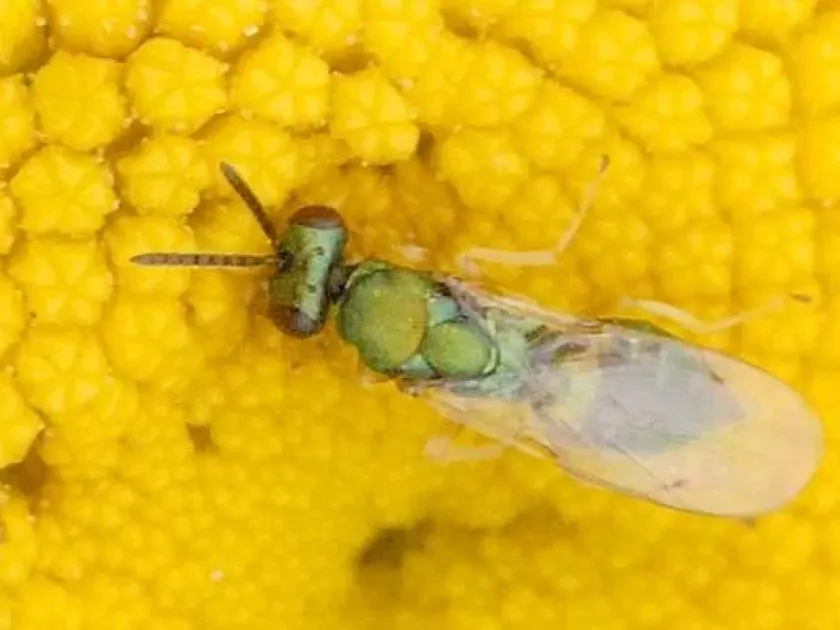
Adults typically feature a metallic-colored body, ranging from dark green to bronze tones. Their wings are clear, with a characteristic venation pattern typical of chalcidoid wasps.
Females are equipped with a thin, sharp ovipositor, which they use to insert eggs into the bodies of host larvae or into the plant tissue where the host is sheltered.
Accurate identification to the species level is complex and often requires expert entomological analysis using microscopic examination of anatomical features.
In many agricultural settings, these wasps serve as essential components of the ecosystem, helping to maintain the natural balance of insect populations.
What it damages
Trichomalus species do not cause damage to plant tissues. They are widely regarded as beneficial insects because they actively parasitize harmful pests, including various beetles and weevils.
The crops they are most commonly associated with include various brassicas, cereals, and vegetables, where they seek out larvae of hidden pests.
While the act of oviposition involves piercing plant tissues, the physical damage caused by this process is negligible and should not be considered an agronomic concern.
Mistaking these beneficial wasps for pests is a common error that can lead to unnecessary pesticide application, disrupting the natural biological control mechanisms.
Agronomists should view the presence of Trichomalus as a positive indicator of natural pest management and a reason to delay or avoid broad-spectrum chemical treatments.
When it appears
The life cycle and seasonal appearance of Trichomalus are strictly synchronized with the life cycles of their specific host species.
They are most active during the spring and summer months, corresponding with the peak activity and feeding periods of crop pests in the field.
Multiple generations can occur throughout the growing season, allowing these wasps to track host population growth and provide consistent biological pressure.
When environmental conditions become unfavorable, they enter a dormant stage or diapause, typically overwintering within the cocoons or remains of their hosts.
Field monitoring, such as sweep-net sampling during peak crop vegetative stages, can help agronomists determine the presence and density of these parasitoids.
Signs of infestation
The most reliable sign of Trichomalus activity is the presence of parasitized host larvae, which may appear motionless, discolored, or specifically mummified.
In many cases, the only visible evidence of their activity is a slight hole in the cuticle of the pest, through which the adult parasitoid has emerged.
A reduction in pest damage or a stagnation in pest population growth despite favorable weather conditions for the pest is a strong indicator of parasitoid efficacy.
Laboratory dissection of collected pest larvae is often required to confirm successful parasitism by Trichomalus and assess the percentage of population control.
Monitoring the population dynamics of the primary pest alongside the presence of its natural enemies is the best way to evaluate the impact of these wasps.
Control measures
Preservation of Trichomalus populations requires the use of selective pest management strategies that minimize harm to non-target beneficial insects.
Broad-spectrum insecticides are highly detrimental to these parasitoids and should be avoided in favor of more targeted biological or chemical control methods.
Enhancing habitat diversity by planting floral strips and maintaining hedgerows provides essential food sources for adult wasps, increasing their overall longevity and reproduction.
Implementing integrated pest management (IPM) practices helps conserve these natural enemies, reducing the long-term reliance on external chemical inputs.
Regular staff training on the identification of natural enemies ensures that beneficial parasitoids are recognized and protected within the agricultural landscape.
Taxonomy
- Latin name
- Trichomalus
- Order
- Hymenoptera
- Family
- Pteromalidae
- EPPO code
- TRISSP
Discussion
No discussions yet — be the first.