
Stenomalina gracilis
Stenomalina gracilis
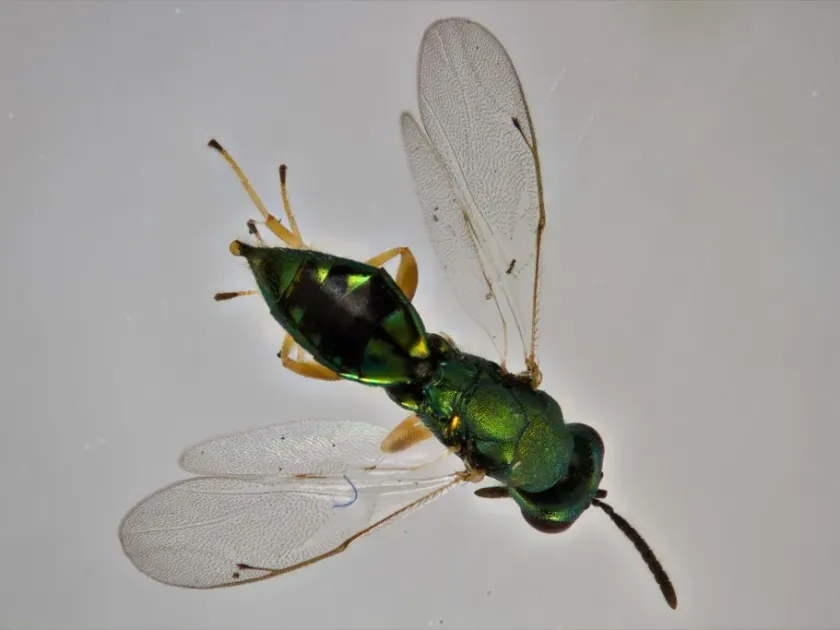
Description
How to identify
Stenomalina gracilis belongs to the order Hymenoptera and the family Pteromalidae. It is a small parasitoid wasp that plays a vital role in natural pest management within agricultural ecosystems.
The adult wasp is characterized by its small size and a distinct metallic luster on its body. The coloration usually ranges from dark green to bronze, providing excellent camouflage among foliage.
Its wings are clear with subtle venation typical of the Pteromalidae family. The antennae are elbowed, which is a key morphological trait used by entomologists to distinguish this species from other similar Hymenoptera.
As a parasitoid, its entire life cycle is intricately linked to the presence of host larvae, specifically those of various cereal flies. This insect is considered a beneficial species rather than a pest.
Detecting Stenomalina gracilis in the field is challenging due to its microscopic size and secretive behavior, often requiring specialized equipment for accurate monitoring.
What it damages
Stenomalina gracilis does not cause direct physical damage to crops. It is not a phytophagous insect and does not feed on plant tissues, leaves, or stems, meaning it does not reduce crop yield directly.
Instead, the wasp acts as a natural control agent. It parasitizes the larvae of various cereal flies that dwell within the stems of wheat, barley, and rye, thereby preventing the larvae from damaging the host plant.
Because the wasp effectively kills the pest larvae, its presence is highly desirable in cereal fields. It contributes significantly to reducing the population density of harmful hidden-stem insects.
In an agronomic context, the "damage" associated with this insect is non-existent, but improper management practices—such as excessive pesticide use—can kill these beneficial wasps, leading to secondary outbreaks of pests.
Therefore, the economic importance of this insect lies in its ability to provide free, natural biological control, which serves as an alternative to intensive chemical interventions.
When it appears
The activity of Stenomalina gracilis typically begins in the spring, corresponding with the active growing phase of cereal crops and the emergence of its host populations.
Adults are most active during the tillering and stem elongation stages of cereals. This timing is critical because it aligns with the larval development stage of the host insects inside the plants.
During the summer months, the wasps produce several generations, with populations often migrating to wild grasses bordering agricultural fields to sustain their life cycle.
As autumn approaches, activity declines as individuals seek suitable overwintering sites, such as crop debris, hedgerows, or soil cavities, entering a state of diapause until the following season.
Environmental factors, particularly temperature and humidity, dictate the duration of each life stage and the overall number of generations occurring throughout the agricultural year.
Signs of infestation
The presence of Stenomalina gracilis is indicated by the outcome of its parasitism: dead host larvae found within the stems of cereal crops during laboratory dissection.
Visually inspecting the field does not yield immediate signs of this wasp's work. Instead, farmers and agronomists can observe a localized decline in pest populations that would otherwise be damaging the crop.
Monitoring requires the use of sticky traps or sweeping nets to collect adult wasps, followed by expert identification in a laboratory setting to confirm species composition.
Samples of infested stems showing "exit holes" or evidence of hollowed-out chambers where the parasitoid has completed its development are clear indicators of successful colonization by the wasp.
Quantitative analysis of host infestation rates provides the most accurate data regarding the effectiveness of the wasp as a biological control agent in a specific field.
Control measures
Management of Stenomalina gracilis is not about eradication, but about conservation. As a beneficial organism, efforts should be made to protect its population within the agroecosystem.
The primary control strategy is to minimize the use of broad-spectrum insecticides, especially during the spring flight period when the wasps are most active and vulnerable.
Maintaining field margins and avoiding the total removal of wild grasses can provide the necessary refuge for these wasps, ensuring a stable population that can suppress pest numbers naturally.
Integrated Pest Management (IPM) practices should prioritize selective biological agents that target specific pests while leaving parasitoid wasps like Stenomalina gracilis unharmed.
By balancing soil tillage methods and reducing chemical dependence, farmers can foster a self-regulating ecosystem where these wasps keep cereal pests under effective natural control.
Taxonomy
- Latin name
- Stenomalina gracilis
- Order
- Hymenoptera
- Family
- Pteromalidae
- EPPO code
- STNMGR
Discussion
No discussions yet — be the first.