
Sphegigaster pallicornis
Sphegigaster pallicornis
Description
How to identify
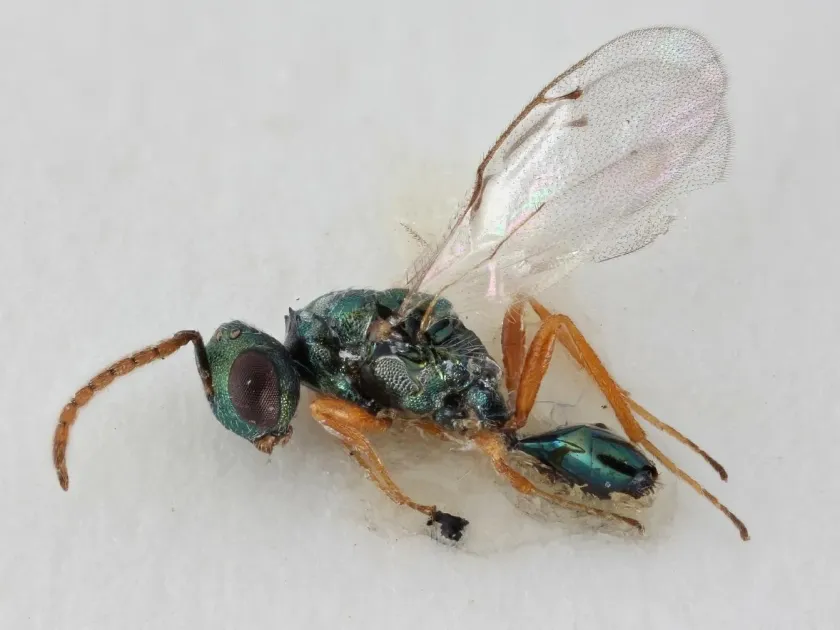
Sphegigaster pallicornis is a species of parasitic wasp belonging to the family Pteromalidae, order Hymenoptera. It is a small insect characterized by its metallic luster and intricate body structure.
Adults are typically dark-colored with specialized wing venation and antennae adapted for sensing their hosts. They are highly mobile insects that actively explore crop environments to find suitable hosts for their larvae.
As a parasitoid, its life cycle is intrinsically linked to other insects, often leaf miners or stem-boring pests. The female uses a sharp ovipositor to deposit eggs near or inside the host.
Identification of the species is challenging and usually requires taxonomic keys and microscopic inspection to distinguish it from other related chalcid wasps found in similar agroecosystems.
The biology of this species involves complex interactions with its host, where the wasp larva gradually consumes the host's body from within, ultimately emerging as an adult.
What it damages
The damage caused by Sphegigaster pallicornis is primarily indirect. As a parasitoid, its direct effect on plants is minimal, limited to minor punctures from the female's ovipositor during host searching.
However, its ecological role is significant. By parasitizing larvae of various pests, it acts as a natural regulator. Yet, if it parasitizes beneficial insects, it may interfere with biological control.
The main impact on crops is mediated through the reduction of pest population densities. When the population of Sphegigaster pallicornis is high, it can significantly lower the impact of leaf-mining insects.
Excessive pesticide use in fields can negatively affect this wasp's population, leading to a breakdown in natural pest control and potential outbreaks of primary agricultural pests.
Understanding its role as either a primary control agent or a hyperparasitoid is crucial for managing overall field health and determining the necessity of chemical interventions.
When it appears
Activity generally peaks during the spring and summer months when host populations are most active. Adults emerge from overwintering sites in synchronization with their hosts.
The insect typically overwinters in the larval or pupal stage inside the remains of its host or within soil debris, which serves as a protective habitat during cold weather.
Multiple generations can occur within a single growing season, provided that weather conditions and host availability remain favorable for reproduction and larval development.
Temperature and humidity significantly influence the timing of emergence and the duration of each life stage. High temperatures generally accelerate the metabolic processes of the wasp.
As autumn approaches, the insect prepares for diapause, entering a dormant state until the following spring, ensuring the species persists throughout the winter period.
Signs of infestation
The most distinctive sign of presence is the appearance of tiny, circular exit holes in the puparia or remnants of host insects, indicating that a wasp has successfully completed its development.
Field monitoring using yellow sticky traps or sweep netting is a common practice to track adult activity levels and assess the presence of the parasitoid within the crop canopy.
A decrease in the damage caused by leaf miners or other stem-feeding pests can serve as a positive indicator of the wasp's effective activity in the field environment.
Laboratory analysis of plant samples involves dissecting damaged tissues to count the number of parasitized hosts, providing concrete data on the parasitism rate.
Integrated Pest Management teams often look for these signs to decide whether to augment existing populations or simply protect the current natural levels of parasitoid activity.
Control measures
Preservation of existing populations is the primary goal. This involves avoiding broad-spectrum insecticides that would kill beneficial Hymenoptera along with the target pests.
Implementing Integrated Pest Management (IPM) practices, such as providing floral nectar sources, helps support adult wasps and increases their longevity and reproductive capacity.
Crop rotation and proper sanitation of crop residues reduce the overwintering capacity of pests and their associated parasitoids, helping to manage population cycles effectively.
When chemical control is unavoidable, selecting narrow-spectrum or soft pesticides that are safe for beneficial insects is vital to maintain biological balance in the field.
Regular monitoring of pest populations allows for timely interventions that minimize the impact on natural enemies, ensuring a sustainable approach to crop protection.
Taxonomy
- Latin name
- Sphegigaster pallicornis
- Order
- Hymenoptera
- Family
- Pteromalidae
- EPPO code
- SPHGFL
Discussion
No discussions yet — be the first.