
Sphegigaster
Sphegigaster
Description
How to identify
Sphegigaster is a genus of parasitoid wasps belonging to the family Pteromalidae within the order Hymenoptera. These tiny wasps are primarily known in entomology as specialized natural enemies of various insect pests.
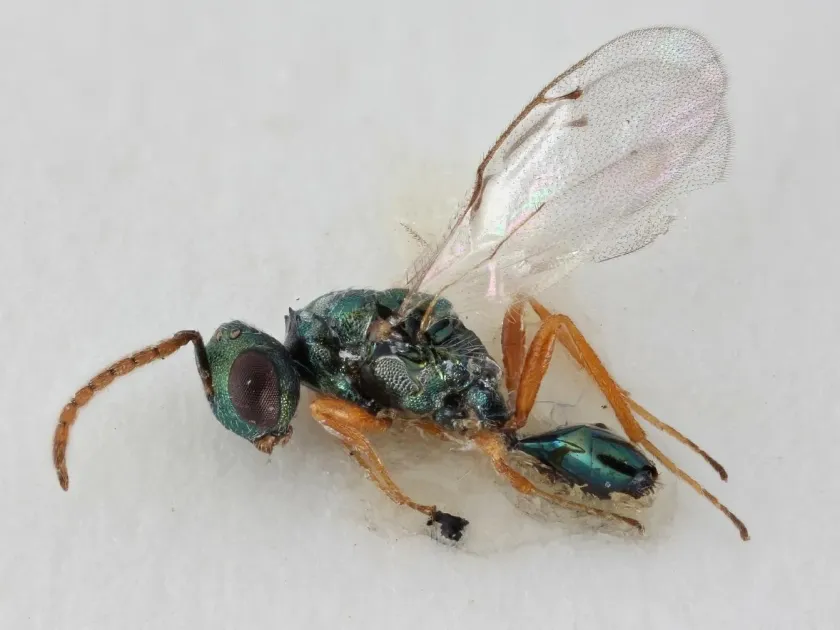
Adult Sphegigaster are small insects with a characteristic metallic luster, typical of the Chalcidoidea superfamily. Their morphology is marked by reduced wing venation, which is a key trait used by specialists for identification.
The larval stage is parasitic, typically developing inside the larvae of other insects, such as leaf-mining flies. This makes them crucial components of natural food webs within agricultural ecosystems.
Due to their small size and specific behavior, they are often overlooked in field observations. Correct identification usually requires laboratory conditions and a stereomicroscope to examine subtle morphological features.
Understanding the role of Sphegigaster is essential for modern integrated pest management, as they act as a biological filter, regulating the populations of potential crop pests.
What it damages
Sphegigaster does not inflict direct damage to crops. They are not phytophagous; they do not consume plant tissues, roots, stems, or leaves, and therefore represent no threat to the commercial yield.
Any perceived damage related to these insects is actually caused by the primary pests they parasitize. In fact, their presence is a positive indicator of natural pest control occurring within the field.
Confusing these beneficial parasitoids with pests and applying broad-spectrum insecticides can lead to secondary pest outbreaks. By eliminating the natural regulators, farmers may find themselves facing larger infestations.
They are strictly classified as entomophagous insects that contribute to the stability of the agroecosystem. Their evolutionary strategy is focused on locating and parasitizing hosts, rather than damaging the host plant.
Agricultural managers should not target Sphegigaster for eradication. Instead, they should monitor the primary pests and allow these parasitoids to perform their natural ecological function.
When it appears
The seasonal appearance of Sphegigaster is tightly linked to the life cycle of their hosts. Adult wasps emerge in spring, following the activity of their target hosts, such as leaf-mining flies.
Multiple generations may occur throughout the growing season, provided that host availability remains constant. Development rates are highly sensitive to environmental temperature and humidity.
Overwintering typically happens at the pupal stage within the host's puparium or inside plant debris. This survival strategy allows them to emerge early in the following season when host pests become active.
Peak flight periods are often observed during the rapid growth phases of crops, aligning with the periods when hosts are most vulnerable to parasitism.
Monitoring these insects requires regular field sampling. However, due to their small size, their abundance is better estimated through standardized trap techniques rather than simple visual counting.
Signs of infestation
Signs of Sphegigaster activity are often found through the inspection of leaf mines or galleries formed by host larvae. If the host larvae appear sluggish or cease feeding, it suggests successful parasitism.
The absence of damage, despite the presence of host-related symptoms, indicates that parasitoids like Sphegigaster are effectively controlling the population of the primary pest.
Field observations might reveal tiny emergence holes in the puparia of pests, which are clear signs that a parasitoid has successfully completed its development and emerged.
It is important for agronomists to distinguish between the damage caused by phytophagous pests and the presence of natural enemies. The former requires intervention, while the latter is a signal to conserve the ecosystem.
A healthy field with active parasitoids will show a significant reduction in pest-induced leaf damage over the course of the season, even without heavy insecticide use.
Control measures
There are no control measures for Sphegigaster, as it is considered a beneficial insect. Protection and conservation of their habitats are the recommended strategies in modern agriculture.
Farmers should avoid unnecessary pesticide applications to prevent the decimation of beneficial wasp populations. If chemical control is inevitable, selecting selective products that are safer for parasitoids is highly advised.
Maintaining floral borders and hedgerows around crop fields can provide supplementary food sources and refugia for adult wasps, increasing their efficacy as biological control agents.
Implementing an Integrated Pest Management (IPM) approach is the best way to utilize the natural services provided by Sphegigaster. This includes regular scouting and threshold-based decision making.
- Minimize the use of broad-spectrum insecticides.
- Preserve natural non-crop vegetation within the farm landscape.
- Adopt selective pest management strategies.
- Focus on monitoring host populations rather than the parasitoids themselves.
Taxonomy
- Latin name
- Sphegigaster
- Order
- Hymenoptera
- Family
- Pteromalidae
- EPPO code
- SPHGSP
Discussion
No discussions yet — be the first.