
Spalangia nigroaenea
Spalangia nigroaenea
Description
How to identify
Spalangia nigroaenea is a species of parasitic wasp belonging to the family Pteromalidae within the order Hymenoptera.
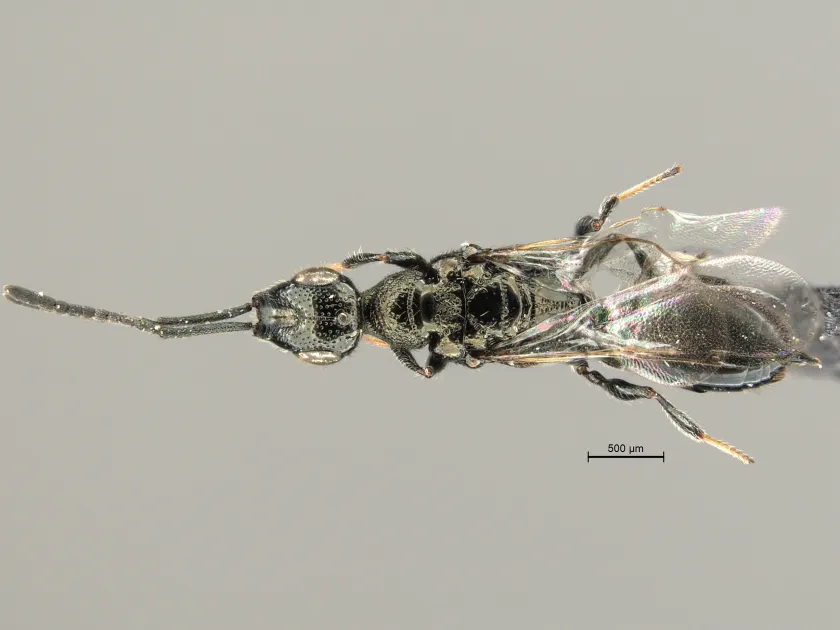
Adults are small, characterized by a shiny black body, which distinguishes them as part of a group of highly effective parasitoids.
They possess specialized mouthparts and an ovipositor designed to penetrate tough surfaces, allowing them to locate and parasitize host pupae.
The morphology of these insects is specifically adapted for navigating through organic debris and manure, where they find their targets.
Their small size and dark coloration allow them to remain largely undetected while patrolling areas with high fly activity.
What it damages
Spalangia nigroaenea is not considered a crop pest as it does not feed on any parts of cultivated plants.
In fact, this insect is a beneficial species that provides biological control by preying on pupae of filth-breeding flies.
It specifically targets species like the house fly (Musca domestica), which are common pests in livestock and poultry facilities.
By parasitizing the pupal stage, the wasp prevents the development of the next generation of nuisance flies.
Consequently, it serves as a valuable tool for integrated pest management in animal husbandry, reducing the need for chemical fly control.
When it appears
The population activity of these wasps is highly dependent on ambient temperature and the availability of suitable host stages.
During the warmer months, higher temperatures facilitate faster development cycles and increased parasitic activity in natural environments.
In temperature-controlled indoor facilities such as dairy farms, they can remain active throughout the entire year.
The lifecycle duration is strictly tied to the environmental conditions and the developmental speed of their insect hosts.
Peaks in their activity are generally synchronized with the seasonal spikes of fly populations in the immediate area.
Signs of infestation
Signs of their presence are primarily found through the examination of fly puparia collected from manure or decaying matter.
Small, round exit holes on the shell of the pupa indicate that an adult Spalangia wasp has successfully emerged.
A noticeable decrease in adult fly density within a stable or barn is a primary indicator of successful parasitic establishment.
Sampling programs using trap collections can confirm the presence and relative abundance of the wasp in specific livestock zones.
Direct visual observation is difficult due to their behavior, but the impact of their activity is easily measured by fly suppression.
Control measures
As a beneficial natural enemy, Spalangia nigroaenea should be protected rather than controlled with insecticides.
Management strategies should focus on fostering these populations by minimizing the use of broad-spectrum pesticides.
Maintaining sanitary conditions and proper manure management helps concentrate the wasps in fly-breeding hotspots for better efficacy.
In cases where fly control is necessary, select chemical treatments that do not adversely impact parasitic wasp populations.
- Avoid heavy insecticide spraying near fly breeding grounds.
- Implement integrated management of livestock waste.
- Monitor parasitization rates to assess control effectiveness.
Taxonomy
- Latin name
- Spalangia nigroaenea
- Order
- Hymenoptera
- Family
- Pteromalidae
- EPPO code
- SPALMU
Discussion
No discussions yet — be the first.