
Spalangia drosophilae
Spalangia drosophilae
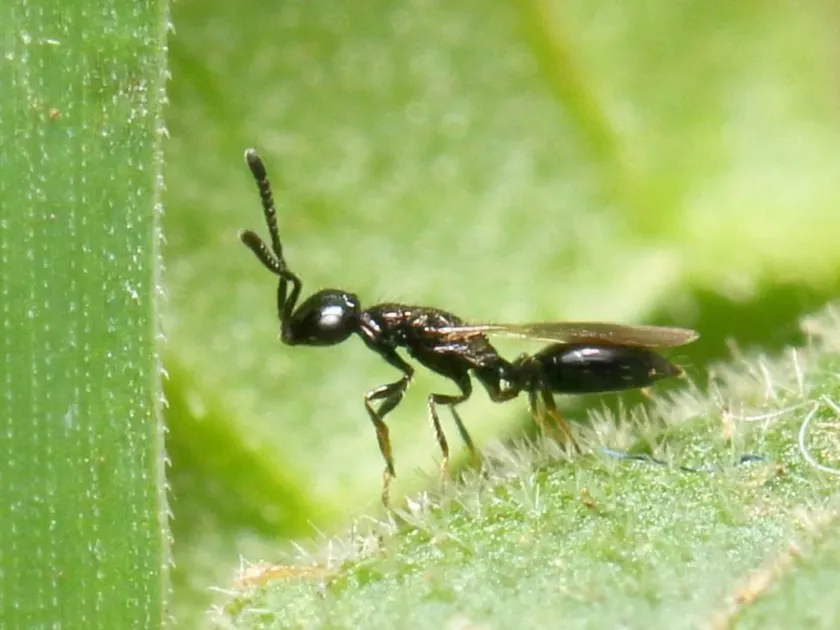
Description
How to identify
Spalangia drosophilae is a species of parasitic wasp belonging to the family Pteromalidae within the order Hymenoptera.
These wasps are recognized by their small, often dark, and metallic-lustered bodies, typical of the Pteromalid family members.
Adult females use specialized ovipositors to locate and deposit eggs directly inside the puparia of various fly species, including Drosophilids.
The life cycle is holometabolous, progressing through egg, larval, pupal, and adult stages, with the entire development occurring inside the host.
The morphology of the wing venation and thoracic punctation serves as a primary diagnostic feature for entomologists identifying the species.
What it damages
Spalangia drosophilae is classified as a beneficial insect rather than a plant pest, as it does not consume plant tissues.
Its ecological function is to act as a parasitoid, targeting fly pupae that could otherwise develop into pests of various crops and fruits.
By reducing fly populations, this wasp helps to prevent secondary infections and damage caused by larvae in decaying vegetable matter.
It exerts natural pressure on pest populations, providing a form of free ecosystem service in agricultural and horticultural settings.
There is no evidence that this species causes harm to plant roots, leaves, or reproductive structures in commercial farming.
When it appears
The seasonal occurrence of the wasp is dictated by the availability of host fly pupae and the ambient environmental temperature.
In controlled environments such as greenhouses or storage facilities, the wasp can remain active throughout the year given sufficient hosts.
In outdoor agricultural settings, populations typically peak during the warm summer months when organic decomposition is most prevalent.
The parasitoid is most effective when temperatures range between 20°C and 28°C, which align with the peak activity of many host flies.
As colder weather approaches, the development cycle slows significantly, and the wasp may overwinter in the pupal stage within the host casing.
Control measures
Standard agronomic practices do not require the control of Spalangia drosophilae, as it is considered a useful natural enemy.
If chemical pest control is necessary, practitioners should select products that are least harmful to beneficial Hymenoptera populations.
Management should focus on sanitation, such as removing overly moist organic waste, to regulate host fly populations naturally.
Integration of biological control programs involves monitoring the presence of parasitoids before applying any broad-spectrum insecticides.
- Minimize insecticide use during active foraging periods.
- Maintain farm hygiene to limit excessive host fly breeding.
- Use selective chemicals that preserve beneficial parasitoid populations.
Taxonomy
- Latin name
- Spalangia drosophilae
- Order
- Hymenoptera
- Family
- Pteromalidae
- EPPO code
- SPALDR
Discussion
No discussions yet — be the first.