
Spalangia cameroni
Spalangia cameroni
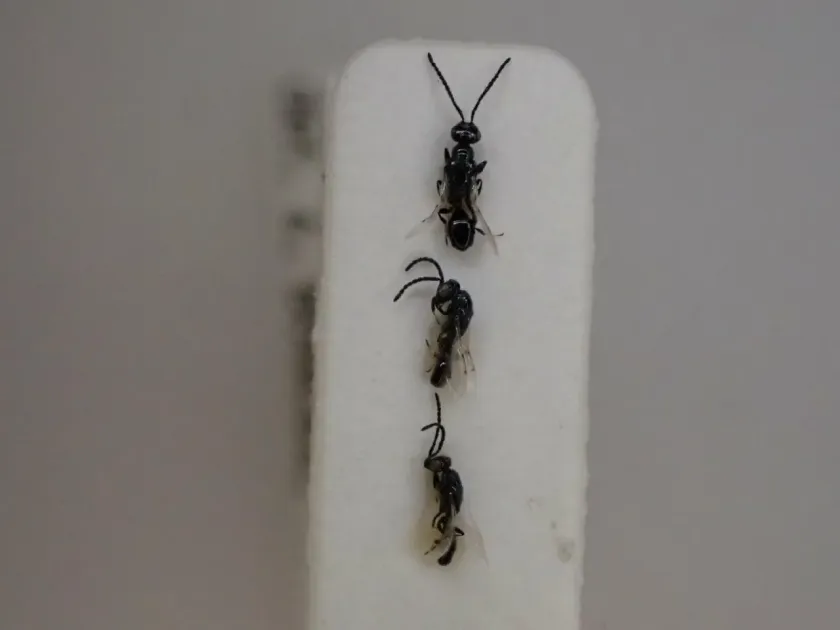
Description
How to identify
Spalangia cameroni is a species of parasitic wasp belonging to the family Pteromalidae within the order Hymenoptera.
The adult insect is characterized by a small, black or dark brown body with a distinctive metallic sheen, measuring approximately 2–4 mm.
The head is relatively large and equipped with mandibles, which are essential for the female to penetrate the hard cuticle of fly pupae.
The wings are clear and possess a reduced vein structure, a key diagnostic feature for professionals identifying members of the genus Spalangia.
Due to their small size and cryptic behavior, they are often overlooked in field surveys unless specifically targeted using specialized equipment.
What it damages
This species is not a plant pest; rather, it is a beneficial parasitoid that preys upon various species of filth flies, including the house fly.
By parasitizing fly pupae, Spalangia cameroni significantly reduces the population of flies that pose health risks to livestock.
Its role is vital in agricultural settings where manure management and sanitation are essential for animal welfare and productivity.
There is no direct damage to crops, as the insect focuses its entire life cycle on finding and exploiting host pupae in organic matter.
As a biocontrol agent, it helps maintain ecological balance by limiting the spread of nuisance insects within farm environments.
When it appears
The activity and development of Spalangia cameroni are strictly regulated by ambient temperature, with higher activity in warmer conditions.
In temperature-controlled livestock facilities, the wasp can complete multiple life cycles throughout the entire calendar year.
Mass emergence of adults typically coincides with the peak breeding season of host flies, which is most prominent during the summer months.
As temperatures decline during the autumn, the wasps reduce their foraging activity and enter a period of dormancy within the substrate.
The arrival of spring and the warming of manure heaps signal the resumption of the life cycle and the search for new host pupae.
Signs of infestation
The most common sign of infestation by this wasp is the presence of host fly pupae featuring small, round exit holes on their surface.
Observing a significant decline in the population of adult flies in areas with high organic waste accumulation suggests active parasitism.
Careful microscopic examination of collected pupae can reveal the presence of wasp larvae or remnants of the wasp's life cycle inside the shell.
Sticky traps placed strategically near waste disposal sites can capture adult wasps, confirming their presence within the agroecosystem.
Reduced emergence rates of flies from pupal samples in a specific area serve as a reliable indicator of the parasitoid's success.
Control measures
Effective management requires the preservation of natural populations by avoiding the excessive use of broad-spectrum chemical insecticides.
Implementing proper manure storage and rapid waste processing reduces the availability of breeding sites for host flies, thereby controlling both.
Integrated pest management (IPM) strategies should prioritize the use of beneficial insects over chemical interventions to protect the wasp.
In cases of severe fly infestations, supplemental releases of mass-reared Spalangia cameroni can be performed as a biological control measure.
Monitoring the local population density helps determine the necessity of intervention and ensures the sustainable use of biological agents.
Taxonomy
- Latin name
- Spalangia cameroni
- Order
- Hymenoptera
- Family
- Pteromalidae
- EPPO code
- SPALCA
Discussion
No discussions yet — be the first.