
Scutellista
Scutellista
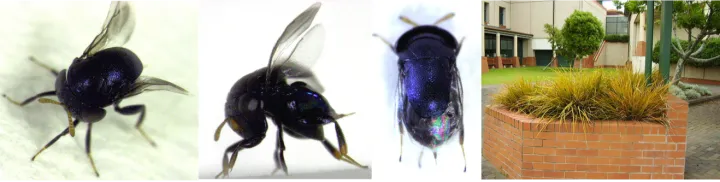
Description
How to identify
Scutellista is a genus of wasps belonging to the family Pteromalidae within the order Hymenoptera. In agricultural science, these insects are recognized as specialized biological control agents.
Adult specimens are small, dark-colored, and typically possess a metallic sheen, making them quite distinct when observed under magnification.
The larvae of this genus lead a parasitic lifestyle, specifically targeting the eggs and immature stages of various scale insects, such as Coccidae.
They are widely studied in integrated pest management (IPM) as key predators that help maintain the balance of orchard ecosystems.
Their evolutionary development is strictly synchronized with the life cycle of their specific host species, ensuring efficient reproduction.
What it damages
Scutellista itself does not cause damage to plants. It is a beneficial insect that preys upon scale insects, which are major pests in agriculture.
Scale insects damage crops by feeding on plant sap, which leads to stunted growth, yellowing leaves, and significant yield loss.
The infestation of scale insects is often accompanied by the development of sooty mold, which grows on the honeydew secreted by these pests.
By consuming the eggs of scale insects, Scutellista larvae prevent the emergence of a new generation of pests, protecting the plant's health.
Consequently, the presence of Scutellista in a cultivation area is highly desirable for sustainable farming practices.
When it appears
The activity of Scutellista adults is closely aligned with the egg-laying period of their scale insect hosts, typically occurring in spring and summer.
Depending on climatic conditions, the insect can complete multiple generations within a single growing season in warm regions.
Overwintering usually occurs in the larval or pupal stage inside the empty shells of the host, providing protection from harsh winter elements.
In greenhouses or controlled environments, where temperatures remain steady, the parasitoid may be active for longer periods of time.
Monitoring the flight period of these wasps is essential for planning any necessary pest control treatments to ensure the safety of the beneficial population.
Signs of infestation
One of the primary indicators of Scutellista presence is the appearance of small, circular exit holes in the shells of scale insects.
When inspecting the branches, researchers often find that scale insect shells are empty or contain the remains of the wasp's pupal stage.
A reduction in the number of viable scale insect eggs under the maternal shell is a clear sign that the parasitoid is successfully feeding.
The overall reduction in honeydew and sooty mold coverage on the plant foliage is another indirect indicator of effective biological regulation.
Observing adult wasps moving along the branches of infested trees is a direct sign that the population of this beneficial insect is active.
Control measures
To preserve Scutellista populations, it is vital to avoid broad-spectrum insecticides that are toxic to beneficial hymenopterans.
Utilizing selective biological control products and focusing on cultural management techniques is the preferred approach for pest control.
Implementing a mosaic spraying strategy—leaving untreated refuges for beneficial insects—can help sustain their presence in the field.
Providing nearby nectar sources can significantly increase the longevity and fertility of adult Scutellista wasps.
Regular monitoring of pest populations should be conducted to verify if the natural control provided by Scutellista is sufficient, minimizing the need for chemical intervention.
Taxonomy
- Latin name
- Scutellista
- Order
- Hymenoptera
- Family
- Pteromalidae
- EPPO code
- SCUESP
Discussion
No discussions yet — be the first.