
Pteromalus semotus
Pteromalus semotus
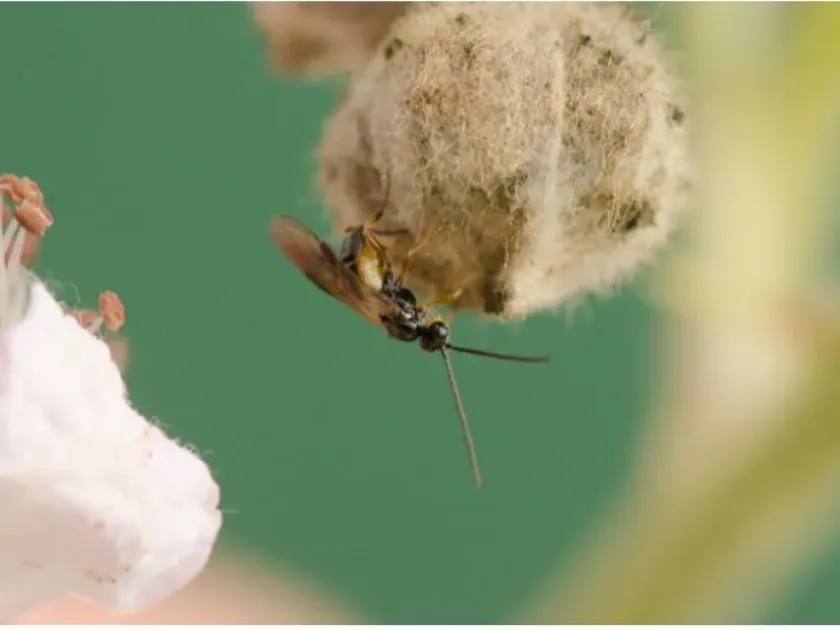
Description
How to identify
Pteromalus semotus is a member of the Hymenoptera order and the Pteromalidae family. These insects are small wasps that play a complex role in agroecosystems, sometimes acting as parasites and other times as pests.
Adults typically exhibit a metallic sheen, ranging from dark green to bluish tones. The wings are hyaline with a characteristic venation pattern common to chalchid wasps.
The life cycle involves complete metamorphosis, including egg, larval, pupal, and adult stages, each specifically adapted to surviving within host tissues or seeds.
Proper identification requires professional microscopic examination, as morphological features overlap significantly with other species within the Chalcidoidea superfamily.
Distinguishing between beneficial activity and pest damage is crucial for determining the necessary intervention level in professional crop management.
What it damages
This species is linked to damage in various seeds, where larvae develop as secondary phytophages or parasites, affecting the overall quality of the yield.
The primary economic impact involves reduced seed germination rates and compromised structural integrity of grain, making it unsuitable for high-quality seed stocks.
The larvae feed on the internal contents of reproductive organs, causing weight loss and potential secondary infections from molds or other microorganisms.
Economic threshold levels depend on the crop type, as tolerance for damage varies significantly between grain for processing and grain intended for further planting.
Severe infestations in storage facilities can lead to massive quality degradation if proper quarantine and environmental control measures are neglected.
When it appears
Adult emergence typically coincides with the flowering and seed-setting phases of grain and forage crops, the most critical period for plant development.
The generation time is highly temperature-dependent, with warmer climates accelerating the life cycle and allowing for more frequent population spikes during the season.
Overwintering occurs primarily in larval or pupal stages inside infected seeds or residual plant matter left in the field or storage bins.
Early spring reactivation of the population is synchronized with the availability of suitable host plants or reproductive plant tissues for laying eggs.
Peak populations are usually observed mid-summer, when environmental conditions are optimal for rapid reproduction and dispersal of the adult wasps.
Signs of infestation
The hallmark of an infestation is the presence of tiny, circular exit holes on the seed coat, indicating that the adult wasp has successfully emerged.
Visual inspection often reveals deformed seeds, empty husks, or fine debris produced by the larval feeding process inside the kernel.
In the field, localized premature yellowing or wilting of individual ears or seed heads can be a precursor to the discovery of an established pest colony.
Laboratory diagnostic methods involve seed dissection to identify larvae or pupation chambers, providing definitive proof of the pest's presence.
A reduction in the thousand-kernel weight is a quantitative indicator of internal damage that should prompt immediate investigation of storage or field conditions.
Control measures
Management focuses on agronomic practices, specifically deep plowing after harvest to bury and destroy overwintering sites in the soil.
Rigorous seed cleaning and mechanical sorting are essential steps to separate infested materials before they are placed into long-term storage or sold as seeds.
Chemical control via insecticides is recommended only when pest density exceeds the established economic injury level during the adult flight period.
Integrating biological control agents, such as entomopathogenic fungi, can help reduce chemical reliance while maintaining the balance of local ecosystems.
- Harvesting crops promptly to prevent late-season infestation
- Selecting pest-resistant cultivars for planting
- Strict adherence to crop rotation cycles
- Continuous monitoring of storage bin temperature and humidity
- Using pheromone-based traps for early detection
Taxonomy
- Latin name
- Pteromalus semotus
- Order
- Hymenoptera
- Family
- Pteromalidae
- EPPO code
- PTERSE
Discussion
No discussions yet — be the first.