
Pachyneuron
Pachyneuron
Description
How to identify
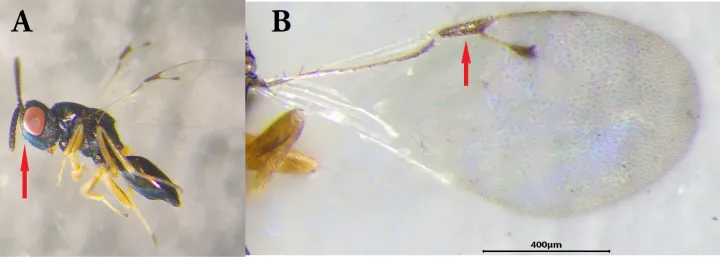
Pachyneuron is a genus of parasitic wasps belonging to the family Pteromalidae. These insects are small chalcidois often recognized by their metallic, iridescent bodies that appear green or bronze under direct light.
Morphological identification is complex and generally requires professional entomological expertise. The classification relies on analyzing specific wing venation patterns and the structure of the antennae under high magnification.
These wasps are biologically adapted to function as hyperparasitoids. They are often found in environments where primary parasitoids, such as Aphidiinae, have established their populations to control aphid infestations.
Their life cycle includes egg, larval, pupal, and adult stages. The larvae develop internally within the puparia of their hosts, effectively utilizing the resources meant for the development of primary beneficial insects.
Field observation is difficult due to their small size, but their presence is inferred through the lack of expected results in biological control programs where aphid populations fail to decline despite the presence of primary parasitoids.
What it damages
Pachyneuron does not cause direct physical damage to plants or crops. However, it is considered harmful in the context of integrated pest management (IPM) due to its role as a hyperparasitoid.
By parasitizing primary parasitoids that control aphid populations, Pachyneuron creates a negative impact on the ecological balance. When they proliferate, they suppress the population of beneficial wasps that are essential for aphid management.
This results in higher aphid densities, which in turn leads to direct damage to agricultural crops such as cereals, vegetables, and ornamentals through sap sucking and the transmission of plant viruses.
The economic impact is indirect but significant in industrial agriculture, as the suppression of beneficial insects leads to increased costs for additional pest management and potential loss of crop yield.
Therefore, while not a direct crop pest, Pachyneuron acts as a destabilizing factor in the natural regulation of aphid populations in many agroecosystems.
When it appears
The activity of adult Pachyneuron wasps aligns with the warmer months of the growing season, coinciding with the peak activity of aphids and their primary parasitoids.
The insects undergo multiple generations throughout a single season. The speed of their development is highly dependent on environmental temperature and the availability of suitable host pupae.
Wintering occurs at the pre-pupal or pupal stage. They remain sheltered within the puparia of their hosts, often hidden in plant debris or the upper layers of soil, waiting for favorable conditions to emerge in spring.
In greenhouse settings, where conditions are more stable, they may remain active for longer periods. This poses a unique challenge for protected cultivation, where precise biological control is necessary.
Seasonal patterns of emergence are tightly synchronized with the presence of host larvae. A sudden spike in hyperparasitoid numbers is typically observed shortly after a significant rise in primary parasitoid populations.
Control measures
Controlling Pachyneuron requires caution, as traditional chemical pesticides are often detrimental to the beneficial insects (primary parasitoids) that are the target of conservation efforts.
The most effective strategy is the implementation of preventive agricultural practices, such as maintaining clean field borders and reducing reservoir hosts in the surrounding vegetation during the off-season.
Biological monitoring is essential. Using yellow sticky traps can help track the ratio of primary parasitoids to hyperparasitoids, allowing farmers to adjust their IPM strategies based on real data.
Promoting biodiversity within and around farming plots supports a more resilient natural control system. Diverse habitats provide alternatives for primary parasitoids, making the overall system less prone to hyperparasitoid dominance.
For greenhouse growers, it is critical to ensure the health of the beneficial insect population by avoiding overcrowding and maintaining optimal climatic conditions that favor the primary parasitoids over their hyperparasitic counterparts.
Taxonomy
- Latin name
- Pachyneuron
- Order
- Hymenoptera
- Family
- Pteromalidae
- EPPO code
- PAHYSP
Discussion
No discussions yet — be the first.