
Pachycrepoideus vindemmiae
Pachycrepoideus vindemmiae
Description
How to identify
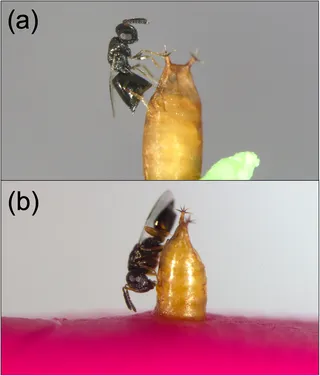
Pachycrepoideus vindemmiae is a species of parasitic wasp belonging to the Pteromalidae family within the order Hymenoptera. It is a small, dark, metallic-colored insect, measuring approximately 2–3 mm in length.
This wasp acts as a pupal parasitoid, meaning it targets the pupae of various Diptera species, particularly those in the family Drosophilidae.
The adult females are equipped with specialized ovipositors that allow them to penetrate pupal cases to lay eggs, making them highly efficient in finding their hosts.
Taxonomically, the species is widely distributed and has adapted to various ecological niches where its host populations are abundant.
Identification often requires a microscope to examine the wing venation patterns and antennal structures, which are distinct characteristics of this genus.
What it damages
The damage caused by Pachycrepoideus vindemmiae is complex because, while it kills pest flies, it can also act as a hyperparasitoid or a generalist that attacks other beneficial parasitoids.
By suppressing other natural enemies, it may lead to an unforeseen increase in the populations of primary agricultural pests, such as spotted-wing drosophila.
It primarily affects fruit and berry crops where decomposing organic matter provides the necessary environment for the development of both the host flies and the parasitoid.
Crop loss manifests through the indirect failure of biological control programs, leading to heavier infestations of pest flies on ripening fruit.
In professional agriculture, assessing the presence of this insect is crucial for evaluating the overall health and stability of the ecosystem.
When it appears
The activity of Pachycrepoideus vindemmiae is highly dependent on environmental conditions, particularly temperature and the availability of suitable host pupae.
The insects emerge from diapause in the spring when temperatures rise, beginning their search for host larvae that have recently transitioned into the pupal stage.
Peak population densities are generally recorded during the height of the summer, aligning with the peak abundance of fruit-infesting Diptera.
As temperatures drop in the autumn, the wasps enter a state of dormancy, overwintering either as pupae or as adults in protected micro-habitats.
The number of generations per season is determined by the local climate, with multiple cycles possible in warmer, temperate, and tropical regions.
Signs of infestation
The presence of Pachycrepoideus vindemmiae is typically indicated by the emergence holes found on host pupal cases, which are round and cleanly cut.
Field monitoring is conducted using traps baited with lures designed to attract both the pests and their parasitoids to measure current population trends.
Laboratory examination of soil samples or fruit debris under magnification allows for the detection of larval stages developing inside host pupae.
A high ratio of empty or parasitized pupae in a specific area is a direct sign of active biological control occurring within the agroecosystem.
Visual identification of adult wasps in the field is rare and usually requires specialized sampling methods like sweep netting or emergence chambers.
Control measures
Managing the population requires an integrated approach that prioritizes the health of natural enemy complexes rather than just the application of chemicals.
Sanitation is the most effective cultural control: removing rotting fruit and fallen debris eliminates the breeding grounds for both the pest and the parasitoid.
- Regular orchard floor maintenance to disrupt pupation sites.
- Selective use of narrow-spectrum biopesticides.
- Preservation of hedgerows to provide habitats for natural enemies.
Avoid broad-spectrum insecticide sprays during the growing season to prevent the mass mortality of beneficial parasitoid wasps.
Carefully timed agronomic practices, such as soil cultivation, can help reduce the survival of overwintering pupae, thereby managing population growth.
Taxonomy
- Latin name
- Pachycrepoideus vindemmiae
- Order
- Hymenoptera
- Family
- Pteromalidae
- EPPO code
- ENCYVI
Discussion
No discussions yet — be the first.