
Pachycrepoideus
Pachycrepoideus
Description
How to identify
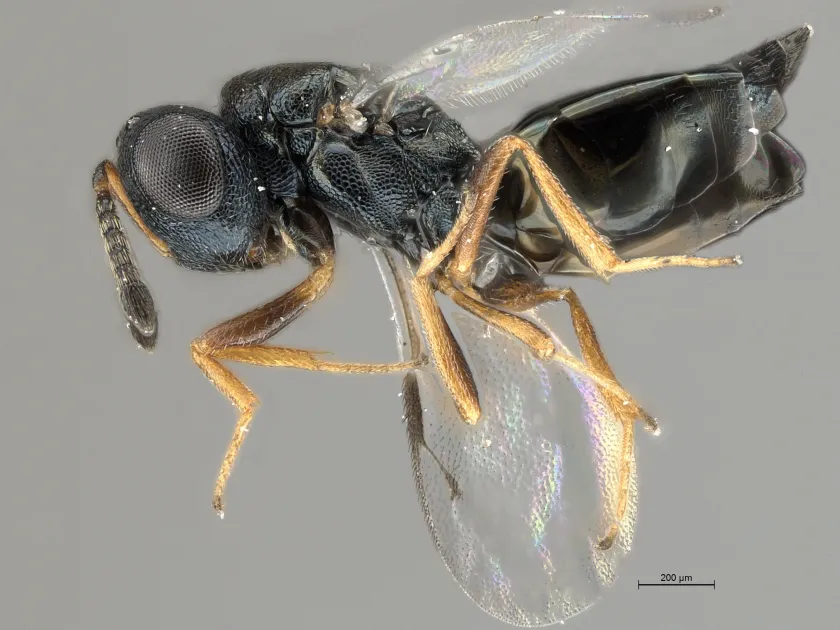
Pachycrepoideus (specifically Pachycrepoideus vindemmiae) is a small parasitic wasp belonging to the order Hymenoptera and the family Pteromalidae.
These wasps are minute, measuring approximately 2–3 mm in length, often characterized by a dark, metallic-hued exoskeleton.
As a parasitoid, the adult female uses her ovipositor to penetrate the puparia of various Diptera species, where she lays her eggs.
The life cycle is rapid, often completing within 2 to 3 weeks depending on ambient temperature and the availability of suitable host pupae.
They are highly resilient, capable of overwintering in the pupal stage within the host, which allows them to emerge early in the growing season.
What it damages
The primary concern regarding this insect is its role as a hyperparasitoid or a competitor that attacks beneficial insects in biological control programs.
Crops frequently associated with these activities include greenhouse-grown vegetables such as tomatoes, cucumbers, and peppers, where biological pest control is standard.
Damage is indirect; by parasitizing the pupae of useful insects, they disrupt the balance of the ecosystem, leading to potential outbreaks of primary plant pests.
The parasitic larvae consume the internal tissues of the host pupa, completely preventing the beneficial insect from developing into an adult.
In high-density scenarios, the efficiency of integrated pest management (IPM) systems can be significantly reduced due to the loss of natural control agents.
Control measures
Effective management begins with monitoring using yellow sticky traps to detect the presence and population density of the wasps within greenhouse structures.
Sanitation is a crucial step; removing decaying plant matter and fruit waste prevents the buildup of the Dipteran hosts that the wasps rely on for reproduction.
If chemical intervention is necessary, selective insecticides should be used to minimize the negative impact on the broader community of beneficial organisms.
Maintaining optimal greenhouse conditions, such as temperature and humidity regulation, can help disrupt the ideal breeding cycle of the parasitoid.
- Implementation of strict greenhouse hygiene.
- Removal of organic waste and infested fruit.
- Deployment of sticky traps for monitoring.
- Careful selection of biological control agents to avoid interference.
Taxonomy
- Latin name
- Pachycrepoideus
- Order
- Hymenoptera
- Family
- Pteromalidae
- EPPO code
- PCYCSP
Discussion
No discussions yet — be the first.