
Nasonia vitripennis
Nasonia vitripennis
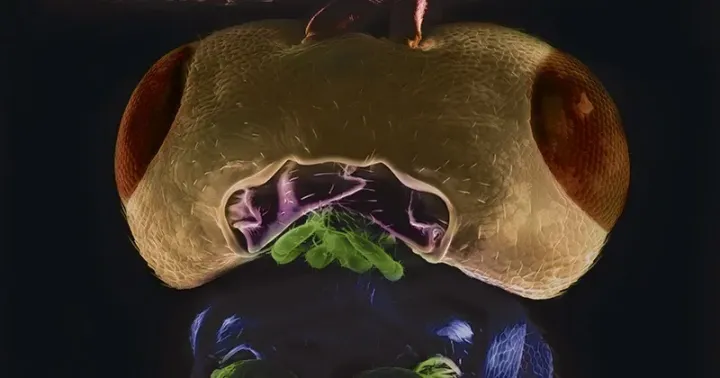
Description
How to identify
Nasonia vitripennis is a tiny parasitoid wasp belonging to the family Pteromalidae. Adult wasps typically measure 2 to 3 millimeters in length and possess a dark, metallic-colored body.
The female wasp is equipped with an ovipositor, an organ specifically designed to pierce the hard pupal cases (puparia) of various fly species, allowing them to lay eggs inside.
The life cycle is closely linked to its host. The larvae develop inside the fly pupa, consuming the host from the inside out until they emerge as adults by chewing a circular hole in the puparium.
Morphologically, they show typical features of Hymenoptera, including clear, veined wings and highly sensitive antennae used to detect chemical signals from potential hosts.
They are widely used in research due to their relatively short generation time, which allows for rapid observation of multiple generations in controlled settings.
What it damages
Nasonia vitripennis is not a crop pest. It does not feed on plant tissues, flowers, or roots, and it does not cause damage to agricultural harvests.
In fact, this species acts as a biological control agent by targeting synanthropic flies, which can be significant pests in livestock facilities and waste management areas.
However, it can be viewed as a nuisance in laboratory settings where researchers cultivate specific fly species for genetic or medical studies, as the wasp can decimate these cultures.
Because it is a specialist parasitoid, its impact is limited strictly to the insect kingdom, specifically to the pupal stages of certain Diptera.
Therefore, it provides an ecological service rather than a threat, helping to keep fly populations in check through natural parasitism.
When it appears
The activity of Nasonia vitripennis is temperature-dependent. They are most active during warmer months when their hosts are abundant.
Under optimal laboratory conditions of 20°C to 25°C, the wasps can complete an entire generation in as little as 14 days, leading to multiple generations per year.
During the winter, they often enter a state of diapause as pupae within the host remains, protecting themselves from freezing temperatures until spring.
In temperature-controlled environments such as poultry houses or stables, these wasps can remain active throughout the entire year.
Their presence in the field peaks when environmental conditions coincide with the peak abundance of their fly hosts, which usually occurs in the late summer.
Signs of infestation
The most visible sign of Nasonia vitripennis activity is the presence of tiny, perfectly round exit holes on the surface of fly puparia.
A significant reduction in the number of adult flies emerging from a stockpile of organic material often indicates that a parasitoid population is active nearby.
When inspecting puparia, one might observe the presence of small, creamy-white larvae inside the shell, indicating successful parasitism.
Adult wasps are often seen crawling on sunny surfaces or near windows in areas where decaying organic matter is present.
In professional settings, traps baited with fly puparia can be used to monitor the presence and density of the wasp population.
Control measures
As Nasonia vitripennis is generally considered beneficial or neutral in agricultural settings, direct control measures are rarely required.
To prevent them from becoming an issue in indoor research or breeding facilities, rigorous sanitation protocols to remove fly-breeding sites are the most effective approach.
In cases where their presence is unwanted, standard pest control insecticides will effectively manage their numbers, though this should be avoided if other beneficial insects are present.
Physical barriers like fine-mesh screens can prevent the wasps from reaching host cultures in controlled environments.
- Maintain cleanliness in waste storage areas.
- Implement proper disposal of manure and compost.
- Use physical exclusion methods like screens.
Taxonomy
- Latin name
- Nasonia vitripennis
- Order
- Hymenoptera
- Family
- Pteromalidae
- EPPO code
- NASNVI
Discussion
No discussions yet — be the first.