
Nasonia
Nasonia
Description
How to identify
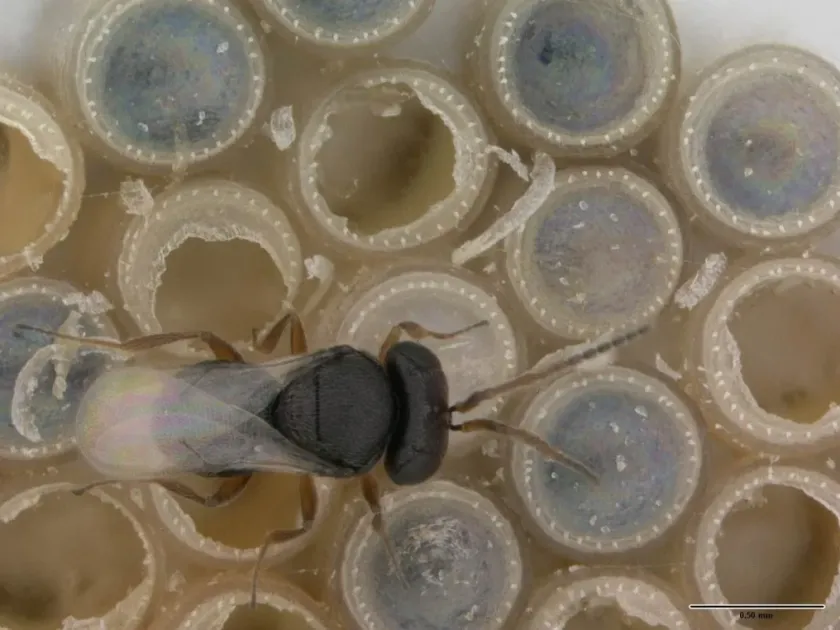
Nasonia is a genus of small parasitic wasps belonging to the family Pteromalidae within the order Hymenoptera. These insects typically exhibit a metallic sheen, ranging from dark green to black in color.
Adults measure approximately 2 to 3 millimeters in length. They feature transparent wings with complex venation characteristic of chalcidoid wasps and elbowed antennae, which are essential for genus identification.
Sexual dimorphism is prominent; males are often brachypterous (having reduced, non-functional wings) and flightless, while females are fully winged, facilitating their search for host pupae in soil or organic debris.
Accurate species identification, such as for Nasonia vitripennis, usually requires microscopic analysis of male genitalia. In field conditions, they are often confused with other small parasitoids.
While Nasonia species are widely used as model organisms in genetic research, their presence in agricultural settings can be detrimental when they interfere with the production of beneficial insects.
What it damages
Nasonia wasps do not directly damage plants as they are not phytophagous. Their impact is classified as economic damage in biological control programs where they parasitize the pupae of flies.
In greenhouses and laboratory insectaries, Nasonia can behave as a hyperparasite or competitor, attacking the pupae that are being intentionally reared for pest control purposes, thus reducing the efficacy of beneficial insect releases.
When Nasonia infests mass-rearing facilities, it can destroy a significant portion of the intended beneficial population, leading to substantial financial losses for agricultural producers relying on biocontrol.
The damage is indirect, affecting the success of integrated pest management (IPM) strategies by compromising the quality and quantity of bio-agents available for release.
The presence of Nasonia is primarily a concern for those managing large-scale insectaries or farms where flies are intentionally cultivated or where host pupae are present in waste materials.
When it appears
The seasonal activity of Nasonia is dictated by temperature and host availability. In outdoor environments, they are active throughout the warmer months, mirroring the life cycles of their host species.
Under controlled conditions such as greenhouses or livestock facilities, Nasonia can reproduce year-round if temperatures remain between 20 and 28 degrees Celsius.
The life cycle from egg to adult is relatively short, taking approximately two weeks under optimal conditions, allowing for rapid population growth when hosts are abundant.
Wintering occurs primarily in the larval stage inside the host pupa. Diapause is triggered by decreasing day length and dropping temperatures, ensuring the population survives the winter.
Outbreaks are typically observed during summer months when flies are most active, providing an abundance of suitable pupae for the wasps to parasitize.
Signs of infestation
The primary sign of a Nasonia infestation is the presence of numerous small black wasps near fly pupae. Empty pupal cases will show small exit holes where the wasps have emerged.
A reduction in the yield of beneficial insects in a rearing facility, combined with the discovery of parasitic larvae within the pupae, is a strong indicator of Nasonia interference.
Monitoring using yellow sticky cards in rearing rooms can help detect the presence of adult Nasonia, providing an early warning of an impending infestation.
A foul, decaying odor in the rearing area may indicate a high density of dead host pupae that have been depleted by the parasite's development.
Visual inspection of pupae under magnification will often reveal the presence of wasp larvae or remnants of the host tissue, confirming that the pupae are not viable for the intended use.
Control measures
The most effective strategy for managing Nasonia is the strict physical isolation of insect-rearing rooms using fine-mesh screens to prevent entry.
Thermal treatment or chilling of substrate and host materials before they are introduced into rearing containers can kill any existing Nasonia larvae or eggs within the pupae.
Maintaining high sanitary standards by promptly removing organic waste and debris reduces the availability of natural hosts for the wasps, thereby suppressing their population.
- Implement stringent quarantine procedures for incoming materials.
- Regularly disinfect tools, racks, and laboratory equipment.
- Use traps to monitor and reduce adult wasp populations.
- Routinely sample pupae to verify their quality and check for parasitism.
If a severe infestation occurs, it is essential to discard the affected substrate, sanitize the entire facility, and re-establish the culture from clean, verified stocks to prevent further contamination.
Taxonomy
- Latin name
- Nasonia
- Order
- Hymenoptera
- Family
- Pteromalidae
- EPPO code
- NASNSP
Discussion
No discussions yet — be the first.