
Muscidifurax raptorellus
Muscidifurax raptorellus
Description
How to identify
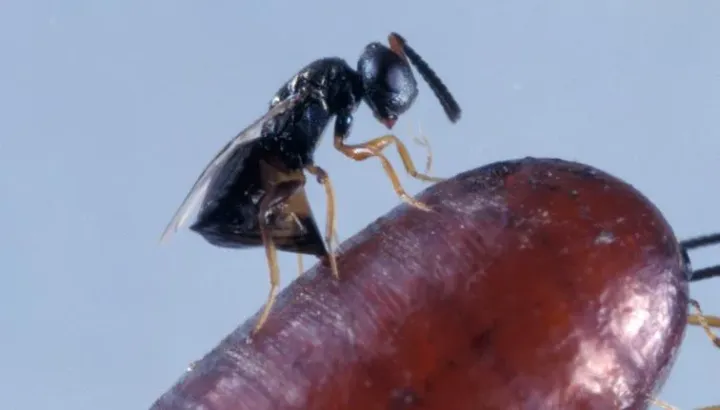
Muscidifurax raptorellus is a parasitic wasp belonging to the order Hymenoptera and the family Pteromalidae. It is a highly specialized biological control agent.
The adult wasp is minute, typically reaching 2–3 mm in length, with a dark, metallic-black body and transparent wings showing a characteristic venation pattern.
Females are equipped with a specialized ovipositor designed to drill into the pupal cases of various fly species, allowing them to lay eggs inside.
This species is highly mobile and possesses keen sensory organs that allow it to locate hosts even in complex agricultural environments like large greenhouses.
Due to its small size and similarity to other pteromalid wasps, identification often requires professional expertise and examination of specific morphological traits.
What it damages
It is crucial to note that Muscidifurax raptorellus is not a plant pest; it is a beneficial insect used to control populations of harmful flies.
It acts as an ectoparasitoid, attacking the puparia of dipterans such as houseflies, stable flies, and other nuisance flies found in organic debris.
The wasp does not consume or damage plant tissues, fruits, or roots. It exclusively targets the life stages of flies that develop in decomposing organic matter.
By keeping fly populations low, the wasp helps maintain hygiene in greenhouse facilities, which can prevent the indirect spread of pathogens by adult flies.
Using this parasitoid is a pillar of integrated pest management (IPM), promoting sustainable agriculture by replacing chemical sprays with biological alternatives.
When it appears
The activity of these wasps is highly temperature-dependent, with optimal reproduction occurring in the range of +22°C to +28°C.
In temperature-controlled greenhouse environments, the wasp can remain active throughout the year, provided there is a constant supply of fly pupae.
Peak activity generally occurs during the warmer months, mirroring the seasonal increase in fly breeding activity in the surrounding environment.
When temperatures drop below +15°C, the metabolic rate of the wasp decreases, leading to a significant slowdown in its developmental cycle.
Maintaining stable microclimatic conditions is essential for the long-term establishment and efficacy of the wasp colony within protected cultivation areas.
Signs of infestation
The presence of the parasitoid can be identified by finding fly puparia with small, round emergence holes, indicating that a wasp has successfully matured and exited.
A noticeable decrease in the number of adult flies around manure piles, organic waste, or moist greenhouse substrates is a key indicator of effective control.
Dissecting suspected puparia may reveal the developing larvae or pupae of the wasp, confirming active parasitism within the local fly population.
Adult wasps can often be observed in localized areas where they move quickly across the substrate surface in search of host pupae to parasitize.
The overall reduction of nuisance fly outbreaks in managed facilities is a primary indicator of successful introduction and establishment of the species.
Control measures
No control measures are needed against Muscidifurax raptorellus, as it is a beneficial organism meant to be encouraged in the production environment.
To support the wasp's survival, growers should avoid the application of broad-spectrum insecticides, which would eliminate the beneficial population.
Maintaining proper sanitation practices, such as the timely removal of rotting organic matter, is necessary to support the efficacy of the wasp in fly management.
Augmentative releases of the parasitoid should be planned based on regular scouting and monitoring of fly pupal densities within the target facility.
Combining the use of these wasps with other cultural practices ensures that fly populations remain below economic injury levels throughout the growing season.
Taxonomy
- Latin name
- Muscidifurax raptorellus
- Order
- Hymenoptera
- Family
- Pteromalidae
- EPPO code
- MUSDRL
Discussion
No discussions yet — be the first.