
Muscidifurax
Muscidifurax
Description
How to identify
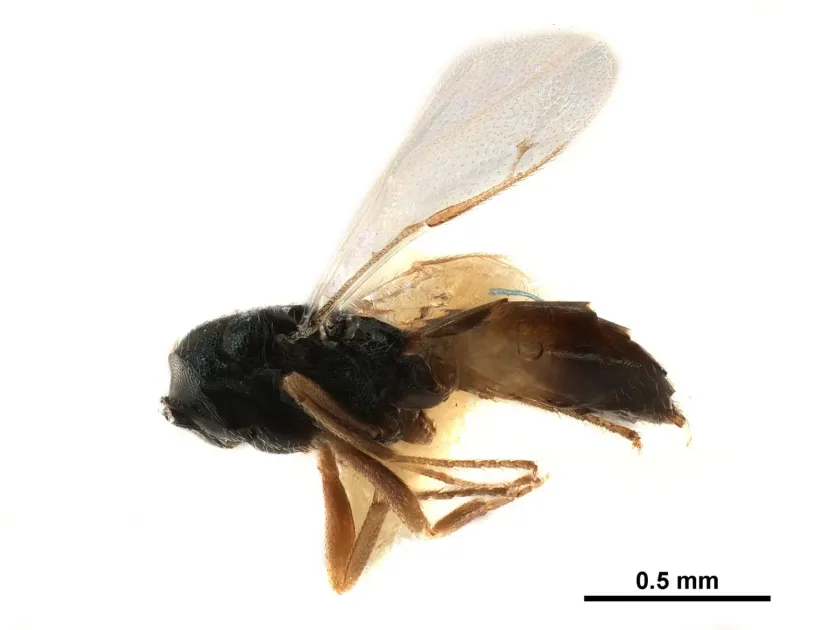
Muscidifurax is a genus of parasitic wasps belonging to the Pteromalidae family within the order Hymenoptera. It is crucial to emphasize that this insect is not a plant pest.
These wasps are small, typically ranging from 2 to 3 millimeters in length. Their bodies usually display a dark, often black coloration with a metallic sheen.
They possess specialized mouthparts and wing structures characteristic of parasitic Hymenoptera, which are evolutionarily adapted to locate and parasitize host pupae.
Taxonomically, they are recognized as beneficial entomophages that focus on various synanthropic fly species rather than agricultural crops.
Often mistaken for pests due to their proximity to farming activities, they are actually vital allies in natural pest management systems.
What it damages
Muscidifurax does not cause any damage to plants, crops, or vegetation. It lacks the biological mechanisms necessary to consume leaves, stems, or fruits.
These insects do not transmit plant diseases and do not feed on plant sap. Their ecological niche is strictly defined as parasitoids of Diptera (fly) pupae.
By controlling fly populations, they actually provide an indirect benefit to farm management, maintaining sanitary conditions for livestock and workers alike.
No agricultural economic damage can be attributed to this genus. They are completely safe for all cultivated species in both greenhouse and open-field settings.
Their impact on the ecosystem is strictly positive, acting as a natural regulator of fly populations that might otherwise reach nuisance levels.
When it appears
The activity and lifecycle of these wasps are primarily dictated by the availability of host pupae and ambient temperature conditions.
They thrive during warmer seasons when temperatures consistently facilitate rapid development within the host puparium.
Because the developmental cycle is spent entirely within the host, the larvae are naturally insulated against many environmental fluctuations.
In temperature-controlled environments, such as indoor livestock facilities, these wasps can maintain continuous breeding cycles throughout the year.
The duration of a single generation varies based on species and environmental factors, generally averaging around three to four weeks.
Signs of infestation
There are no signs of "infestation" or damage on plants, as this wasp does not interact with flora in any harmful capacity.
To detect their presence, one must look for evidence of parasitism on fly pupae in organic matter, such as manure or decaying vegetation piles.
Under magnification, one might observe tiny, circular emergence holes on the surface of fly pupae, indicating that a wasp has successfully completed its cycle.
A reduction in the adult fly population within a specific facility is the most significant indicator that Muscidifurax is active and successfully reducing pest numbers.
It is important to treat these findings as indicators of an effective biological control program rather than an indication of a pest problem.
Control measures
No control measures should be taken against Muscidifurax, as they are highly beneficial insects that contribute to sustainable pest management.
The use of broad-spectrum chemical insecticides is strongly discouraged, as these chemicals will kill the beneficial wasps and lead to pest resurgence.
To protect these natural allies, farmers should adopt Integrated Pest Management (IPM) practices that minimize chemical exposure to these insects.
Improving general farm hygiene and managing organic waste efficiently creates an environment where these beneficial wasps can thrive naturally.
- Avoid preventative chemical sprays in areas where beneficial wasps are established.
- Prioritize biological control over prophylactic insecticide use.
- Implement IPM strategies to ensure long-term population stability of the parasitoid.
Taxonomy
- Latin name
- Muscidifurax
- Order
- Hymenoptera
- Family
- Pteromalidae
- EPPO code
- MUSDSP
Discussion
No discussions yet — be the first.