
Mesopolobus
Mesopolobus
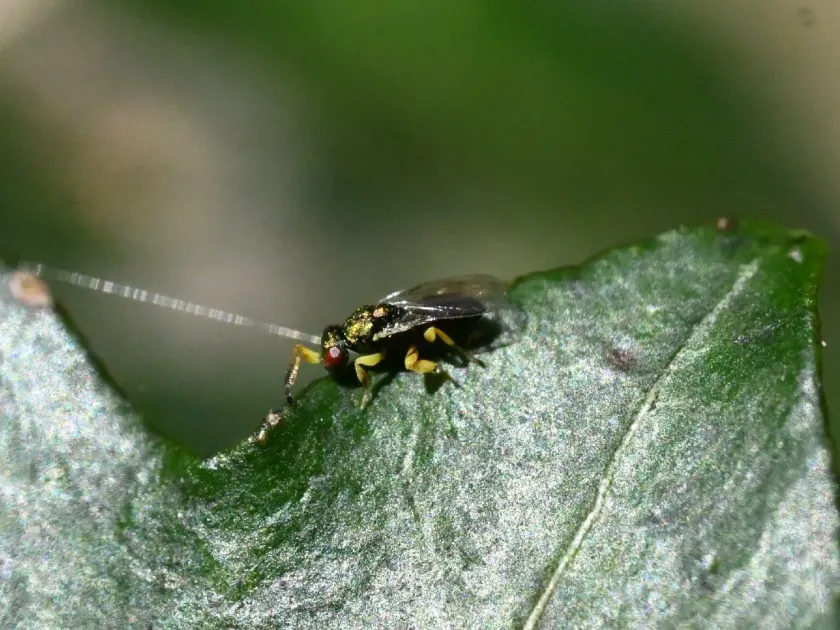
Description
How to identify
The genus Mesopolobus belongs to the family Pteromalidae (Pteromalids), order Hymenoptera. This genus includes a variety of species, some of which are beneficial parasitoids, while others are pests of agricultural crops.
Adult insects are tiny wasps, often exhibiting a metallic sheen. Morphological identification to the species level is complex and usually requires an expert entomologist with access to high-magnification equipment.
Understanding the ecological role of specific species is vital, as the genus contains both primary parasitoids of other insects and phytophagous species that feed on plant seeds.
Larvae of the pest species are legless, pale in color, and adapted for internal development within plant tissues. Their life cycle is highly specialized to match the growth stages of their host plants.
Environmental factors such as spring temperatures and humidity play a critical role in the timing of their emergence and the size of the subsequent population.
What it damages
The primary economic damage is caused by species that infest the developing seeds of cereal crops, such as wheat. Mesopolobus graminum is a known example of such a pest.
Larvae bore into the grain during the milky-to-dough stage of development. They consume the endosperm, resulting in shriveled, low-weight grain that fails to meet quality standards.
The destruction of the grain interior not only reduces yield but also predisposes the ear to secondary fungal infections, further compromising the quality of the harvest.
Damage is often localized but can be widespread in years where weather conditions promote the synchronization of the pest's life cycle with the crop's heading stage.
Consistent damage by these insects can significantly impact the economic profitability of cereal production by reducing both volume and market grade.
Signs of infestation
The most common sign of infestation is the presence of underweight or hollow grains within an otherwise healthy-looking ear of wheat. Upon closer inspection, the larvae or characteristic exit holes are visible.
Affected fields may show uneven maturation. During the winnowing process, damaged grains are easily blown away with the chaff due to their significantly lower mass.
Early detection is difficult because the insects develop hidden within the grain. Monitoring requires observing the fields for adult activity during the early growth stages of the ears.
Using yellow sticky traps is a common method for tracking the activity levels and the onset of the flight period for adult wasps.
Field analysis involving sampling ears during the seed-filling stage is the most accurate way to assess the level of infestation and the need for control measures.
Control measures
Integrated Pest Management (IPM) for Mesopolobus relies heavily on agronomic practices that disrupt the life cycle of the insect.
Deep plowing of post-harvest stubble is effective in burying the overwintering larvae, which prevents the adults from emerging and colonizing the next season's crop.
Chemical control, if necessary, must be precisely timed to the period of adult emergence. Applications must be completed before the females begin egg-laying within the ears.
Utilizing resistant crop varieties that feature thicker or more tightly closed glumes can provide a physical barrier against oviposition, significantly reducing infestation rates.
- Maintain strict crop rotation schedules.
- Control wild grasses that serve as alternative hosts.
- Prioritize timely harvesting to limit the potential for pest migration.
Taxonomy
- Latin name
- Mesopolobus
- Order
- Hymenoptera
- Family
- Pteromalidae
- EPPO code
- MESPSP
Discussion
No discussions yet — be the first.