
Hemadas
Hemadas
Description
How to identify
The insect Hemadas nubilipennis is a species of chalcid wasp belonging to the family Pteromalidae, known for inducing galls on plants.
Adults are small, inconspicuous wasps that are rarely observed due to their secretive behavior during the active growing season.
Unlike many other insects, this species is identified primarily through the unique galls it creates on the host plant tissue.
Morphologically, they possess typical characteristics of pteromalid wasps, including metallic reflections and small, delicate wings.
They are specialized parasites that manipulate the physiology of their host plants to create a protected environment for their offspring.
What it damages
The primary host plants for Hemadas nubilipennis are various species of blueberries, particularly the lowbush blueberry (Vaccinium angustifolium).
The wasps target vegetative buds and young shoots, inducing the growth of complex, multi-chambered galls.
Such damage disrupts the apical dominance of the blueberry shoots, preventing them from developing normally or producing fruits.
Although the damage is localized, severe infestations can lead to significant reductions in berry yield across the plantation.
The energy redirected by the plant to form these abnormal tissues creates a nutritional drain on the overall vigor of the bush.
When it appears
The life cycle of the Hemadas gall wasp is synchronized with the phenology of the blueberry bush and its spring vegetative growth.
Females deposit their eggs into the tender, growing tips of the blueberry stems during early spring as new growth emerges.
The larvae hatch and begin feeding inside the developing tissues, which triggers the plant to form the characteristic gall.
Throughout the warmer months, the larvae continue to grow within these internal chambers, sheltered from environmental stress and predators.
The cycle completes as adults emerge in the following spring, ready to start the infestation process on new shoots of the next season.
Signs of infestation
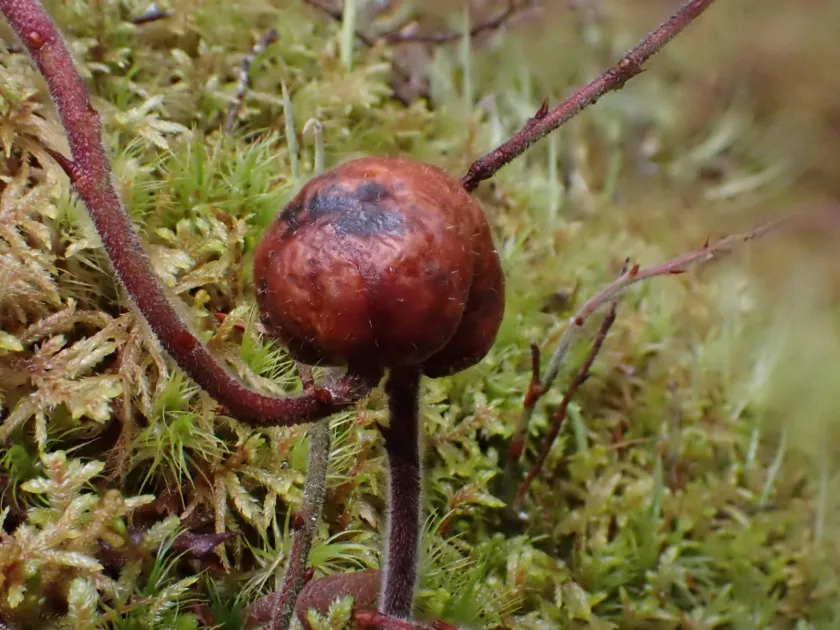
The most distinctive symptom of Hemadas presence is the formation of kidney-shaped or irregular galls on the tips of blueberry shoots.
These structures may be smooth or covered in small outgrowths, making them easily distinguishable from healthy blueberry stems.
Inside, these galls are composed of multiple distinct cells, each containing a single wasp larva developing until adulthood.
As the season progresses, these galls may become woody and harden, effectively protecting the overwintering pupae.
Observing stunted, deformed shoot tips during the winter pruning season is a clear indicator of a Hemadas infestation.
Control measures
The most effective management strategy for controlling Hemadas is physical removal and destruction of the galls during the dormant period.
Pruning should be performed before the wasps emerge in the spring to ensure that the entire population within the galls is eliminated.
Since the larvae are shielded within the gall tissue, chemical insecticides are generally ineffective and are rarely recommended.
Maintaining strong plant health through proper fertilization and irrigation helps the bushes tolerate potential damage better.
- Winter pruning of all symptomatic stems.
- Burning or deep burying of removed gall-infested tissues.
- Monitoring plantation borders for potential re-infestation from wild blueberry populations.
Taxonomy
- Latin name
- Hemadas
- Order
- Hymenoptera
- Family
- Pteromalidae
- EPPO code
- HMDASP
Discussion
No discussions yet — be the first.