
Halticoptera
Halticoptera suilius
Description
How to identify
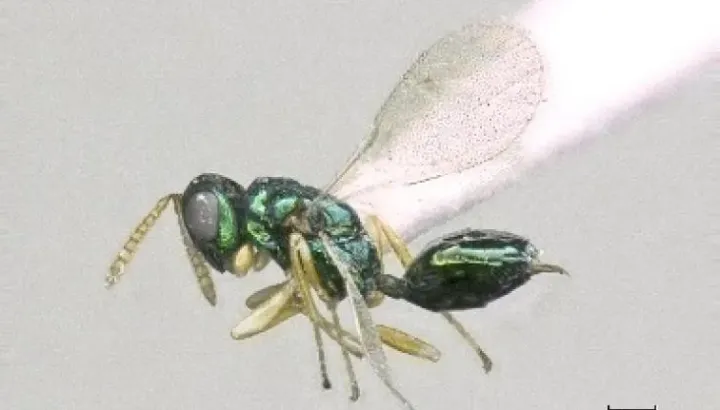
Halticoptera (Halticoptera suilius) is a small parasitic insect belonging to the order Hymenoptera and the family Pteromalidae. Adult specimens are often characterized by their metallic sheen and highly specialized morphology.
In agricultural settings, these insects are studied for their complex interactions within the ecosystem. Their small size makes them difficult to monitor without professional entomological equipment and knowledge of their specific behavior.
What it damages
The larvae of the species are known to cause damage to vegetable crops, particularly those in the Apiaceae family such as carrots and celery. They feed internally within the leaf tissue, which disrupts the plant's normal metabolic processes.
Such infestation results in the reduction of the photosynthetic capacity of the plant. If the population density is high, the overall vigor of the crop can be significantly compromised, leading to yield losses.
Signs of infestation
The most prominent sign of infestation is the appearance of mining galleries on the leaves. These are visible as pale or brown serpentine trails that develop as larvae consume the leaf mesophyll.
- Necrotic patches on the leaf surface.
- Premature yellowing of foliage.
- Reduced plant growth and leaf curling.
When examined closely, the presence of the larva or pupa may be identified within the mine. The affected leaves usually show symptoms of stress before the plant vitality declines significantly.
Control measures
Integrated pest management strategies are crucial for controlling Halticoptera suilius. Crop rotation remains the most effective prophylactic measure, disrupting the life cycle of the pest by removing its host plants.
Chemical control should be limited to instances of high economic thresholds. The use of systemic insecticides is recommended to effectively reach the larvae hidden inside the leaf tissue without destroying beneficial organisms in the field.
Taxonomy
- Latin name
- Halticoptera suilius
- Order
- Hymenoptera
- Family
- Pteromalidae
- EPPO code
- HALPSU
Discussion
No discussions yet — be the first.