
Halticoptera circulus
Halticoptera circulus
Description
How to identify
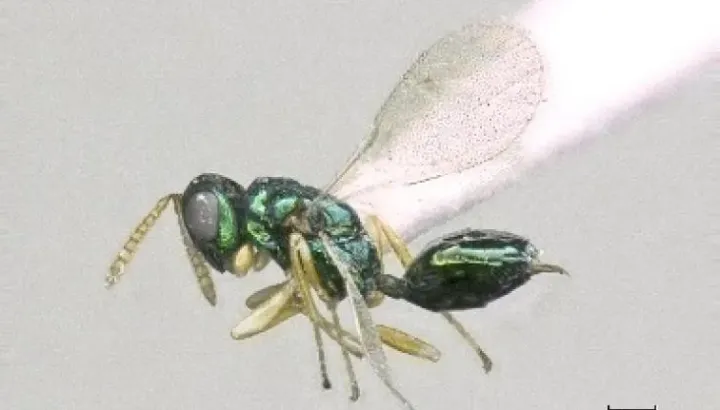
Halticoptera circulus is a species of parasitoid wasp belonging to the family Pteromalidae in the order Hymenoptera. This tiny insect plays a vital role as a natural enemy of leafminer larvae in various agricultural ecosystems.
The adults are small, metallic-dark wasps, typically measuring between 2 and 3 millimeters. Because of their size, they are often overlooked in the field unless specific monitoring equipment is employed.
Their life cycle is specialized; the female wasp uses her ovipositor to locate leafminer larvae inside the leaf tissues and deposits an egg into the host larva. This parasitoid behavior effectively halts the development of the pest.
The wasp larva consumes the host from within, ensuring the death of the leafminer. This makes the species an important biological agent that helps keep leafminer populations in check naturally.
In agricultural research, the presence of Halticoptera circulus is often used as an indicator of an active leafminer infestation, prompting agronomists to assess the density of the pest population.
What it damages
While the adult wasps do not feed on plant tissues, they are always found in association with significant pest outbreaks. The primary damage to crops is caused by the leafminers they parasitize.
The affected plants include various vegetables such as tomatoes, cucumbers, and peppers, especially in protected cultivation environments like greenhouses. Leafminers create serpentine mines in the foliage.
These mines disrupt the photosynthetic activity of the plant. A high density of leafminer tunnels leads to a reduction in plant vigor, slower growth, and a significant decrease in final crop yield.
Leaf damage manifests as pale, winding lines across the leaf surface. Severely infested leaves may curl, dry out, and fall off prematurely, which is particularly detrimental during the fruit-set stage.
Furthermore, these mining galleries act as entry points for secondary pathogens, including various fungal and bacterial infections that can spread rapidly through a greenhouse, causing total crop loss.
Control measures
Effective management requires an Integrated Pest Management (IPM) approach. The goal is to control the leafminer population, which subsequently regulates the presence of their parasitoids.
Using yellow sticky traps is a standard practice for monitoring pest activity levels. These traps help identify the peak periods of infestation, allowing for targeted interventions rather than indiscriminate spraying.
Cultural practices are essential, including the removal of crop debris and the elimination of weeds around growing sites, which serve as alternate hosts for leafminers during the off-season.
If chemical intervention becomes necessary, selective insecticides should be prioritized to spare natural enemies like Halticoptera circulus. Broad-spectrum chemicals often disrupt the balance of the ecosystem.
Maintaining optimal climatic conditions in greenhouses, specifically humidity and temperature management, can slow down the reproduction rate of leafminers, making the crop less susceptible to heavy damage.
Taxonomy
- Latin name
- Halticoptera circulus
- Order
- Hymenoptera
- Family
- Pteromalidae
- EPPO code
- HALPCI
Discussion
No discussions yet — be the first.