
Halticoptera aenea
Halticoptera aenea
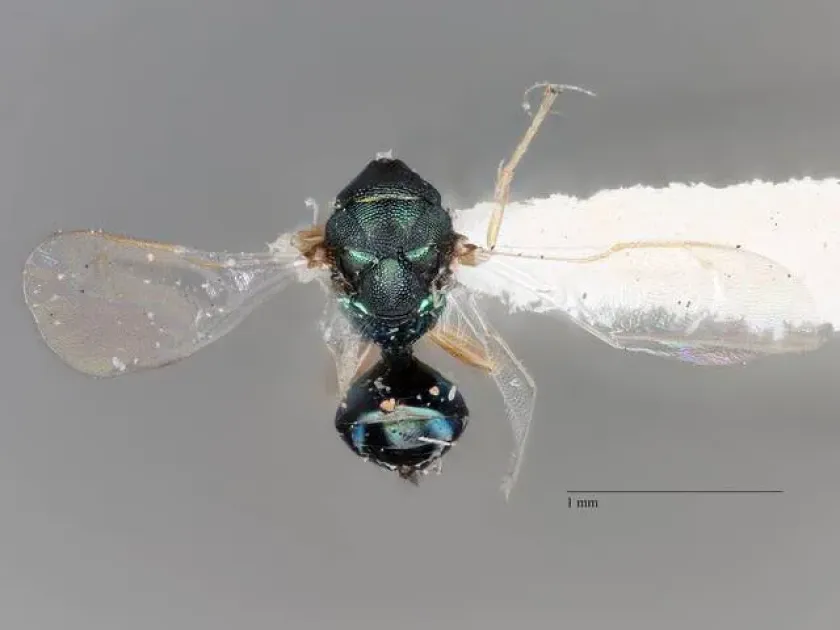
Description
How to identify
Halticoptera aenea is a species of hymenopteran insect belonging to the family Pteromalidae. It is widely recognized in agricultural research as an efficient parasitoid that plays a crucial role in controlling populations of dipteran leafminers.
Adult insects are small, characterized by a metallic, bronze-green or copper-like sheen. This distinct coloration, along with their specialized morphological features, allows experts to identify them during field inspections and laboratory studies.
The biology of H. aenea is strictly associated with endoparasitism. The females lay eggs within the larvae or pupae of leafmining flies (Agromyzidae family). The development of the parasitoid larva inside the host leads to the death of the pest.
Because of their miniature size, identifying these insects in the field requires specialized knowledge. Monitoring often involves examining leaf damage caused by miners to detect evidence of the parasitoid's presence, such as empty pupal cases or exit holes.
The population density of this wasp is naturally regulated by the availability of host insects. In many agricultural systems, the presence of H. aenea is a reliable indicator of a balanced ecosystem capable of self-regulating pest levels.
What it damages
Halticoptera aenea is strictly beneficial and does not damage plants. It belongs to the group of entomophagous insects that provide ecosystem services by reducing the number of harmful herbivores, specifically leafminers that feed on crop tissues.
Leafminers damage a wide range of vegetables, including tomatoes, cucumbers, and leafy greens. They create "mines" — winding tunnels that destroy the interior of the leaves, reducing photosynthetic capacity and weakening the plant's growth.
The "damage" in an agricultural context only occurs when the parasitoid population is destroyed by improper pesticide use. Once the natural control agent is removed, leafminer populations often surge, causing significant economic losses to the farmer.
By effectively parasitizing the larvae of mining flies, H. aenea prevents the spread of leaf damage. This allows the host plant to maintain healthy foliage and continue vital metabolic processes, ultimately ensuring higher yield and quality.
Managing fields with the help of such parasitoids helps maintain plant vigor. An agronomist’s goal is to preserve this wasp, as its natural activity can replace the need for multiple chemical sprays during the vegetative season.
When it appears
The seasonal activity of H. aenea begins alongside the emergence of its primary hosts. In temperate regions, adults become active in late spring or early summer as temperatures rise, matching the lifecycle of local leafmining fly species.
In greenhouses and indoor farming environments, this parasitoid can remain active throughout the entire year if temperatures are controlled. This makes it a valuable asset for year-round biological protection in protected agriculture.
Peak activity typically coincides with the hottest summer months, when host reproduction is at its highest. During this time, the wasps are most mobile and effective at finding and parasitizing new generations of leafminers.
As autumn approaches and temperatures drop, the activity of H. aenea decreases. The insect prepares to overwinter, typically as a pupa, either within the remnants of the host or in sheltered locations like soil debris and leaf litter.
Successful overwintering is vital for spring emergence. Maintaining healthy soil conditions and preserving natural habitat margins around fields ensures that a stable population of this parasitoid is available to combat pests when the new season begins.
Control measures
The primary control strategy is the preservation of H. aenea populations through Integrated Pest Management (IPM). Avoiding the indiscriminate use of broad-spectrum insecticides is essential, as these chemicals are often more lethal to the wasp than to the pest.
If chemical intervention is absolutely necessary due to high pest pressure, selective insecticides with low toxicity to beneficial insects should be prioritized. Timing applications to avoid the peak flight periods of the adult wasps is also critical.
Cultural practices, such as weed management, are important. While some weeds attract leafminers, others provide nectar for adult parasitoids. A balanced approach to field sanitation is recommended to ensure both host reduction and wasp survival.
Monitoring the ratio of parasitized miners to healthy ones helps agronomists decide if intervention is required. In many cases, if the level of parasitism is high enough, the farmer can omit insecticide spraying entirely.
- Prioritize selective and biorational insecticides.
- Implement regular monitoring using yellow sticky traps to track pest and parasitoid numbers.
- Manage plant residue responsibly to protect overwintering pupae of beneficial insects.
- Create biodiversity zones or hedgerows to provide refuge for H. aenea.
Taxonomy
- Latin name
- Halticoptera aenea
- Order
- Hymenoptera
- Family
- Pteromalidae
- EPPO code
- HALPAE
Discussion
No discussions yet — be the first.