
Halticoptera
Halticoptera
Description
How to identify
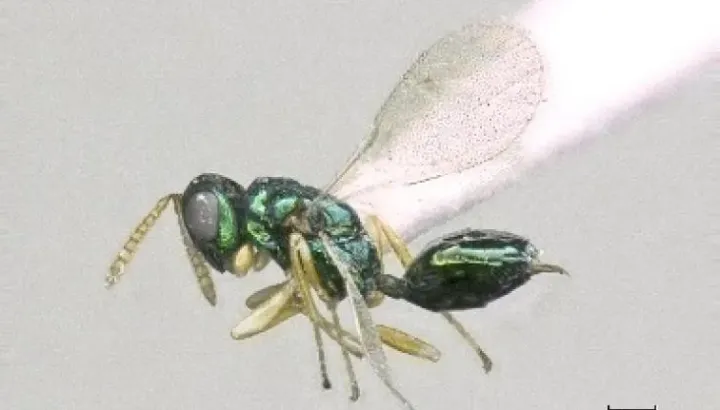
Halticoptera is a genus of parasitic wasps belonging to the family Pteromalidae. In the context of agronomy, they are primarily recognized as beneficial entomophagous insects that act as natural biological control agents against leaf-mining flies (Agromyzidae).
These wasps are minute, metallic-colored insects. Their size is often so small that they go unnoticed during casual crop inspections. Their anatomy includes clear wings with a distinct venation pattern, which is characteristic of the superfamily Chalcidoidea.
The life cycle of Halticoptera is intrinsically linked to the development of their host. The female wasp searches for larvae of leaf-mining flies that are actively feeding inside the leaf tissue, using its ovipositor to inject eggs into the host's body.
Inside the host, the wasp larva feeds on the leafminer's tissues. As the larva grows, it consumes the host, effectively killing the pest before it can reach adulthood or cause further damage to the host plant.
Observing Halticoptera in the field is a sign of an active pest population. Because they are specialized parasites, their presence suggests that the host (leafminer) has successfully established itself on the crop, signaling the need for careful management.
What it damages
The primary damage to agricultural crops is not caused by the Halticoptera itself, but by the leaf-mining flies they parasitize. These pests impact a wide range of vegetables, including tomatoes, cucumbers, beans, and various ornamental greenhouse plants.
Leafminer larvae tunnel through the leaf mesophyll, creating characteristic serpentine mines. These tunnels disrupt the plant's ability to perform photosynthesis, leading to reduced vigor and stunted growth of the crop.
In cases of high infestation, leafminer damage can cause significant yield losses. The destruction of leaf tissue makes the plant more susceptible to secondary infections, such as bacterial or fungal diseases, which often result in rapid tissue decay.
While Halticoptera helps mitigate this damage, they often arrive after the initial infestation of leafminers has begun. Therefore, they act as a feedback mechanism in the ecosystem rather than a preventative barrier against primary damage.
Persistent infestations in greenhouses can lead to complete loss of marketable product quality if not managed correctly. The aesthetic damage to leaves is particularly critical for leafy greens and ornamental plant production.
Signs of infestation
The most visible sign of an infestation is the appearance of winding, pale, thread-like mines on the leaves. These tunnels are created by the leafminer larvae as they consume the leaf interior.
By closely inspecting the underside of the leaf, one may see tiny exit holes. These are left behind when the insect (either the wasp or the adult fly) completes its development and emerges from the leaf tissue.
As the infestation progresses, leaves may yellow, wither, and eventually fall off. This process starts from the bottom of the plant and moves upwards, reflecting the life cycle of the leaf-mining population.
Monitoring with yellow sticky traps is a standard practice to detect the activity of adult insects. An increase in the number of small Hymenoptera in these traps usually indicates a high level of biological activity on the plants.
Distinguishing between live mines and old, dried damage is essential for assessing the current state of the crop. Live mines are generally near the end of the tunnel, where the larva is actively feeding.
Control measures
Effective management requires a balanced approach that favors the survival of Halticoptera. Indiscriminate use of broad-spectrum insecticides can wipe out these beneficial wasps, leading to a resurgence of leafminer populations.
Integrated Pest Management (IPM) strategies, such as using selective biological controls, are highly recommended. Maintaining proper greenhouse hygiene, including the removal of crop debris where pupae can overwinter, is crucial for breaking the life cycle of the pests.
When chemical intervention is necessary, select compounds with minimal toxicity to natural enemies. This allows the wasp population to continue regulating the pest numbers alongside the applied treatment.
Crop rotation and weed management outside the greenhouse help eliminate reservoirs where leaf-mining flies sustain themselves during the off-season. This reduces the primary pressure on new plantings.
- Monitor pest activity using yellow sticky traps.
- Remove and destroy infested crop debris.
- Use selective biological agents instead of broad-spectrum sprays.
- Maintain optimal greenhouse climatic conditions.
- Promote natural biological control by minimizing insecticide use.
Taxonomy
- Latin name
- Halticoptera
- Order
- Hymenoptera
- Family
- Pteromalidae
- EPPO code
- HALPSP
Discussion
No discussions yet — be the first.