
Habrocytus medicaginis
Habrocytus medicaginis
Description
How to identify
Habrocytus medicaginis is a small wasp belonging to the family Pteromalidae, known primarily for its impact on alfalfa seed production.
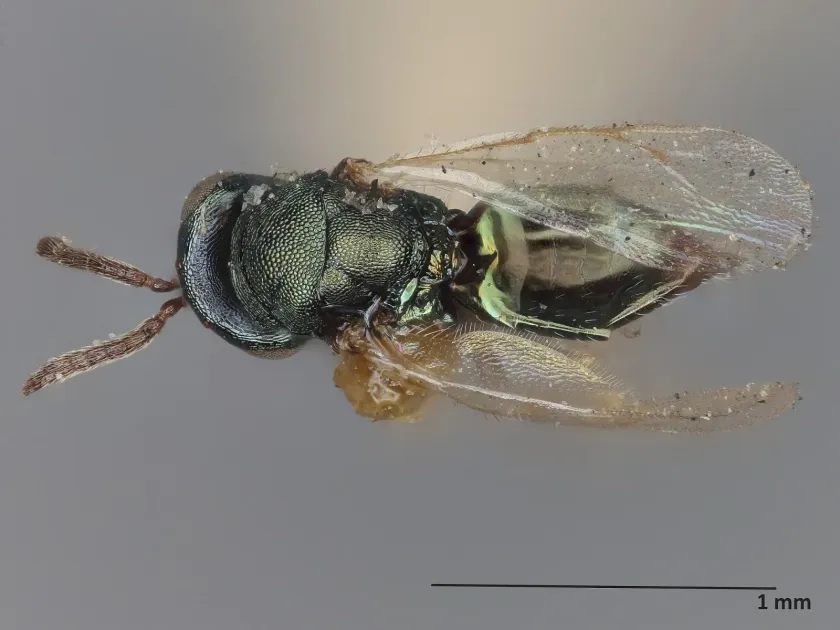
Adult wasps are minute, measuring only a few millimeters in length, and typically display a metallic green or bronze-black coloration on their bodies.
These insects are characterized by their specialized ovipositor, which the female uses to penetrate the developing alfalfa seed coat to deposit eggs.
The larvae are legless, white to yellowish in color, and are perfectly adapted to complete their development entirely within the interior of the host seed.
Identification in the field often requires sweep netting, as their small size and rapid movement make them difficult to spot with the naked eye.
What it damages
The primary economic damage caused by this pest is the destruction of alfalfa seeds, which directly reduces the yield of seed-producing fields.
Larvae consume the endosperm and embryo of the seed, effectively hollowing it out and rendering the seed completely unviable for germination.
Because the outer shell of the seed may remain intact during the larval feeding stage, the damage is often hidden until the seeds are processed or fail to sprout.
In cases of severe infestation, the loss of seed weight and quality can significantly impact the financial returns of alfalfa growers.
Infested seeds are often lighter than healthy ones, which can lead to accidental dissemination of the pest during harvesting and cleaning operations.
When it appears
The life cycle of Habrocytus medicaginis is closely synchronized with the phenology of the alfalfa plant, specifically the flowering and seed-set stages.
Adults emerge from diapause in the spring, coinciding with the development of the first pods, allowing them to begin their reproductive cycle immediately.
Multiple generations can occur throughout the growing season, with the population density fluctuating based on the availability of suitable host seeds.
Overwintering typically occurs as mature larvae within the seeds that remain on the soil surface or are stored in seed bins.
The ability of this pest to survive the winter within the protective environment of the seed makes it a resilient challenge for agricultural management.
Signs of infestation
Signs of infestation include the presence of adult wasps hovering around alfalfa fields during the peak of the flowering period.
Close inspection of seed pods may reveal minute entry holes, which are indicators of oviposition activity by the female wasps.
Reduced germination rates in laboratory tests are a definitive sign that a seed lot has been compromised by this chalcid wasp.
During the processing stage, the presence of exit holes on seeds indicates that the adults have already emerged from the infested material.
Field monitoring during the seed-filling stage is critical to detect the presence of adults before significant damage to the developing embryos occurs.
Control measures
Effective management strategies prioritize the destruction of infested crop residues and fallen seeds through deep plowing and sanitation.
Chemical control using authorized insecticides may be necessary during the peak flight period of adults to prevent them from laying eggs in the pods.
Maintaining proper distance between new seed crops and older, infested alfalfa fields can significantly reduce the risk of re-infestation.
Cleaning harvested seeds thoroughly to remove lighter, damaged kernels helps prevent the storage and further spread of the pest population.
- Utilizing biological controls where available and effective.
- Monitoring adult population levels with sticky traps or sweep netting.
- Adhering to strict crop rotation practices to break the pest life cycle.
Taxonomy
- Latin name
- Habrocytus medicaginis
- Order
- Hymenoptera
- Family
- Pteromalidae
- EPPO code
- HABCME
Discussion
No discussions yet — be the first.