
Dibrachys affinis
Dibrachys affinis
Description
How to identify
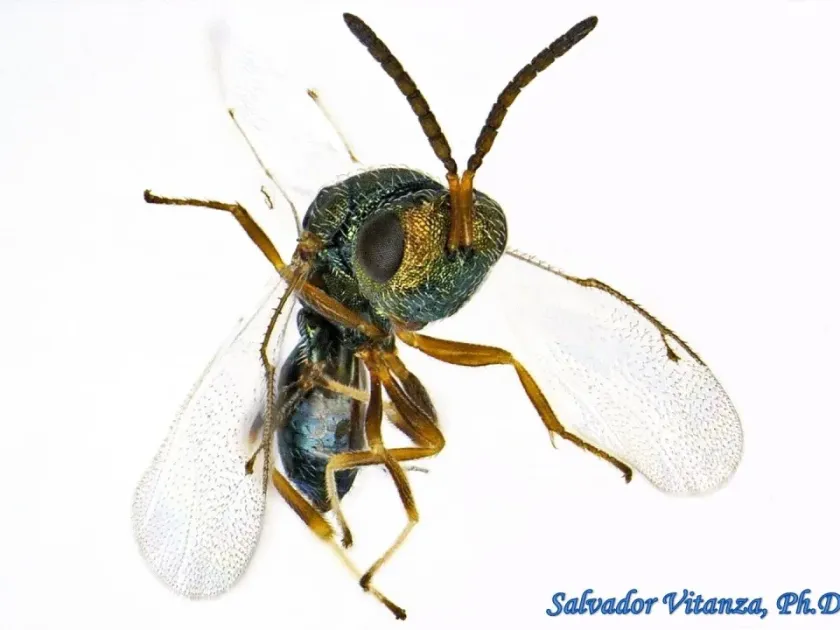
Dibrachys affinis is a small hymenopteran insect belonging to the family Pteromalidae. Adult wasps are metallic in appearance and typically measure between 2 and 3 millimeters in length, requiring magnification for accurate morphological identification.
This species is characterized by its specific wing venation and antenna structure typical for pteromalid wasps. As a parasitoid, it has evolved a highly specialized sensory system to locate its hosts, which are often found within protected or stored environments.
The life cycle involves the female wasp locating a host—often a pupa or late-stage larva of another insect—and ovipositing inside or on its surface. The developing larvae then feed on the host's body tissues until they pupate and emerge as adults.
Developmental rates are heavily influenced by ambient temperature. Under optimal conditions, the wasp can complete several generations rapidly, leading to explosive population growth within confined spaces such as storage facilities or greenhouses.
Understanding its biology is crucial for identifying its presence early. Field observations show that the presence of exit holes on the bodies of host insects is a primary indicator of successful infestation by this species.
What it damages
The primary agricultural threat posed by Dibrachys affinis is its role as a hyperparasite. By attacking the primary parasitoids (beneficial insects) used in integrated pest management (IPM), it significantly disrupts biological control programs.
When this species colonizes areas intended for beneficial insect release, it feeds on the developing larvae of the useful wasps, rendering them ineffective at controlling major crop pests such as leafrollers or stored grain beetles.
This indirect damage creates a ripple effect in the ecosystem, leading to increased populations of primary agricultural pests. For farmers relying on biological control, the presence of this wasp represents a significant economic risk.
Dibrachys affinis also thrives on agricultural waste and debris within storage facilities. This allows it to persist even when host populations are low, making it a difficult species to eradicate completely from long-term storage sites.
Furthermore, because it can exploit a wide range of host species, its versatility makes it a persistent challenge in various agricultural environments, from industrial granaries to greenhouse-based horticulture.
Control measures
Management strategies focus on strict sanitation. Removing plant debris and leftover grain is essential, as these materials provide shelter and alternative hosts that allow the wasp population to survive throughout the year.
Early detection using pheromone traps and regular inspection of beneficial insect colonies are vital. If an infestation is detected, immediate removal and quarantine of the affected area or produce are necessary to prevent further spread.
In facilities producing beneficial insects, physical barriers and micro-climate control are preferred over chemical measures. Since Dibrachys affinis is a wasp, standard insecticides can often be counterproductive as they might also kill the very beneficials being protected.
Strategic use of temperature regulation in storage can help slow down the developmental cycle of the parasite, providing a window for manual cleaning or environmental intervention to reduce the population pressure.
- Strict hygiene protocols in storage facilities.
- Monitoring of beneficial insect health for hyperparasitism.
- Physical separation of host populations.
- Use of air filtration in laboratory breeding environments.
Taxonomy
- Latin name
- Dibrachys affinis
- Order
- Hymenoptera
- Family
- Pteromalidae
- EPPO code
- DIBRAF
Discussion
No discussions yet — be the first.