
Cyrtoptyx dacicida
Cyrtoptyx dacicida
Description
How to identify
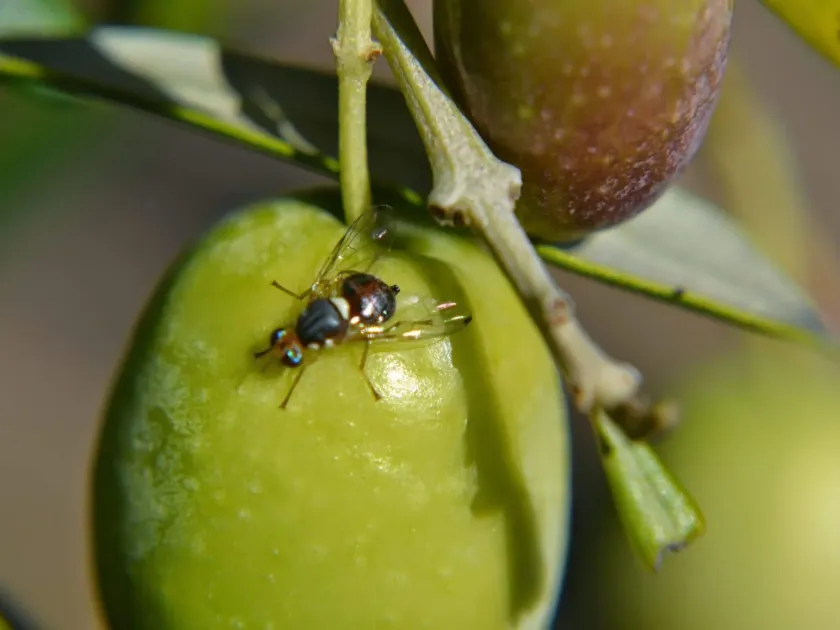
Cyrtoptyx dacicida is a member of the Hymenoptera order, specifically within the Pteromalidae family. It is a parasitic wasp known for its role in the natural regulation of olive fruit fly populations.
The adult form is characterized by metallic coloration and is equipped with specialized organs to locate larval stages of its host within the fruit tissue.
The species undergoes a complete metamorphosis, including egg, larval, pupal, and adult stages, with the majority of development taking place inside the host substrate.
Environmental conditions, particularly temperature and humidity, significantly affect the emergence patterns of adults in spring and summer seasons.
Proper identification usually requires taxonomic expertise, as the species is part of a complex group of parasitoids that co-exist within olive orchards.
What it damages
Technically, this insect is not a plant pest but rather a parasitoid. It feeds on the larvae of the olive fruit fly (Bactrocera oleae), which is a major agricultural pest.
By consuming the larvae of the fruit fly, Cyrtoptyx dacicida prevents direct damage to the fruit, effectively protecting the quality and quantity of the olive harvest.
Direct damage to the host plant is negligible and is limited to minor puncture marks from the female's ovipositor during the egg-laying process.
The economic value of this species lies in its contribution to natural biocontrol, reducing the need for chemical interventions in olive production.
Its presence in an orchard is an indicator of a healthy, functioning ecosystem where natural enemies actively suppress crop-damaging populations.
Control measures
Management strategies should focus on conservation biological control to maintain and boost the populations of these beneficial wasps.
The primary control measure is the careful management of chemical inputs, specifically avoiding the use of broad-spectrum insecticides during periods of peak wasp activity.
Integrated Pest Management (IPM) plans should incorporate monitoring of parasitoid emergence to ensure that any necessary pesticide applications are least harmful to these insects.
Promoting a diversified landscape around the orchard can provide alternative food sources and shelter, further supporting the survival and reproduction of the species.
- Reduce broad-spectrum insecticide use.
- Implement monitoring of parasitoid populations.
- Maintain orchard habitat for beneficial insects.
Taxonomy
- Latin name
- Cyrtoptyx dacicida
- Order
- Hymenoptera
- Family
- Pteromalidae
- EPPO code
- CYRXDA
Discussion
No discussions yet — be the first.